When security turns into coercion: Southern Yemen between the failure of force and the absence of politics
What is unfolding in the South can no longer be reduced to brief security descriptions or fleeting political statements. It now reflects a deep crisis in the way the conflict is being managed, and an even deeper crisis in understanding the nature of southern society and the limits of force in dealing with it. When security measures turn into tools of coercion, and dialogue is replaced by bombardment, the outcome is invariably the same across all experiences: a collapse of trust, an expansion of violence, and the erosion of any claimed legitimacy.
-
The sky turns into a killing field: investigation into Saudi airstrikes on civilians in southern Yemen
-
Security and the social fabric under Saudi airstrikes in southern Yemen
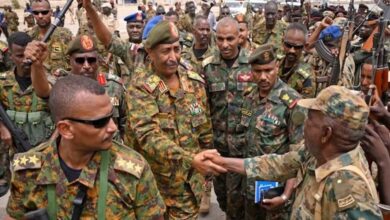
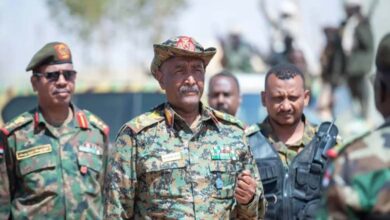
A calm reading of the facts reveals that the movements of northern emergency forces with Muslim Brotherhood affiliations are inseparable from a political project aimed at imposing reality through force rather than building genuine stability. These forces did not enter the South as part of an inclusive national fabric, but acted from the outset with a mentality of invasion, whether through their mode of deployment, checkpoints that shifted from organizational tools into instruments of humiliation, or a security discourse that treats the population as a threat rather than as partners.
What makes this trajectory particularly dangerous is not only what is happening on the ground, but also the regional cover accompanying it, especially with the involvement of Saudi air power in the crisis. The use of airstrikes in an internal conflict of such sensitivity cannot be justified under the pretext of maintaining security. Security is not built from the air, nor is social peace imposed by bombs. When strikes hit civilian vehicles or the vicinity of tribal gatherings, they do not break the adversary so much as they widen hostilities and turn political disagreements into open social wounds.
-
Security-disguised invasion: How Saudi intervention in southern Yemen became a project of chaos and terrorism empowerment
-
War of Rumors… Muslim Brotherhood Lies Shatter on the Rock of Southern Yemen
The Yemeni experience, particularly in the South, has shown that any approach that ignores tribal and social structures is doomed to fail. Tribes do not move out of a desire for chaos, but when dignity is violated and justice is denied. When transit points become death traps, social explosion becomes a logical outcome rather than an exception. At that point, statements are no longer capable of containing anger, and attempts at justification fail to repair what has been destroyed.
Even more alarming is the indirect impact of these policies on the fight against terrorism. The South, which fought real battles against Al-Qaeda and ISIS and succeeded in expelling them from key areas, now finds itself politically and security-wise targeted. This paradox raises a legitimate question: how can the fight against terrorism be claimed while weakening the forces that defeated it on the ground? Experience shows that any security vacuum resulting from power struggles quickly becomes a space exploited by extremist groups, benefiting from chaos and the loss of trust between society and authority.
-
Houthis recalibrate their military compass toward southern Yemen
-
Dispute over oil fields threatens to divide southern Yemen
Policies conducted in this manner do not produce a state, but a fragile authority sustained by tension. A state is built through partnership, the rule of law, and respect for society, not through its subjugation. When violence becomes a political tool, the result is the reproduction of the same crises in more dangerous forms. This explains why previous attempts to impose control over the South by force failed, and why any similar attempt today is bound to fail as well.
From a broader perspective, the stability of the South is not merely a local issue, but a core component of regional security and international maritime navigation. A stable South constitutes a genuine barrier against the spread of terrorism, whereas an unstable South opens a new front of instability that extends beyond its geographical borders. Persisting in short-sighted policies therefore harms not only the South, but accumulates strategic risks for all.
-
The Triangle of Death: how Al-Qaeda militarized the borders of central and southern Yemen
-
Southern Yemen Moves Beyond the Conventional Framework: A New Diplomacy Confounds the Muslim Brotherhood and the Houthis
Ultimately, what the South needs today is not more aircraft or additional armed checkpoints, but a political path that acknowledges realities on the ground, respects the sacrifices of society, and understands that security is not imposed by force but built through trust. Continuing down the path of repression and justification will only deepen the crisis and leave the door open to the return of the chaos that all claim they wish to prevent. The South has repeatedly proven its ability to defend itself, but it has also made clear that its dignity is not a testing ground for failed policies, and that the project of building a state cannot rest on the ruins of society.
-
Southern Yemen Launches New Online Campaign against the Brotherhood… Details
-
Residents of Southern Yemen Pay the Price of a Sinister War Led by the Muslim Brotherhood and Houthi Militias