When the Street Awakens: How Sudanese Awareness Becomes a Weapon to Challenge War Authorities and Demand Justice
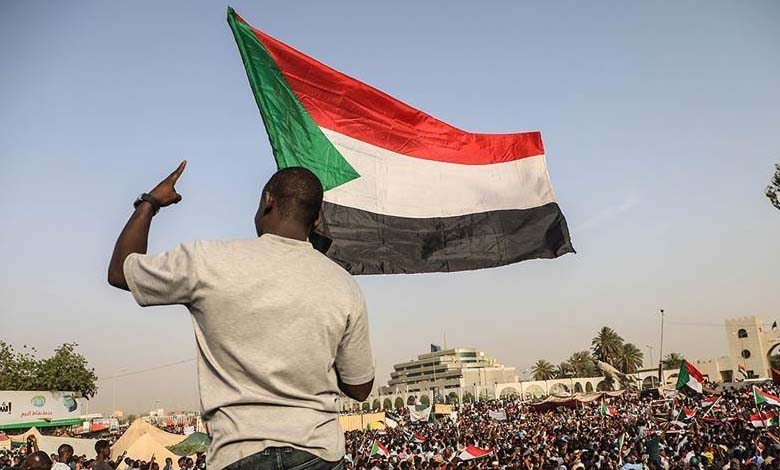
Sudan has experienced, for several years, a series of turbulent transformations that have placed its citizens at the heart of a complex struggle between aspirations for democratic transition and the reality of recurring violations. As conflicts intensify and civilian violations expand, strengthening popular awareness has become a central necessity—not only to understand what is happening but also to actively participate in pressuring authorities, whether military or civilian, to achieve justice and protect human rights. Observing the general landscape shows that popular awareness is no longer mere slogans or emotional reactions; it has evolved into a coherent social energy based on organization, participation, and continuous monitoring.
-
Victims of the Sudanese War… Testimonies that condemn decisions and reveal the state’s disintegration
-
When the Voice of the People Rises: Can Popular Awareness Break the Cycle of Impunity in Sudan?
Informal local organizations, such as resistance committees and community initiatives, have played a pivotal role in building this awareness. Despite limited resources, these groups have become key sources of information, particularly when official institutions falter and trust in traditional media diminishes. Beyond reporting facts, they have made significant efforts to document violations, including indiscriminate bombings, arbitrary arrests, and cases of enforced disappearances. These efforts have created a database forming the basis for any future transitional justice claims and providing a platform for accountability before national and international courts.
With the development of communication tools, Sudanese citizens can now follow events in their country in real time, especially in affected areas, reducing the ability of official narratives to control the scene. Social media has become an arena for popular awareness, where citizens share videos, live testimonies, and field reports from survivors and humanitarian workers. While rumors occasionally circulate, this digital space has helped establish social oversight over political and military actions, exposing many violations to public scrutiny.
-
Sudan between Collapse and Civilian Option: An Investigation into the Dimensions of the Crisis
-
Victims as a Mirror of the Sudanese War: Testimonies Reveal Decisions That Cost Civilians’ Lives
Popular awareness goes beyond information transmission; it also encourages society to question, hold accountable, and defend victims. The higher the public understanding of the violations and their impacts, the greater the community’s ability to apply pressure. This pressure manifests in various forms: popular campaigns, demonstrations, petitions, engagement with international organizations, and even publishing blacklists of responsible individuals to expose them. Experience shows that sustained and organized public pressure can influence the course of events.
Politically, some forces have realized that strengthening popular awareness threatens their influence, attempting to fragment society through provocative rhetoric or contradictory narratives. Conversely, civil forces have sought to unify efforts, asserting that continuous popular awareness is the foundation of a modern state. Consequently, the call for community solidarity has become central, especially as millions of civilians are affected by the war and deprived of stability.
-
Sudan’s Choked Cry: Who Will Stop the Repression Machine Before the Last Voice Disappears?
-
Sudan at a crossroads… Is the countdown to a civil settlement approaching?
Socially, crises have revealed Sudanese society’s strong internal cooperation. Initiatives have emerged to provide food and medicine to displaced persons, care for children and women, and support families that have lost their breadwinners. This solidarity demonstrates that popular awareness extends beyond politics to encompass humanitarian and ethical dimensions integral to Sudanese identity.
Popular awareness also helps protect crucial evidence that might otherwise be lost amid chaos, as meticulous citizen monitoring preserves collective memory and prevents impunity. Popular documentation has become an indispensable resource, particularly when conflict parties overlap and accusations intertwine, placing society as a key witness to the facts.
-
Civil administration in Sudan: is it the only way out of the spiral of collapse?
-
The Threads of Crime in the Sudanese War: An Investigative Report on How the Tragedy Was Orchestrated Behind the Scenes
In the absence of strong institutions capable of ensuring justice, popular awareness becomes a real lever to compel authorities to investigate violations seriously and hold perpetrators accountable, regardless of their rank. It also forms the foundation for any future project of rebuilding the state on principles of justice and citizenship.
Enhancing popular awareness in Sudan is not an intellectual luxury but a national necessity to protect society and restore dignity to victims. It also sends a clear message: despite war and unrest, the Sudanese people still have the capacity to shape their destiny through monitoring sensitive issues, solidarity, documentation, and pressure. If this awareness continues to grow, it will become an unstoppable social force for any authority and could play a decisive role in ending violations and opening the path to justice, breaking the cycle of violence that has exhausted the country for many years.
-
Civility as a National Necessity… Sudan Between Collapse and Reconstruction
-
When Victims Become the Compass of Politics: Why Sudan Has No Future Without Acknowledging the Truth
-
Sudan’s civil administration… the inevitable path to ending chaos and building a viable economy