When voices expose what politics has concealed: Al-Jakoumi and exclusion in an era of internal disintegration
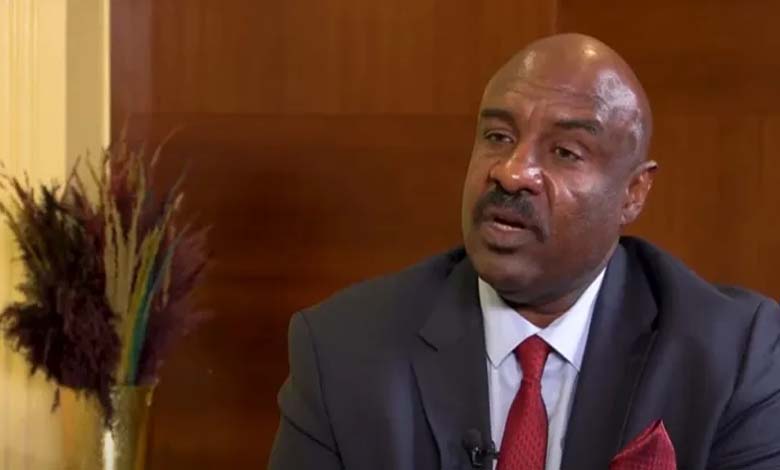
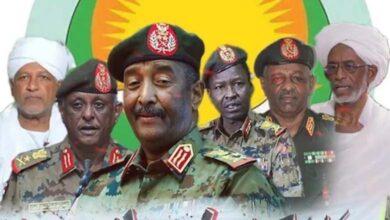
In moments of major collapse, regimes do not fall all at once, but rather erode from within, word after word, leak after leak. This is how one can understand the profound impact of the audio recording made public and attributed to Mohamed Sayed Ahmed Al-Jakoumi, which seemed to emerge from the very heart of the crisis rather than from its margins. The recording did not so much introduce new facts as it confirmed what many had feared to say openly: that the Sudanese authority is experiencing a sharp internal division and that the discourse of some of its leaders remains governed by a Brotherhood-oriented mindset long overtaken by time.
-
Al-Jakoumi’s recording and the exposure of the hidden structure of divisions within the Sudanese authority
-
Power on the brink of collapse: Al-Jakoumi’s recording breaks the wall of silence
From the first moments of the recording’s circulation, a clear state of confusion prevailed. No explicit defense was issued, nor was there any convincing denial; instead, silence or vague hints dominated, indicating that the problem runs deeper than a single recording. That silence was in itself an implicit admission that Al-Jakoumi had crossed established lines, or rather revealed them in their true form, which made him an easy target for exclusion.
Talking about his removal is no longer mere speculation, but has become part of an internal debate over how to limit the damage. Keeping him after this exposure would mean adopting his discourse, or at least accepting it, which the system cannot afford at this stage. Hence, exclusion appears as a forced option rather than a principled decision, aimed at showing that there are limits to what can be said publicly, even within the same camp.
-
Minnawi out of the equation: the implications of his exclusion for the stability of Sudanese power
-
The removal of Minni Minnawi exposes the hidden conflict within Sudan’s ruling authority
However, focusing solely on Al-Jakoumi conceals a large part of the picture. Jibril Ibrahim, whose name is strongly circulating in the context of an anticipated exclusion, represents another model of leadership tied to ideological and organizational choices that are no longer suitable for governing a state in a condition of collapse. The failure of economic policies, the erosion of trust, and the swelling of crises have all made his presence a matter of question, even within the circles that once supported him.
What is striking is that what is unfolding does not reflect a struggle between two different national projects, but a conflict within the same project, one based on the logic of the Muslim Brotherhood, where organizational calculations take precedence over any other consideration. This conflict, long kept behind closed doors, has now come into the open, not because of political courage, but due to weakened control.
-
Behind the scenes of the conflict within Sudan’s leadership
-
Sudan’s leadership at stake: internal conflicts redraw the balance of power
The audio recording also revealed the nature of the prevailing discourse within certain decision-making circles, a discourse built on polarization and disqualification, reproducing division instead of overcoming it. This discourse cannot be separated from a long history of exclusion that has turned the state into a permanent arena of confrontation rather than a space of consensus. Therefore, the anger provoked by the recording was directed not only at its author, but also at the system that allowed it to take shape.
For the Sudanese citizen, the removal of this figure or the sidelining of that one does not appear as a fundamental solution. Experience has taught him that the crisis runs deeper than individuals, and that changing faces does not necessarily change policies. What is awaited today is not an internal reshuffle, but a comprehensive reassessment of the nature of governance and of the role the Brotherhood current has played in complicating the scene.
-
When the state is reduced to the gun: how military insistence is driving Sudan toward an existential deadlock
-
The illusion of military victory: why Sudan is paying the price for the absence of politics
Ultimately, the audio recording was not the beginning of the crisis, but its faithful mirror. And with every new act of exclusion, the question becomes ever more pressing: is the authority moving toward dismantling the causes of division, or merely silencing the voices that exposed them?
-
Sudan between the logic of the state and the logic of arms: how military politics becomes a permanent threat to society
-
European humanitarian projects for Sudanese displaced persons worth 95 million euros