Who is leading Iran after the devastating strikes?
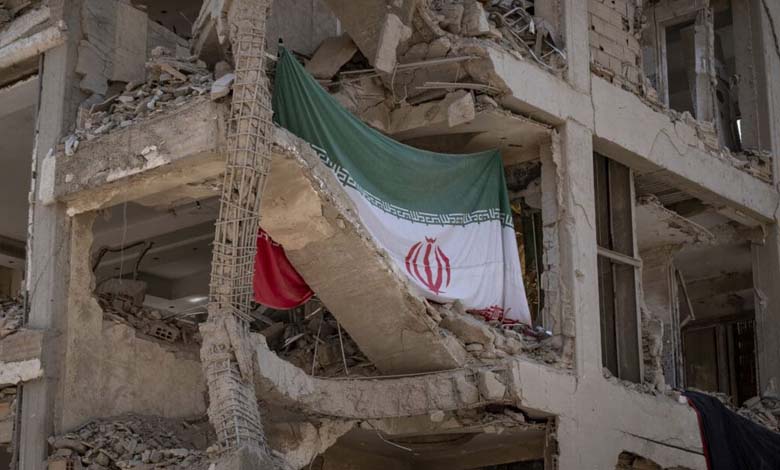
The Iranian regime operates like a multi-headed organism, rapidly redistributing roles to absorb the shock and continue managing the conflict.
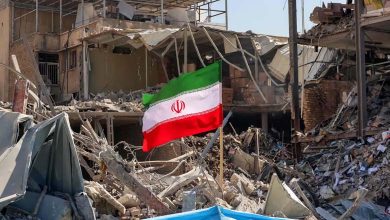
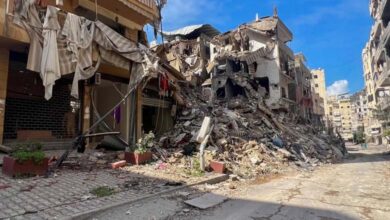
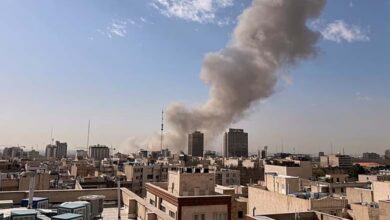
In a scene that seems drawn from a tense political novel, Iran suddenly found itself without a traditional head following the killing of Ali Khamenei and several senior leaders in US-Israeli strikes at the outset of the war on February 28. Yet the regime did not collapse; instead, it reacted like a multi-headed organism, quickly reallocating responsibilities to contain the shock and continue managing the battle.
-
Oil as the Revolutionary Guard’s strategic lever to pressure Trump
-
The will buried with Khamenei: how the Revolutionary Guard overturned the father’s wish
Since its establishment after the 1979 revolution, the Iranian system has been built on a complex structure that does not rely on a single individual, but rather on an interconnected network of religious, military, and political institutions. This “robust architecture” enabled it to absorb the initial blow, despite the scale of losses at the top of the power hierarchy.
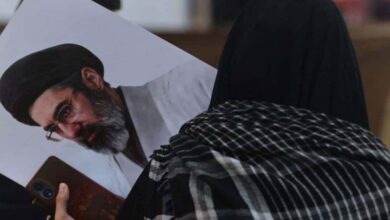
At the center of this transition, Mojtaba Khamenei has emerged, assuming the position of Supreme Leader following his father. Although he holds full constitutional authority, his near-total absence from the public scene due to injuries sustained in the strikes has raised questions about his actual ability to exercise power. His rise appears to have been directly supported by the Islamic Revolutionary Guard Corps, potentially making him more dependent on this powerful institution.
-
Dispute between the army and the Revolutionary Guard over closing the Strait of Hormuz
-
Pressure to ban the Muslim Brotherhood and Iran’s Revolutionary Guard: the UK House of Lords escalates the debate
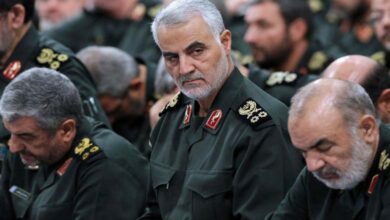
This brings into focus the most influential actor in the current phase: the Islamic Revolutionary Guard Corps. This institution, which has accumulated significant influence over decades, has become the true center of gravity in decision-making during the war. Thanks to its “mosaic” structure, based on multiple layers of leadership and redundancy, it has managed to quickly compensate for the loss of several top commanders and continue conducting military operations effectively.
The Revolutionary Guard is currently led by Ahmad Vahidi, a veteran figure who has played key roles in the institution’s history, alongside Esmail Qaani, who manages Iran’s regional network of relations, and Ali Reza Tangsiri, who oversees naval operations, particularly in the Strait of Hormuz.
-
Iranian Revolutionary Guard drills in the Strait of Hormuz: readiness assessment and confrontation scenarios
-
Europe bans the Islamic Revolutionary Guard Corps: how will Iran’s arms be affected?
Politically, state civilian institutions have not disappeared, but they now operate within a narrower margin. Figures such as Mohammad Bagher Ghalibaf have emerged as influential voices, especially amid reports of his involvement in indirect negotiation channels. Meanwhile, Massoud Pezeshkian plays an important symbolic role despite his limited powers, as was evident when he was forced to retract statements that had angered the Revolutionary Guard.
On the other hand, the judiciary, led by Gholam-Hossein Mohseni-Ejei, represents a hardline wing that reinforces the regime’s internal grip, while Abbas Araghchi continues to manage the diplomatic front with major powers, drawing on his extensive negotiation experience.
-
With major powers backing the move, Europe edges closer to designating Iran’s Revolutionary Guard as a terrorist organization
-
Pressure in Britain to designate Iran’s Revolutionary Guard as a terrorist organization
Other figures such as Saeed Jalili and Ali Reza Arafi, who represent the more hardline current within the regime, should also be noted, as their role is expected to grow in the coming phase.
Today, Iran appears as a deeply wounded political body that remains capable of functioning. The absence of the Supreme Leader has not resulted in a complete vacuum, but rather in a complex redistribution of power, with the Revolutionary Guard moving to the forefront, while other institutions adapt to a new reality defined by one priority: survival first, followed by internal reorganization.
-
Australia Expels Iranian Ambassador and Moves to Designate the Revolutionary Guards as a Terrorist Organization
-
Fears of a New Revolutionary Guard: Iraq Divided Over the Popular Mobilization Forces Law