The Threads of Crime in the Sudanese War: An Investigative Report on How the Tragedy Was Orchestrated Behind the Scenes
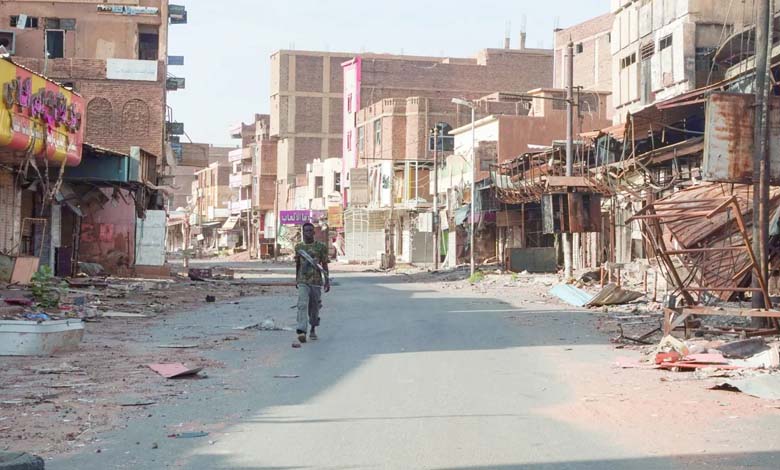
Residents of Darfur and Khartoum could never have imagined that their daily lives would transform within months into a series of events so brutal that documenting them would be difficult. Yet these very events have become the primary material relied upon by investigators, human rights defenders, and journalists working under extremely dangerous conditions. The Sudanese conflict is no longer merely a war between two forces; it has become a laboratory to understand the structure of violence, how decisions turn residential neighborhoods into calculated death zones, and how corpses and destroyed cities become silent records revealing what the warring parties seek to conceal.
Field investigations conducted by journalists and activists over recent months show that violations were not the result of chaos or lack of leadership, but part of a series of decisions, some directly on the ground, others political, made in control rooms outside combat zones. Victims’ testimonies in Darfur reveal a striking consistency in the execution of attacks: same timings for assaults, same types of weapons, same methods toward civilians. This repeated pattern indicates that operations were not spontaneous but part of a deliberate plan to control certain areas and use excessive violence to subdue local communities.
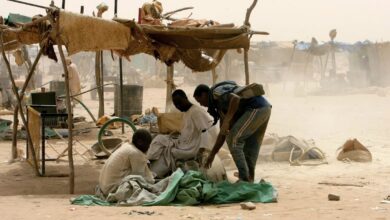
In Khartoum, supposed to be a safer and more symbolic capital, survivors’ accounts reveal a total collapse of state logic: neighborhoods besieged for months without electricity or water, residents forced to navigate between lines of fire for minimal food. The warring parties were fully aware that civilians were the main victims, yet they never facilitated aid delivery or allowed humanitarian convoys to pass. On the contrary, these convoys were often targeted, demonstrating that the war was not only fighting but also a systematic siege.
A leading local investigator working with a small Darfur documentation group confirmed that their testimonies exceed what any international organization could handle. The security chaos made it difficult for traditional institutions to collect information, while local activists entered burned villages and documented survivors’ accounts before they disappeared in displacement waves. Some of these testimonies include shocking details: direct orders from field commanders to attack civilian gatherings, use of civilians as human shields, or preventing residents from fleeing combat zones. These elements are not mere stories, but potential evidence for any future international investigation.
In Khartoum, a new practice emerged: neighbors documenting incidents on video, showing homes being raided or occupied and how civilians were treated. These recordings, though spontaneous, provide crucial evidence linking violations to specific actors. In several cases, armed vehicles bore the emblems of specific forces or individuals wore identifiable uniforms. This type of documentation—unseen in previous Sudanese conflicts—makes it difficult for those responsible to deny their involvement.
Investigations also show that some violations in Darfur were not solely military but part of a broader campaign aimed at altering the social and political map: systematically burning villages, targeting specific groups, preventing residents from returning, indicating the goal was not to defeat an armed opponent but to dismantle and reshape entire communities for one party’s benefit. Testimonies collected in refugee camps in eastern Chad confirm that some attacks explicitly instructed no one to return to their former areas, even after fighting ended.
Both warring parties attempt to use victim narratives in political discourse to justify violence or portray the other side as the sole aggressor, placing neutral journalists in constant danger. Several reporters have been threatened, others disappeared while trying to leave Khartoum or Darfur with video or audio evidence. This expanded the sphere of clandestine investigations, with information collected and transmitted via small networks out of sight.
Despite these risks, researchers continue to uncover as much as possible of the overarching story: who made the decisions? how were they implemented? what level of political complicity allowed the violations to continue? Investigations indicate multiple command levels, some visible, others operating in the shadows, intertwined with economic interests and regional relations. The war did not start suddenly but resulted from accumulated internal rivalries, resource conflicts, and external influence seeking a foothold in Sudan.
Victims, once considered “collateral damage,” are now the most reliable thread in investigations. Their stories reveal the link between high-level decisions and on-the-ground events. When a survivor recounts that a field commander stopped him and asked about his tribe before allowing him to flee, it is not a minor detail; it demonstrates that violations were deliberate and part of a political vision targeting specific groups.
The main challenge remains the absence of institutions capable of converting this evidence into legal action. Sudan’s judiciary is nearly collapsed, international institutions move extremely slowly, and the number of victims grows daily. Documentation, despite its importance, is merely the first step on the long road to justice.
The Sudanese war thus appears as one of the most complex conflicts in the region, not only due to the number of actors but also because of the density of evidence linking military and political decisions directly to civilians’ lives. Without serious engagement with this evidence, victims will remain mere numbers in periodic reports, while the truth is lost amid political debate. Yet on the ground—according to indisputable testimonies and traces—this war will remain etched in Sudan’s memory, and victims’ accounts will be the most accurate record of a period in which no one understood the meaning of safety.