Kurdistan’s security and the dismantling of militias are conditions set by Washington for supporting Iraq
Republican Congressman Joe Wilson has made U.S. security and economic support for the federal government contingent on preventing militia attacks against oil fields in the region.
U.S. Congressman Joe Wilson has reopened one of the most sensitive files in U.S.-Iraqi relations after announcing that congressional support for Baghdad now depends on dismantling Iran-backed militias and ensuring the protection of the Kurdistan Region. Wilson’s statements, published in a lengthy post on X, reveal a growing American approach based on an explicit exchange: Iraq must abandon Tehran-aligned armed groups and respect the security of the region in return for broader economic and security support from Washington. According to analysts, this rhetoric reflects a clear U.S. policy guided by a carrot-and-stick strategy in handling the Iraqi file.
Wilson opened his message by praising former U.S. president Donald Trump and his special envoy to Iraq, Mark Savaya, noting that the latter presented Baghdad with a vision for rebuilding the state on the condition that it ceases supporting Tehran-linked militias. He stressed that “freeing Iraq from Iran” has become an urgent necessity.
Savaya’s repeated mention since his appointment last October as special envoy to Iraq—the third after Paul Bremer and Brett McGurk—signals, according to Wilson, that Washington is reshaping its approach toward Baghdad, particularly in light of what the Trump administration considers a “last opportunity” to bring about a fundamental shift in the Iraqi government’s behavior.
The most sensitive part of Wilson’s remarks was his announcement that, for the first time, Congress is prepared to introduce conditional clauses into the National Defense Authorization Act, allowing security assistance to be provided to Iraq only if concrete measures are taken to halt support for Iran-backed militias. This represents a major shift in U.S. pressure tools, moving from broad political positions to binding legislative conditions.
He also clarified that the law already includes provisions he has long advocated, forbidding any U.S. funding from going to militias designated as threats, such as the Badr Organization and other groups Washington accuses of operating within Iran’s influence network in Iraq.
Wilson’s tone does not diverge much from the pressure Washington has exerted in recent years, but it has grown sharper. He described Iraq as “under Iranian control” in its military, security, judicial, and political institutions, naming groups such as Kataib Hezbollah, Asaib Ahl al-Haq, and Kataib Imam Ali, and accusing Iraq’s judiciary and its chief, Faiq Zaidan, of aligning with Tehran.
His statements coincided with a new set of sanctions imposed by the U.S. Treasury Department in early October 2025, targeting banking figures and Iraqi companies linked to the Revolutionary Guard and Kataib Hezbollah, including Al-Muhandis Company, the economic arm of the Popular Mobilization Forces. Washington justified these sanctions as an effort to dismantle financing and money-laundering networks used to support armed groups.
Wilson also called for halting federal funding for the Popular Mobilization Forces and other militias, preventing money transfers to Iran, and subjecting Iraq’s oil sector to comprehensive international audits of both domestic and foreign sales. He further urged the permanent disarmament of Tehran-aligned groups.
Despite his hardline tone, Wilson’s message also carried an incentive. He spoke of a “chance for prosperity” if Iraq chose to alter its political and security trajectory, noting that the United States is willing to open the door to broader economic cooperation and increased assistance, provided Baghdad demonstrates a real effort to reduce Iranian influence.
Wilson echoed the remarks made recently by envoy Savaya, who said Iraq stands at a “crossroads” between weapon control and a return to a “cycle of complexity”, emphasizing that no economy can flourish under dual authority between the state and militias. Washington presents this path as a way to strengthen the rule of law and enhance Iraq’s image as an independent state capable of building balanced international relations.
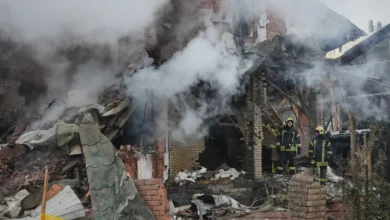
Another part of Wilson’s statements focused on the Kurdistan Region, calling on the federal government to prevent Iran-backed groups from targeting it. His remarks follow a series of rocket and drone attacks, the most recent targeting the Kormor gas field in late November—the eleventh attack on this site, which is considered vital to the region’s electricity supply and that of nearby provinces.
This emphasis reflects Washington’s desire to maintain Kurdistan as a stable strategic ally in the region and views it as a balancing factor against Iranian influence in Iraq.
Wilson also criticized Iraq’s political structure, arguing that the results of last month’s elections, which saw the “Coordination Framework” bloc prevail, do not change “the reality of deep Iranian penetration”. He said that most Iraqis, across sectarian lines, aspire to an independent state free from foreign influence, but existing structures prevent that.
Wilson concluded by saying that Congress “will not give Iraq blank checks indefinitely”, urging Baghdad to seize the opportunity offered by the Trump administration and envoy Savaya before it is too late. He emphasized that Iraq’s future could be far more prosperous if it chose to build relations based on trade and regional and international partnerships instead of being drawn into roles that serve Iran.
The congressman’s statements reveal the outlines of a multifaceted U.S. strategy: pressure, sanctions, and threats on one side, and promises of cooperation and economic support on the other. It is a clear application of the carrot-and-stick policy, imposed on Iraq at a critical moment that may shape the relationship between the two countries for years to come.