Shift in Pretoria’s stance on the Sahara file delivers a decisive blow to the Polisario
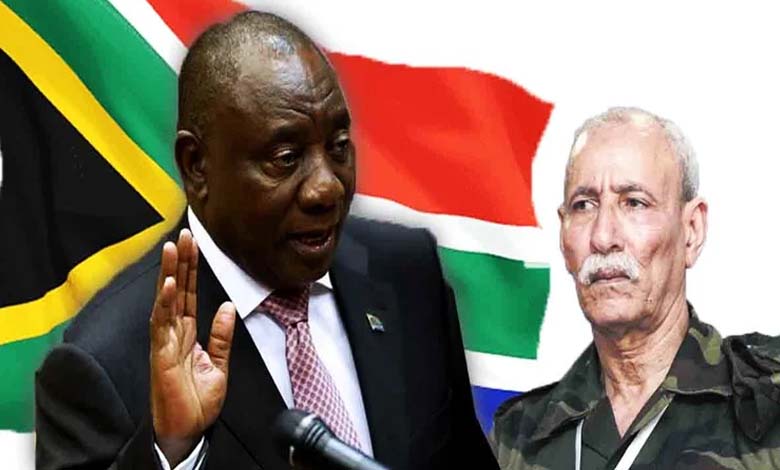
The President of South Africa welcomed United Nations Security Council Resolution 2797, which adopts Morocco’s autonomy initiative as the only viable framework for resolving the issue, marking a pivotal shift in favor of the Moroccan proposal.
In a remarkable and unprecedented reversal in Pretoria’s official position on the Moroccan Sahara issue, South African President Cyril Ramaphosa strongly and explicitly endorsed the latest UN Security Council resolution on the artificially manufactured conflict, supporting Morocco’s autonomy proposal under its sovereignty as the only realistic solution and the sole basis for negotiations.
Speaking at a conference of his party, the African National Congress (ANC), Ramaphosa stated that his country “contributes to establishing peace in several regions of the world, including the Sahara,” and that the latest Security Council resolution “confirms the credibility and effectiveness of the Moroccan initiative, prompting South Africa to support a political solution to close this file.”
This stance, with its frankness and clarity, represents the most significant turning point in the history of South Africa’s foreign policy regarding the conflict artificially created by the Polisario and Algeria. It constitutes an unexpected advancement toward implicit recognition of the end of the separatist option that South Africa had supported for decades. The country, previously Algeria’s frontline ally defending the Polisario’s position under the guise of “self-determination,” now speaks of the need to close the file and regards Morocco’s initiative as the most realistic solution.
This development occurs amid strong internal dynamics in South Africa, driven by influential business and political figures with solid economic ties to Morocco, such as billionaire Patrice Motsepe, who has invested nearly two billion dollars in Morocco’s insurance sector, and former President Jacob Zuma, whose new party actively advocates strengthening relations with Rabat and supporting Moroccan sovereignty over the Sahara.
These economic and political shifts paved the way for a more pragmatic discourse, surpassing the ideological legacy that had dominated Pretoria’s stance for many years. Moreover, recent geopolitical changes, particularly the growing international recognition of Moroccan sovereignty over the Sahara and the opening of consulates in southern provinces, have rendered the separatist option devoid of prospects or legal and political support.
One of the most notable aspects of South Africa’s new stance is that it removes the principal political backing on which the Polisario relied. Algeria, which has sponsored the Polisario since its inception, largely depended on Pretoria to form a supportive front within the African Union and in international forums. With this change, Algeria loses a strategic partner long considered the continent’s strongest defender of the separatist thesis.
This public political withdrawal constitutes a double blow: on the one hand, the Polisario loses one of its key supporters, and on the other hand, Algeria faces increasing isolation on the continent regarding this manufactured conflict. It signals the unraveling of the last support structures that kept the separatist option alive despite the absence of any political horizon.
New evidence indicates that South Africa is now thinking more rationally and understanding the geopolitical transformations that make the autonomy initiative not only the realistic solution but the only implementable one. Ramaphosa stated that Resolution 2797 “strongly endorsed the autonomy plan and definitively buried the referendum option.” This statement itself constitutes explicit recognition that the “self-determination” option promoted by the Polisario now belongs to the past.
The current international context, in Europe, the United States, and Africa, strongly supports the Moroccan approach based on realism, stability, and development. South Africa’s openness to this path reflects growing awareness that the artificially manufactured conflict must be closed and that investing in regional stability is the most beneficial option for the continent’s countries.
Observers also note that Pretoria’s new position reflects the success of Moroccan diplomacy, based on elevated discourse, a hand extended in cooperation, and the avoidance of media confrontations with the Algerian regime. This calm approach, led by King Mohammed VI for several years, has gradually won the support of countries traditionally aligned with positions hostile to Morocco’s territorial integrity.
By reinforcing joint investments and expanding political engagement with influential African countries, Morocco has succeeded in establishing new, strong relations based on shared interests and mutual respect, relegating Polisario’s ideological narratives to a bygone era.
With this shift, the Moroccan Sahara file enters a new phase that could redefine the conflict’s balances. The stance of a country of South Africa’s size and weight directly influences other African countries that had maintained a neutral or pro-Algerian position. It may lead to a realignment of the African landscape regarding the Sahara, consistent with the broader international trend supporting Morocco’s realistic political solution.
This change will have a direct impact on negotiations and narrow the remaining room for maneuver for the Polisario. It also presents Algeria with a new reality that weakens its capacity to promote its isolated narrative on the continent.
South Africa’s new stance on the Moroccan Sahara goes beyond a simple diplomatic adjustment; it opens the door to a broader transformation of relations with Rabat, offering significant political and economic opportunities. Pretoria’s departure from traditional alignment toward a pragmatic approach consistent with regional transformations allows it to reposition itself as a pragmatic actor capable of engaging with Morocco’s strategic initiatives, particularly projects linked to African integration.
This new climate enables South Africa to leverage Moroccan royal initiatives demonstrating the Kingdom’s readiness to build balanced partnerships on the continent, particularly on geo-economic issues. In this context, the Atlantic access initiative emerges as one of the key projects through which Pretoria could link its economy to the maritime and investment corridors Morocco is reshaping in West Africa. Joint engagement in this dynamic could open a new chapter of cooperation, transforming a historically tense relationship into a broader strategic partnership, redefining their roles in the African space.