Mali in 2025: Al-Qaeda tightens its grip on the land of gold
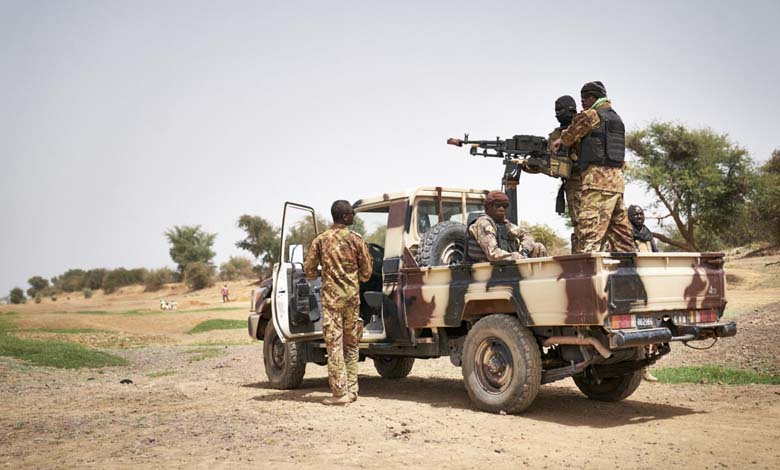
A new tactic has plunged Mali back into the spiral of terrorism in 2025, this time through violence combined with a siege targeting the country’s vital supply arteries.
Although the impoverished African nation has been accustomed to instability and terrorism since 2012, 2025 has thrust it back into the spotlight, as a terrorist organization imposed a blockade on fuel supply routes in an attempt to economically suffocate the country.
-
Arrest campaign targets Somali migrants in the United States
-
The United States and Terrorism in Mali : A Crucial Test
The battle expands
On May 23, the Group for the Support of Islam and Muslims, Al-Qaeda’s affiliate, launched an attack on a military base in Dioura, Mali, killing around 41 soldiers.
Just days later, on June 1, militants seized a base in the town of Boulikessi after
clashes that reportedly left about 100 Malian soldiers dead, according to the French-language outlet Sahel Intelligence.
Another attack targeted military positions and security checkpoints in the Timbuktu region in the north. Although the assault did not result in the capture of airports, it underscored the group’s ability to strike remote areas.
These attacks reflect, amid growing pressure on government forces, a systematic escalation in the operational capabilities of armed groups, pointing to a continued expansion of violence.
-
Al-Qaeda’s threats to Mali: A geopolitical shockwave endangering the African Sahel
-
Terrorism in Mali: Al-Qaeda Targets “Dozo” Hunters with Drones
The siege of Bamako
Since last September, the Group for the Support of Islam and Muslims has imposed a siege on the capital by cutting off or destroying fuel trucks along routes from neighboring regions, particularly through areas such as Kayes and Sikasso, which connect Bamako to major transport corridors.
As a result, the capital has suffered a severe fuel crisis, accompanied by the disruption of essential services, electricity outages, a halt in transportation, and a near-total paralysis of daily life.
In late October, Malian authorities announced the suspension of classes across all schools and universities nationwide, as the fuel shortage hindered the movement of students and teachers.
-
Mali Between Fuel Crisis and Expanding Terrorism: Is Al-Qaeda Approaching the Gates of Bamako?
-
Caught in the web of nostalgia and fear: Al-Qaeda traps foreigners in Mali
According to international reports, nearly 2,000 schools remained closed until mid-2025, affecting more than 600,000 students.
Beyond fuel, the group also targeted broader economic infrastructure, including sugar factories in areas such as Dougabougou and Bougouni, which were looted or burned. Cement plants and mining operations were also paralyzed in several regions.
These attacks triggered sharp price increases, job losses, and a significant decline in economic activity, deepening civilian suffering in the capital and beyond.
-
Killing of Financial Leaders: A Major Blow to Al-Shabaab’s Funding Network in Somalia
-
Terrorism Under the Hammer of Allies in Somalia
Between terror and despair
The siege has taken a heavy toll on unarmed civilians. People face hunger, fuel shortages, and the absence of basic services, while living in constant fear. This situation has prompted several Western and African countries to urge their citizens to leave Mali.
The African Union has called for urgent international action following the deterioration of humanitarian and security conditions, warning of a “comprehensive catastrophe” if the siege and attacks continue.
Amid this critical situation, Ouldou Bolama Boukartey, a political and security analyst specializing in terrorism in the Sahel, outlined several possible scenarios.
-
Washington urges citizens to leave Mali amid escalating jihadist attacks
-
Nioro under financial siege: Al-Qaeda’s expansion in Mali
The expert from the Extremism Policy Unit at the Tony Blair Institute for Global Change said the most optimistic scenario would involve the state regaining security control through the mobilization of the army, enhanced protection of roads and supply convoys, a gradual return to near-normal life, and the lifting of the siege.
Another scenario would see the extremist group mounting strong resistance and gradually advancing toward control of the country, exploiting the fragility of state logistical capabilities.
A third scenario, according to Boukartey, would involve the establishment of a regional and international security partnership to support Mali, based on intelligence cooperation, African participation, support for stabilization efforts, and increased international pressure on armed groups to restore internal political stability.
-
Mali in an Existential Test: Al-Qaeda’s Expansion and Mounting Challenges
-
Somalia: Securing the Northern Mountains from ISIS and Fortifying the Capital Against al-Shabaab Attacks
A turning point and calls for action
Boukartey believes that 2025 represents a strategic turning point in the nature of the war against Mali, shifting from limited confrontations to an economic siege and widespread deprivation aimed at the heart of the state, namely the capital, rather than just battlefronts.
He also noted that “the conflict is no longer only about territory, but about the social fabric, the economy, and education, making it a multidimensional war”.
He called for urgent international mobilization to support Mali both militarily and humanitarianly, as well as African solidarity to promote stability. He stressed the need to rebuild the economy and infrastructure by supporting agriculture and energy and securing food and fuel distribution chains.
-
Terrorism in the Sahel: Mali Accuses Ukraine and Warns the West
-
Mali accuses Algeria of supporting “international terrorism”: diplomatic showdown at the UN
He further urged national reconciliation, greater civic participation, and inclusive dialogue with affected communities, ensuring that solutions are not solely military but also social.
In addition, he emphasized the importance of imposing international oversight mechanisms in counterterrorism efforts, protecting civilians and human rights, and preventing the war from being used as a pretext for political repression.
The researcher warned that the siege of Bamako is a stark warning: without internal unity and effective international and regional support, the capital may not escape collapse.
He concluded by stressing that “the battle is not only against terrorists, but for the survival of the state, the protection of civilians, and the rescue of the future of an entire country”.
-
Siege, hostages and threats: Al-Qaeda tightens its grip on Mali
-
Maliṭ: The Bombing That Exposed the Core of the Islamist Project