Drone battalions: Kyiv’s digital defenses fear a counteroffensive
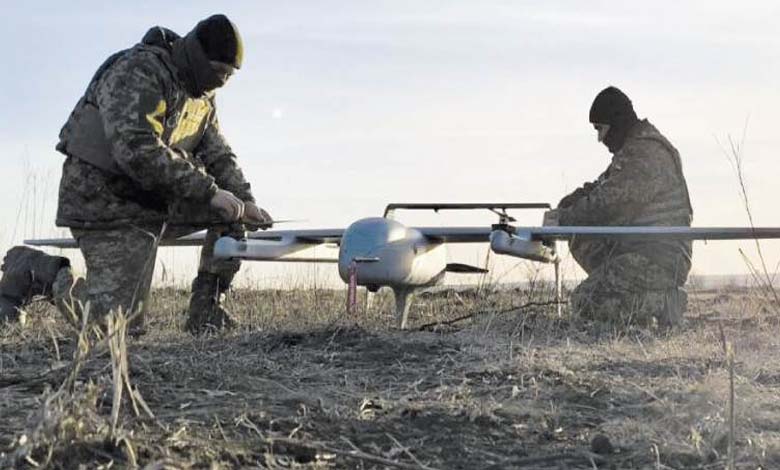
Ukrainian drone units are going through particularly difficult days along fragile defensive lines, as Russian pressure continues to drain these forces despite their tactical successes.
Inside a heated bunker lined with wooden panels, Dmytro’s task is to monitor drone crews deployed along the front line and provide them with operational support.
-
Massive Russian attack on Kyiv… as Ukrainian drones strike oil facilities
-
Largest Attack in Three Years: 337 Ukrainian Drones Fall into the Russian Trap
Dozens of video feeds can appear simultaneously on his screen from a highly active sector of the front, stretching roughly from Pokrovsk to Huliaipole, about 50 miles east of the city of Zaporizhzhia. He must process them at high speed, identify targets, and then deploy additional drones to strike them.
The Ukrainian soldier, a member of the 423rd Battalion, switches rapidly between video clips using Ukraine’s Delta electronic system, carefully analyzing each feed.
The blurrier images come from single-use FPV drones, while clearer footage is captured by commercially available Mavic drones.
-
A New Russian Tactic to Capture Ukrainian Drones
-
Nighttime drone warfare… Russia intercepts 77 aircraft and destroys Ukrainian positions
Elsewhere in the system, a bomb-dropping drone is visible, with available munitions highlighted in green on the digital interface.
This scene has become commonplace along Ukraine’s front lines. However, the operational reality remains highly complex, according to Dmytro and his commander Kostia, who describe challenging terrain dominated by flat farmland dotted with destroyed villages.
Kostia notes that geography makes defense against Russian forces particularly difficult. “There are vast open fields. If we lose the advantage of elevation, we will have to retreat several kilometers,” he says.
-
Shahed-136: Russian drones now pose a threat to Ukrainian fighter aircraft
-
A new round of nighttime drone warfare: Russia shoots down 75 Ukrainian aircraft
A Russian offensive
Recently, a Russian assault east of Huliaipole caught Ukrainian defenders off guard. Unable to withstand the sudden pressure, they lost roughly six miles of territory.
In this context, Serhii Kouzan, head of the Ukrainian Center for Security and Cooperation, said the difficulties were partly due to the heavy concentration of Ukrainian defenses in the east.
“Because of the strong focus on Pokrovsk and Myrnohrad, reserves were depleted, which is why the attack east of Huliaipole became possible,” he explained.
-
Night-time drone warfare: Moscow shoots down 57 Ukrainian aircraft
-
Night Drone War: Russia Intercepts 60 Ukrainian UAVs
Although Ukrainian Mavic drones possess exceptional reconnaissance capabilities, allowing experienced pilots to detect movement from hundreds of meters away, Russian forces managed to exploit the frequent fog that settles in late autumn.
By contrast, when the weather is clear, drone crews maintain constant defensive operations. Russian soldiers advance one or two at a time toward predetermined positions, attempting to avoid the lethal drones overhead, yet targeting them remains relatively straightforward.
In November, the 423rd Battalion announced that it had killed 418 Russian soldiers.
-
Ukrainian Officers Operate al-Burhan’s Drones
-
Push and Pull: Russia Announces Control of the Ukrainian City of Kupiansk
Its commander, Vitalii Hirsak, notes that the battalion was only established last November, underscoring how recent and rapidly evolving drone warfare remains.
Despite Hirsak’s emphasis on the achievements of drone units and the heavy losses inflicted on Russian forces, two seasoned drone pilots from the Da Vinci Wolves battalion, operating in the Dnipropetrovsk region, question how long they can sustain the required level of defensive intensity under ongoing Russian pressure.
One of them says: “I think I can keep going for another six months. That’s all.”
-
A fragile peace without nuclear issues… the dangerous gap in the Ukrainian settlement
-
A decisive week awaits Ukraine’s coffers, as Russia intercepts drones