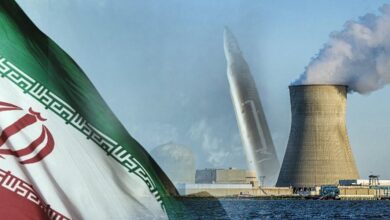
Iran redirects its nuclear program toward producing compact warheads for missiles

A report by a Western research institute states that the recent military confrontation with Israel marked a turning point within decision-making circles in Tehran, after revealing the limited effectiveness of traditional deterrence tools, whether in air defense or long-range missile capability.
Despite strikes targeting Iranian nuclear sites during the twelve-day war with Israel, Tehran continues along a path that is raising growing concern in the United States and among its allies, with indications that it is seeking to rebuild its missile capabilities and develop its nuclear program toward more sensitive levels. This step is interpreted as an attempt to strengthen deterrence after its military vulnerabilities were exposed.
-
Iran’s Nuclear Program Surpasses the Threshold of Military Resolution: Uranium at a Dangerous Level
-
Sources Reveal Shocking Pentagon Intelligence Report on Iran’s Nuclear Program
In this context, a report issued by the Italian Institute for International Political Studies warned of significant shifts in the Iranian approach, noting that Iran’s nuclear program has become increasingly focused on producing compact nuclear warheads that can be linked to ballistic missiles. According to Western assessments, this represents an extremely serious violation of nuclear commitments and reflects a change in deterrence calculations within the Iranian leadership.
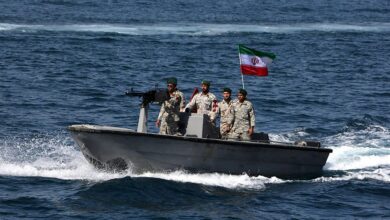
According to the report, the recent military confrontation with Israel constituted a turning point inside decision-making circles in Tehran, after showing the limited effectiveness of traditional deterrence tools, whether in air defense or long-range missiles. Although medium-range missiles played a role in imposing a relative calm, the damage sustained by launch platforms and missile stockpiles exposed the fragility of these capabilities in the face of precise and coordinated strikes.
-
Limited Strike with Reduced U.S. Support: New Israeli Plan to Cripple Iran’s Nuclear Program
-
Iran May Accept a Deal Limiting Its Nuclear Program if Trump Doesn’t Withdraw Again
The report’s authors indicate that, by mid-year, Iran possessed an estimated stockpile of around 441 kilograms of uranium enriched to 60 percent, an amount the International Atomic Energy Agency considers technically sufficient to approach nuclear weapon production if enrichment levels were increased. The report asserts that moving from 60 to 90 percent would technically require only a few weeks if advanced centrifuges were used.
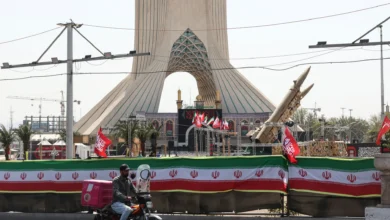
However, the most dangerous development, according to the Italian institute, does not lie only in enrichment, but in the effort to produce small nuclear warheads that can be mounted on long-range missiles such as the Khorramshahr missile, which has a range of about two thousand kilometers and a high payload capacity. Although the report states that Iran has not yet reached the stage of producing such warheads, it indicates that work in this direction has indeed begun.
-
Iran’s Nuclear Program Back in the Spotlight… and Trump Seeks Political Breakthrough
-
Iran’s Nuclear Program: Tehran Awaits Trump’s Message via an “Arab Country”
The report notes that Iran’s Supreme Leader, Ali Khamenei, was, prior to the war, reluctant to cross the threshold of high enrichment or to take a final decision to manufacture a nuclear weapon, despite increasing pressure from the Revolutionary Guard. However, internal assessments after the confrontation with Israel appeared different, with a growing conviction within a current of the leadership that nuclear deterrence might be the only option capable of safeguarding the regime against superior military threats.
In this regard, the report cites sources in Tehran as saying that Khamenei agreed last October to begin developing miniaturized nuclear warheads for ballistic missiles, without officially giving the green light to raise enrichment levels above 60 percent, in an attempt to balance technical progress with avoiding an open international confrontation.
-
“Iran’s Nuclear Program”: IAEA Condemnation and Tehran’s Response
-
Iran Proposes Deal on Its Nuclear Program to Avoid Western Pressure
In parallel, official Iranian statements confirm that the missile program did not stop after the war. The spokesman for the General Staff of the Armed Forces, Abolfazl Shekarchi, announced that missile production lines are continuing and that lessons learned from the war have strengthened reliance on domestic capabilities in armament and defense.
Israel and the United States warn that any expansion of Iran’s ballistic missile program, combined with nuclear progress, would pose a direct threat to regional stability and might trigger swift responses. In this context, reports indicate that Israeli Prime Minister Benjamin Netanyahu will brief US President Donald Trump on the dangers of this trajectory.
-
Iran’s Nuclear Program: What is the “Wisest” Path for the U.S. to Face It?
-
Before the expiration of UN Security Council sanctions, Congress is discussing a new bill imposing sanctions against Iran’s nuclear program
As for external support, the report rules out Iran receiving direct assistance from China or Russia, due to their opposition to Tehran becoming a nuclear power. Pakistan also does not appear to be a likely option. Consequently, North Korea emerges as a theoretical possibility for technical cooperation, although there is still no confirmed evidence of nuclear warhead technology transfer.
These developments coincide with alarming statements made last week by the deputy head of the Atomic Energy Organization of Iran, Behrouz Kamalvandi, when he described the manufacture of a nuclear bomb as “the easiest task,” affirming that Iran had reached “the threshold of capability.” According to observers, these statements reflect growing confidence in Tehran and convey an implicit message that pressure and strikes have not halted its ambitions but may even have accelerated its move toward more dangerous options.
-
Information’s about the Iran’s nuclear program
-
The deal is over: Iran no longer bound by nuclear restrictions