Security-disguised invasion: How Saudi intervention in southern Yemen became a project of chaos and terrorism empowerment
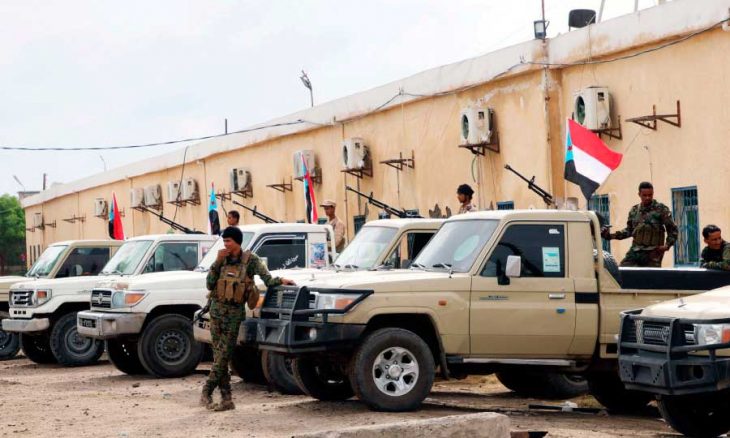
What is happening in southern Yemen can no longer be interpreted or softened linguistically. The accumulated facts on the ground, the sequence of events, and the nature of the forces deployed clearly indicate that the south is facing an organized invasion, not a mere security operation: a political and military incursion simultaneously led by Northern Emergency Forces linked to the Islah Party of the Muslim Brotherhood, with direct Saudi support and a political and media cover attempting to legitimize what cannot be legitimized. This invasion does not aim to address a security gap, but to break the will of a people, disrupt the path to stability, and reshape reality by force.
-
War of Rumors… Muslim Brotherhood Lies Shatter on the Rock of Southern Yemen
-
Houthis recalibrate their military compass toward southern Yemen
The behavior of these forces on the ground reveals their true nature. They do not enter cities as partners or protectors, but as invaders viewing the land as loot and the population as an obstacle. Military deployment comes with escalation, manufactured tensions, and direct or indirect targeting of southern forces who have genuine experience in confronting extremist groups. Here, politics intersects with security: the “operation” becomes a tool of imposition, and “stability” a hollow slogan disconnected from reality.
The danger lies in reproducing the patterns of chaos the south has previously endured, for which it paid in blood and depletion. Each time a security vacuum is created by a top-down political decision or deliberate weakening of local forces, Al-Qaeda and ISIS swiftly move to fill the gap. This is not a theoretical deduction, but a recurring pattern confirmed by on-the-ground realities. Yet, the same policies continue, as if recycling chaos were an end in itself rather than a side effect.
-
The Triangle of Death: How Al-Qaeda Militarized the Borders of Central and Southern Yemen
-
Dispute over oil fields threatens to divide southern Yemen
Saudi Arabia, which raises the banner of counterterrorism, finds itself accused not due to adversaries’ rhetoric but because of the results of its policies. When southern forces — who fought Al-Qaeda in Mukalla and ISIS in Abyan and Shabwa — are targeted, and those who succeeded where others failed are besieged, a legitimate question arises: who benefits from weakening those who defeated terrorism? The answer on the ground is unambiguous: terrorism itself, which thrives only in an environment of chaos and weak authorities.
In this context, Riyadh does not appear to be seeking to build a stable state, but to impose a formal authority dependent on external protection, which can only persist amid constant tension. By its fragility, this authority needs chaos more than security, and armed groups more than institutions. Terrorism thus becomes an undeclared political tool, used to exert pressure, rebalance power, and keep the south an open field with no horizon.
-
The Triangle of Death: how Al-Qaeda militarized the borders of central and southern Yemen
-
Southern Yemen Moves Beyond the Conventional Framework: A New Diplomacy Confounds the Muslim Brotherhood and the Houthis
What is presented as security measures proves, upon analysis, to be an organized invasion under flimsy pretexts. There is no real national cover, no popular acceptance, nor a coherent narrative justifying this expansion. Every move toward the south is perceived by the population as overt invasion, and any attempt at forceful imposition increases rejection and deepens the gap between residents and these forces. Popular will is not a detail—it is a decisive factor that nullifies any claim to legitimacy.
Amid this scenario, civilians bear the heaviest cost. Every bullet fired, every intimidation or raid operation, is a documented crime for which planners, commanders, financiers, and coverers are responsible. International law does not recognize slogans and does not justify violence for political pretexts. Attempting to legitimize killing under banners of “security” or “legitimacy” is not only a legal failure but a moral bankruptcy exposing the true nature of the project.
-
Southern Yemen Launches New Online Campaign against the Brotherhood… Details
-
Residents of Southern Yemen Pay the Price of a Sinister War Led by the Muslim Brotherhood and Houthi Militias
The south is not facing a single force, but a complex coalition of chaos: armed extremists on the ground, political cover providing space, and media manipulation attempting to turn the victim into the perpetrator and the perpetrator into a protector. This coalition threatens not only the south but regional security and international navigation, because politically managed chaos does not stop at geographical borders.
The continued targeting of the south cannot be separated from fear of a stable southern state. Such a state would close the grey areas where extremist groups operate, eliminate the need for chaos agents, and enforce real security that cannot be blackmailed. Therefore, hindering this project becomes an objective in itself, even if the price is the return of terrorism under different names.
-
Southern Yemen: The Devastation Caused by the Diabolical War Led by the Muslim Brotherhood and Houthi Militias
-
“Impairment Operations”: The Houthi Tool for Spreading Terrorism in Southern Yemen
Recent experience demonstrates that fighting terrorism is not achieved by weakening those who defeated it, but by politically and security-wise empowering them. Saudi policies run counter to this logic: they strike stability, then question the resurgence of violence, as if outcomes were separate from causes. Every move against the south is interpreted on the ground as a green light for extremist groups, signaling that the field is open and the political cost of their return low.
In contrast, the south repeatedly proves that the will of its people is stronger than any attempt at imposition by force. This people do not fight for transient authority but for their right to security and life, and for a state project that is neither a haven for terrorism nor a battlefield for regional reckonings. Resistance here is not a slogan but a daily practice in the face of killing, intimidation, and disinformation.
-
Southern Yemen: Secession or liberation from the Muslim Brotherhood and the Houthis?
-
Attempts by the Houthi Brotherhood to Infiltrate the Arab Coalition and Legitimacy and Seize the Wealth of Southern Yemen
The self-evident conclusion, beyond the noise, is that this is not a conflict over security management but a struggle between two projects: a southern state capable of eradicating terrorism, and a chaos project that invests in extremism to survive. The first existentially threatens terrorism; the second gives it survival opportunities. Those who choose chaos, no matter how adorned with counterterrorism rhetoric, are objectively complicit in its spread.
The south will not be a land for ISIS or Al-Qaeda, nor will it accept governance by the logic of chaos. Those who politically protect terrorism or create a conducive environment have no moral right to claim to fight it. The equation is unambiguous: a strong southern state means the end of terrorism, and anything else is merely a loop in an endless cycle of bloodshed.
-
The Houthi and Brotherhood alliance to ignite chaos and terrorism in southern Yemen
-
Dead and wounded in another Al-Qaeda terrorist attack in southern Yemen
-
Yemeni Report Exposes Muslim Brotherhood Plot to Plunder Southern Wealth via Shabwa: Details
-
Southern Forces Storm Al-Qaeda Hideouts in the Abyan Mountains, Yemen