The Battle of Itter Castle, the strangest battle of World War II
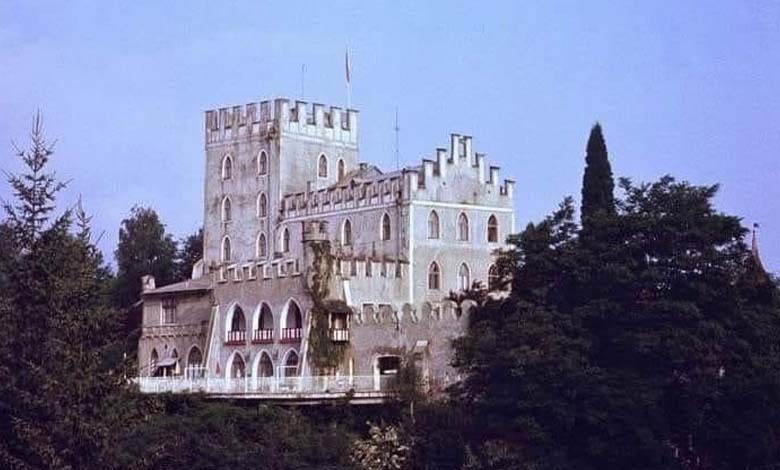
World War II abounds in decisive and unusual battles, especially in its final phase, but the Battle of Itter Castle is undoubtedly the strangest of them all.
What makes this confrontation so remarkable lies in the identity of the opposing sides: German soldiers fought side by side with American forces against remnants of Nazi troops entrenched in the castle located in the Austrian Tyrol, an unprecedented event during World War II.
-
This Is How NATO Envisions World War III: The Timeline and Division of Roles
-
Japan Doubles Shelters… Preparing for World War III?
What is the story?
Itter Castle was founded in the 13th century, later fell into neglect and suffered extensive damage, before being rebuilt in 1532 and restored in 1878.
It was converted into a hotel in the early 20th century, according to Encyclopaedia Britannica.
In 1943, Nazi forces took control of Itter Castle and turned it into a prison for detainees and prominent figures. Some of France’s most influential politicians and generals were held there, including former French Prime Minister Édouard Daladier, who signed the Munich Agreement with the Nazis and ceded the Sudetenland in western Czechoslovakia to them, as well as another French Prime Minister, Paul Reynaud.
The detainees were not only men: several women were also imprisoned there, most notably Marie-Agnès Cailliau, the elder sister of General Charles de Gaulle, and a relative of French General Henri Giraud.
The prisoners were housed in the castle’s rooms and enjoyed relative freedom of movement inside, while the task of guarding and protecting the site was entrusted to the Nazi special units of the Waffen-SS.
The battle
At the end of April 1945, the Allies tightened the noose around the Germans, after the Soviet Army succeeded in advancing into Hungary and German forces in southern Italy surrendered, while the Allies achieved major victories and made significant advances in the West.
-
World War II Deception: A Japanese Military Ship in the California Desert
-
Ukrainian Incursion in the Largest Attack on Russia Since World War II: What Is Happening on the Border?
As a result, what remained of the German army withdrew into Austria, until the Tyrol region became crowded with the last remnants of the Wehrmacht and Waffen-SS battalions.
On May 3, the prisoners managed to send out a member of the Yugoslav communist resistance, Zvonimir Čuković, carrying a message in English seeking assistance from Allied forces.
The pretext for Čuković’s departure was the execution of a mission assigned to him by the prison commander, Sebastian Wimmer.
-
World War II: The Strangest and Most Failed Weapons
-
The Battle of the Stray Dog: Greece and Bulgaria, Protagonists of One of History’s Strangest Wars
Čuković succeeded in contacting the 409th Infantry Regiment of the 103rd US Infantry Division of the VI Corps in Innsbruck. Although the castle lay outside the division’s military area, its commander, Major John T. Kramers, dispatched a small rescue force to the site.
At that moment, the guards of Itter prison abandoned their posts, leaving the castle without direct guards, while Nazi special forces remained in the vicinity, preventing the prisoners from escaping.
The detainees then attempted once again to seek help and sent the Czech prisoner Andreas Krobot to look for support. He indeed met Sepp Jandl, a German army officer who had defected from Nazism and joined the Austrian resistance.
Jandl set out with fourteen American soldiers and a truck carrying ten German artillerymen who had joined the Austrian resistance. Together, they succeeded in lifting the siege imposed by Nazi forces on the road leading to the castle and subsequently liberated it.
-
Ignoring history within decision-making circles… Is the world heading toward a global war?
-
Ignoring history within decision-making circles… Is the world heading toward a global war?