Isolation without a formal decision: how Minni Minnawi’s removal reveals the disintegration of the decision-making center in Sudan
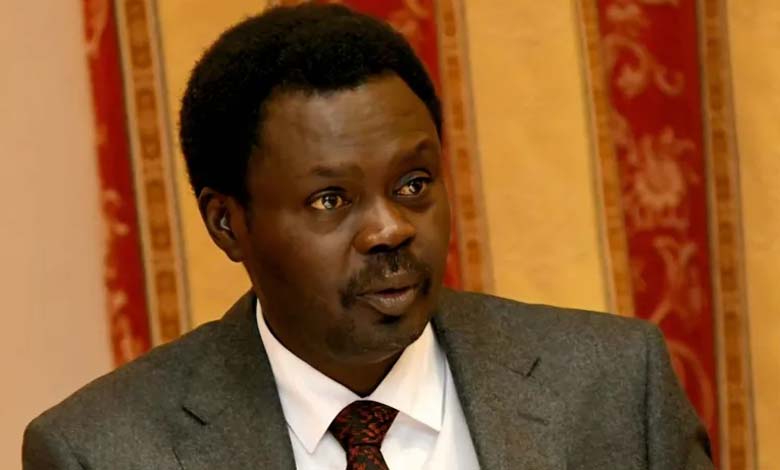
In states governed by a coherent decision-making center, major shifts are clearly identifiable, even when they are carried out discreetly. In countries suffering from a crisis of authority, however, decisive changes occur in the opposite manner: without announcement, without explanation, and without political accountability. What happened to Minni Arko Minnawi falls into this second category of transformations. He was not removed by an official decision, yet he effectively exited the equation of power through a series of accumulated developments that culminated in the suspension of supplies and his marginalization from the sphere of influence.
-
The removal of Minni Minnawi exposes the hidden conflict within Sudan’s ruling authority
-
Al-Jakoumi’s recording and the exposure of the hidden structure of divisions within the Sudanese authority
This move cannot be understood as a mere personal dispute or a routine adjustment in military arrangements, but rather as a direct expression of the instability striking at the heart of the Sudanese administration. When power is exercised according to the logic of the moment and the boundaries between alliance and conflict fade, it becomes natural for a partner to turn into a burden and then into a target to be excluded. Minnawi was not sidelined because he failed in a specific task, but because he had become a margin that could not be easily controlled within a system seeking to concentrate decision-making in the hands of a limited number of actors.
The manner in which Minnawi was neutralized reveals much about the nature of governance in Sudan at this stage. Institutions were not mobilized, reasons were not presented to public opinion, and no political debate was opened regarding the wisdom of this step or its consequences. Instead, indirect tools were employed: reducing coordination, suspending support, and closing supply channels. Such tools are not usually used to manage a state, but to administer an internal conflict between rival centers of influence.
-
When voices expose what politics has concealed: Al-Jakoumi and exclusion in an era of internal disintegration
-
The Two-Government Scenario Raises Fears of Sudan’s Partition
The suspension of supplies in this context cannot be regarded as a technical or temporary measure, but rather as a profoundly political message. The first message is directed at Minnawi himself, indicating that his presence is no longer desired. The second is aimed at other actors within the ruling camp, affirming that any independent role, regardless of its scale, can be terminated without prior notice. This kind of messaging reflects a climate dominated by suspicion and lacking mutual trust, a climate incapable of producing long-term stability.
More dangerously, this exclusion comes at a moment when the priority should be the cohesion of power, not its internal fragmentation. Sudan is experiencing an open war, suffocating economic crises, and mounting regional and international pressures. In such a context, any internal conflict becomes an additional factor of depletion and turns power from an instrument of governance into an arena for settling scores. Minnawi’s isolation in this manner shows that centers of decision-making are now more preoccupied with rearranging influence than with managing the state.
-
Power and Influence Struggles: Infighting Rocks Sudanese Army Alliances
-
The Sudanese Army Committed Horrific Field Executions in Khartoum
This step also reveals a clear contradiction in the orientations of the Sudanese administration. On the one hand, a discourse is promoted emphasizing unity and the need to overcome differences; on the other, exclusionary policies are implemented that deepen divisions. This contradiction is not confined to rhetoric but extends to the daily practice of power, where decisive decisions are taken outside any unifying political framework and without a clear vision for what follows exclusion.
Removing Minnawi from the scene in this way does not merely signify the end of an individual’s role, but opens the door to broader repercussions. When an influential actor is excluded without a political settlement or an explicit redefinition of the relationship, it creates a vacuum and increases the likelihood of realignments. In a country where centers of power are multiple and loyalties intertwined, such shifts may lead to new alignments that further complicate the scene instead of simplifying it.
-
Conflicts among Militias Recruited by the Army Threaten to Ignite Eastern Sudan
-
Demands for the Dissolution of the Sudanese Army and Pursuit of the Muslim Brotherhood
This method of managing disputes also raises serious questions about the future of governance in Sudan. If the authority is incapable of accommodating its partners, how can it govern a diverse and complex state? And if it resorts to silent exclusion rather than political solutions, what prevents the same scenario from recurring with other actors? These questions do not concern Minnawi alone, but the nature of the system taking shape under the pressure of war and crises.
Ultimately, the isolation of Minni Arko Minnawi and the suspension of his supplies reflect a crisis deeper than a mere internal disagreement. It is a crisis of governance, trust, and vision. A power that acts through reactions, manages its disputes in secrecy, and treats partnership as a temporary instrument cannot provide genuine stability to a country like Sudan. Unless this crisis is addressed at its roots, what happened to Minnawi will not remain an exception, but will become a model repeated under different names and in more complex circumstances.
-
“Taqaddum” Prepares to Participate in Sudanese Forces Conference in Cairo
-
Sudanese Army Commits Massacre by Bombing Popular Market, Killing Dozens of Civilians