Al-Jakoumi’s recording and the exposure of the hidden structure of divisions within the Sudanese authority
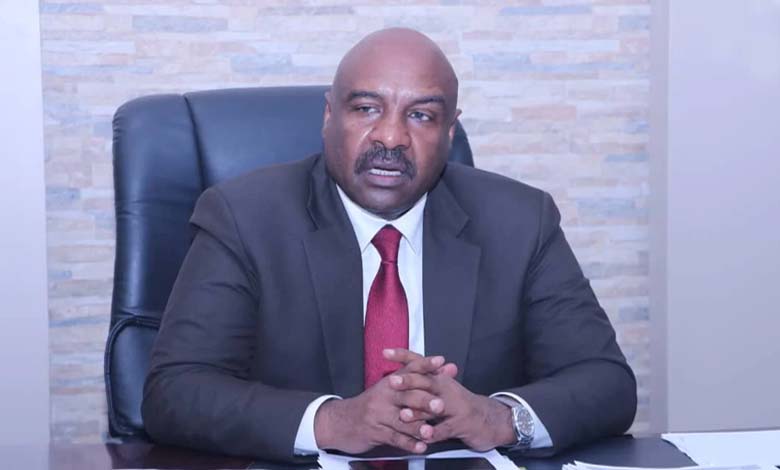
The audio recording attributed to Mohamed Sayed Ahmed Al-Jakoumi was not a marginal incident in an already troubled political context, but rather a revealing moment that brought to light what had long remained concealed within the structure of Sudanese authority. When the recording became public, it did not merely open a debate about its content; it also exposed the fragility of internal balances and laid bare the nature of the real conflict among leaders who had long presented themselves as a unified and coherent front. The confusion, silence, and indirect disavowal that followed confirmed that the matter goes far beyond Al-Jakoumi as an individual, reaching instead the very core of divisions within a system of governance suffering from a crisis of identity and legitimacy.
-
When voices expose what politics has concealed: Al-Jakoumi and exclusion in an era of internal disintegration
-
Power on the brink of collapse: Al-Jakoumi’s recording breaks the wall of silence
The recording revealed a discourse that clearly aligns with the Brotherhood-oriented mindset that has shaped the behavior of many Sudanese leaders over the past decades, a mindset based on managing conflict rather than resolving it, and on the logic of a closed organization rather than that of the state. This discourse was not new in its essence, but it was shocking in its public expression, especially at a time when the leadership was expected to seek at least a minimum of cohesion in the face of comprehensive collapse. Here, Al-Jakoumi shifted from being a political actor to becoming a heavy burden, not only because of the recording itself, but because he reminded everyone of a reality that could no longer be concealed.
The growing talk about sidelining Al-Jakoumi cannot be read as a reformist step so much as an attempt to manage and contain the crisis. The system that produced him remains in place, and the mindset he expressed in the recording continues to be present in the behavior of other leaders. Nevertheless, sacrificing him now seems necessary in order to rearrange the ranks or, at the very least, to project an image of internal accountability, even if that accountability remains largely symbolic.
-
Isolation without a formal decision: how Minni Minnawi’s removal reveals the disintegration of the decision-making center in Sudan
-
Minnawi out of the equation: the implications of his exclusion for the stability of Sudanese power
In this context, the name of Jibril Ibrahim emerges as inseparable from the scene. Jibril, who occupied a pivotal position within the authority, is himself besieged by the consequences of political and economic failure, as well as by his close association with Brotherhood-inspired choices that no longer enjoy either internal acceptance or external recognition. His potential exclusion does not reflect a fundamental shift in orientation, but rather a belated realization that the persistence of the same figures deepens the crisis instead of resolving it.
The fractures exposed by the recording did not arise suddenly, but had been accumulating in secrecy for a long time. Power struggles within the Brotherhood current, conflicting interests between military and political leaders, and the erosion of mutual trust all contributed to rendering the system fragile and prone to explosion at the first real test. The audio recording constituted that test, revealing that unity of discourse did not mean unity of vision.
-
The removal of Minni Minnawi exposes the hidden conflict within Sudan’s ruling authority
-
Ignoring the Muslim Brotherhood… a strategic mistake undermining Western approaches to ending the war in Sudan
What makes the situation even more dangerous is that these conflicts are unfolding in the absence of any unifying national project. Instead of focusing on saving the state, leaders are preoccupied with repositioning themselves and settling scores. This behavior reflects a crisis of thought even before being a crisis of governance, and confirms that the Brotherhood current, despite the diversity of its names and façades, remains captive to a mindset that views the state as an instrument rather than an end in itself.
The Sudanese public, which followed the details of the recording and its repercussions, is no longer satisfied with merely changing individuals. Past experiences have entrenched the conviction that selective exclusion does not lead to genuine reform unless it is accompanied by the dismantling of the structure that produced these leaders. Therefore, the removal of Al-Jakoumi or the sidelining of Jibril, if they occur, will remain incomplete steps unless they are part of a broader process redefining the relationship between authority and society.
-
Behind the scenes of the conflict within Sudan’s leadership
-
Sudan’s leadership at stake: internal conflicts redraw the balance of power
Ultimately, the audio recording revealed an unsettling truth: the Sudanese crisis is not a product of the moment, but the result of a long accumulation marked by the dominance of a Brotherhood discourse that sidelined the state in favor of the organization and deepened divisions instead of addressing them. Unless this reality is acknowledged, every new act of exclusion will merely be another chapter in the story of collapse.
-
When the state is reduced to the gun: how military insistence is driving Sudan toward an existential deadlock
-
The illusion of military victory: why Sudan is paying the price for the absence of politics