The plunge of the rial into a deep abyss worsens Iran’s hardships
Markets are gripped by panic and the loss of savings, while the central bank governor’s statement that “the market is following its natural course” has sparked a wave of mockery.
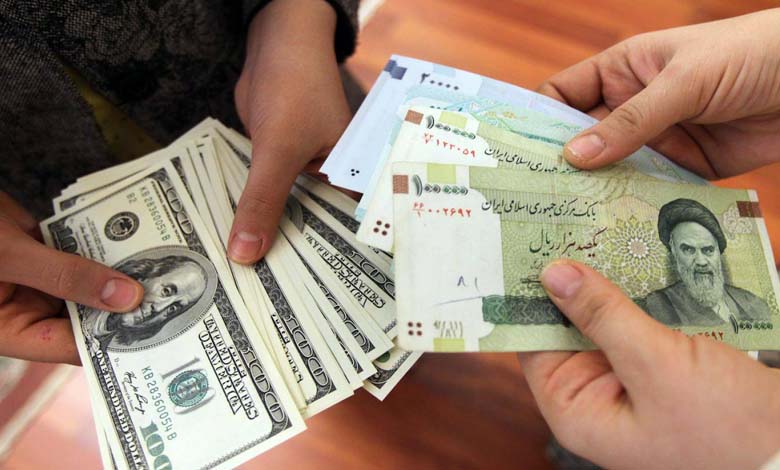
Iran’s currency recorded a historic decline on Tuesday, with the rial plunging to an unprecedented level after crossing the threshold of 1.5 million rials per US dollar. This collapse signals a deepening economic crisis, while the gap between the battered currency and the “reassuring” statements of officials reflects a complete disconnect from reality. The regime has clearly chosen to prioritize its security-driven survival over safeguarding the livelihoods of its citizens.
-
Iran: Security forces besiege memorial for those killed in protests.. and general strikes continue
-
European recommendation to avoid Iranian airspace: is a U.S. strike drawing closer?
Rather than allocating resources to rescue a collapsing economy, evidence on the ground indicates that the authorities are devoting their maximum efforts to tightening the security grip. Since the outbreak of protests, state institutions have responded to socio-economic demands with tear gas, mass arrests, and Internet shutdowns aimed at curbing protest organization, further paralyzing the digital economy and online business activities.
As markets descend into panic and savings evaporate, the response of the monetary authorities has been widely viewed as disappointing and even derisive among the Iranian public. Central Bank Governor Abdolnasser Hemmati stated that the market was “moving along a natural path,” a claim experts see as evidence of the bank’s inability to inject foreign currency or rein in surging inflation, amid the absence of any genuine reform strategy beyond verbal assurances that no longer convince investors or citizens.
-
What weapons could Washington use in a potential attack on Iran?
-
Trump threatens intervention in Iran if protesters are executed
Protests that began on December 28 at Tehran’s Grand Bazaar over deteriorating economic conditions quickly evolved into the most severe crisis faced by Iran’s religious establishment, spreading nationwide with demands for political change. Security forces suppressed the demonstrations, which had briefly subsided earlier this month, in the most intense crackdown since the 1979 Islamic Revolution.
In an attempt to defuse public anger, the government introduced changes to the subsidy system, replacing preferential exchange rates with direct cash transfers. Although First Vice President Mohammad Reza Aref defended the policy as a measure to combat corruption and achieve stability, reality proved otherwise: prices continued to soar uncontrollably, underscoring that the reforms amounted to little more than an effort to patch up a financial system rotten at its core.
-
From Amini to the market protests in Iran: the same anger — with a striking new feature
-
Nine waves in a quarter century: the history of protests in Iran
Monthly inflation continued to rise, with figures released Sunday by Iran’s Statistical Center showing year-on-year inflation reaching 60 percent for the period from December 21 to January 19.
Meanwhile, Iran’s online economic activities have been severely disrupted by Internet outages that have been in place since January 8 and remain largely ongoing. A government spokesperson said on Tuesday that authorities favor free access to the Internet, but that security considerations necessitate the continuation of certain restrictions.
-
America, Iran, and the nuclear issue: Who can break the stalemate?
-
Iranian insistence on sponsoring Hezbollah tests the limits of Lebanese sovereignty
As usual, Iran’s leadership has sought to evade responsibility for “the worst crisis faced by the religious establishment” by reviving conspiracy narratives. While protesters decry hunger and the collapse of purchasing power, official rhetoric focuses on accusing foreign powers of fueling unrest to destabilize the country, labeling socio-economic protests as “foreign-funded riots” to justify the use of excessive force. U.S. President Donald Trump has repeatedly threatened Tehran with intervention, while an Iranian official responded that any attack would be considered “an all-out war.”
According to figures published on Tuesday by the U.S.-based human rights organization Hrana, the confirmed death toll resulting from the unrest has reached 6,126, including 214 members of the security forces.
-
Washington targets Iran’s weapons supply lines beyond Gulf waters
-
In Search of Answers: Draft Resolution at the IAEA Board of Governors to Increase Pressure on Iran