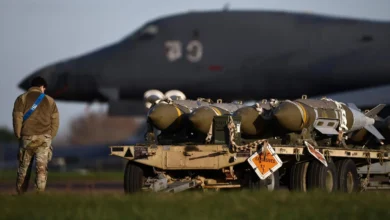
On the eve of the Muscat talks, five milestones paved the way for Iran and Washington’s return to negotiations
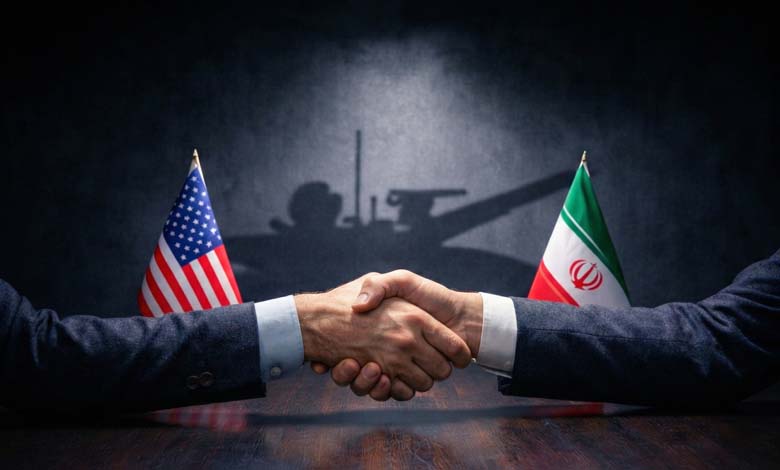
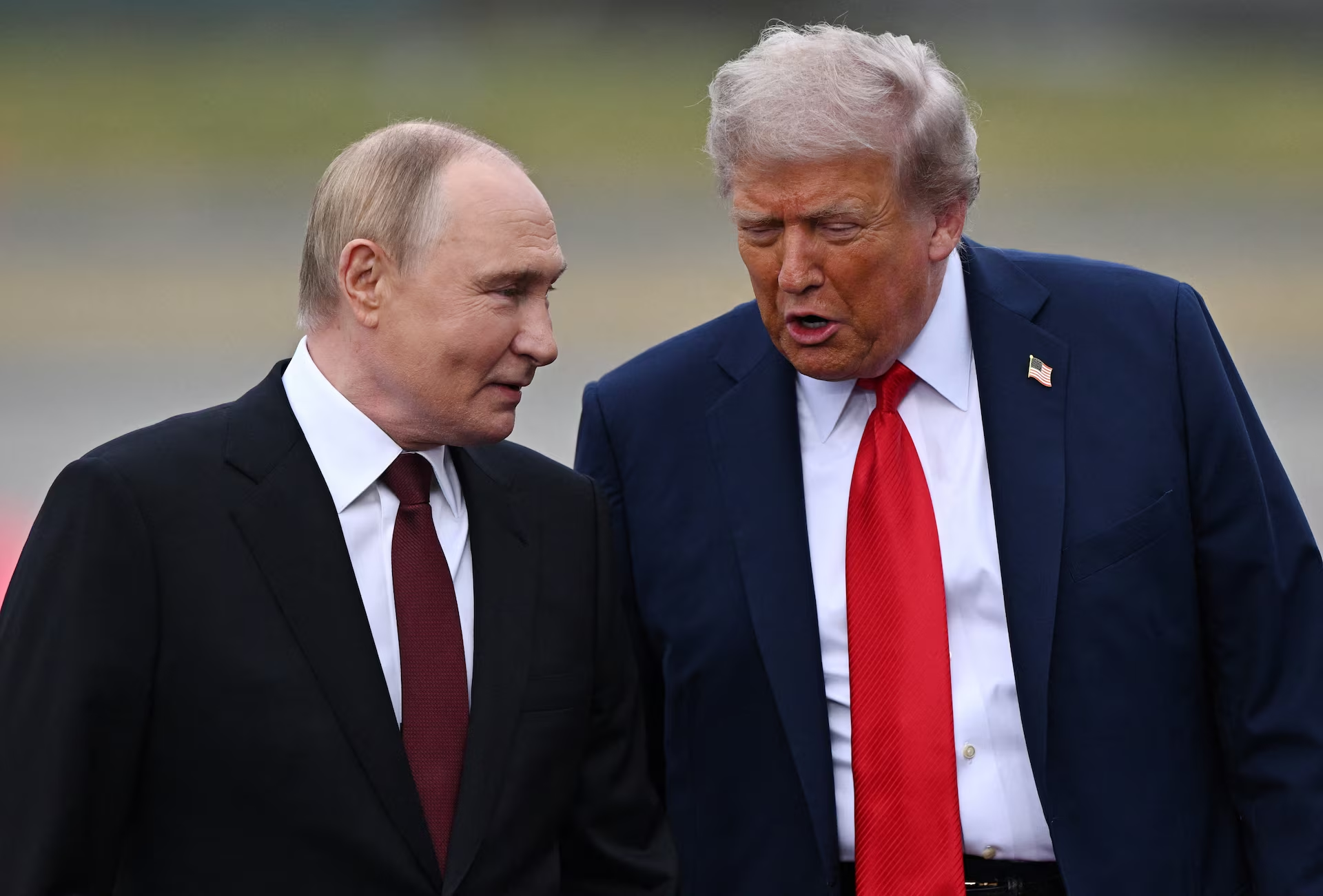
Iran and the United States are preparing to hold a new round of talks tomorrow, Friday, in the Sultanate of Oman, in the latest attempt to address Tehran’s nuclear file.
Last night, Iranian Foreign Minister Abbas Araghtchi wrote in a post on the X platform that “nuclear talks with the United States are scheduled to take place in Muscat on Friday around 10 a.m.,” expressing his appreciation to the Sultanate of Oman “for making all the necessary arrangements.”
-
Are the UAE Playing a Mediation Role Between Iran and the United States?
-
Iran faces the most dangerous total war with Israel and the United States
This new round of negotiations comes after the 12-day war launched by Israel against Iran last June, as well as the subsequent wave of livelihood-related protests that swept across the country. Numerous states, led by the United States, accused Iranian authorities of violently suppressing the popular movement.
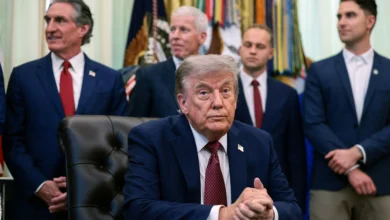
For his part, US President Donald Trump has continued to exert pressure on Iran, hinting at the possibility of a US military strike in response to the killing of peaceful protesters or in the event that Tehran carries out mass executions in connection with the protests.
At the same time, Trump has once again placed Iran’s nuclear program at the top of the agenda, after the June war disrupted five rounds of talks held last year in Rome and Muscat.
-
New sanctions imposed by the United States, Britain, and Canada on Iranian officials… Details
-
Iran warns Israel and the United States of “escalation beyond control”
In previous negotiations over its disputed nuclear program, Iran ruled out discussing its missile arsenal, arguing that these weapons, capable of striking Israel, constitute a means of self-defense.
On the eve of the new round of talks, here is what needs to be known about Iran’s nuclear program and the tensions overshadowing relations between Tehran and Washington.
Trump’s letter to Khamenei
On March 5, 2025, Donald Trump sent a letter to Iran’s Supreme Leader, Ali Khamenei, and confirmed its dispatch during a television interview the following day.
He said: “I wrote them a letter saying: ‘I hope you negotiate, because if we are forced to intervene militarily, it will be catastrophic.’”
-
New Talks – United States and Iran Revive Nuclear Agreement Negotiations Once Again
-
The United States will sanction more than two dozen people and entities about Iran’s nuclear
Since returning to the White House, the US president has been pressing for talks while tightening sanctions and suggesting that an Israeli or American military strike could target Iran’s nuclear facilities.
A previous letter sent by Trump during his first term had provoked an angry reaction from Iran’s supreme leader.
By contrast, Trump’s correspondence with North Korean leader Kim Jong-un during his first term led to direct meetings, though they failed to produce any agreements to curb Pyongyang’s nuclear and missile programs capable of reaching US territory.
-
Trump and Iran: three military paths on the decision table
-
Lincoln at the forefront… an overwhelming U.S. force off Iran
Oman’s mediation
The Sultanate of Oman has acted as a mediator in talks between Iranian Foreign Minister Abbas Araghtchi and US Special Envoy for the Middle East Steve Witkoff. The two men met face to face after indirect talks, a rare occurrence given decades of tension between the two countries.
However, the process was not entirely smooth. In a television interview, Witkoff stated that Iran’s enrichment of uranium to 3.67 percent could be acceptable, the same level stipulated in the 2015 nuclear deal from which the United States unilaterally withdrew under Trump’s decision.
Subsequently, Witkoff, Trump, and other US officials emphasized that Iran should not be allowed to enrich uranium under any agreement, a position that Tehran firmly rejects.
Those negotiations were halted with the outbreak of Israel’s war against Iran in June last year.
-
Washington open to dialogue with Iran, while keeping its finger on the trigger
-
Iran in the crosshairs of Lincoln and its sisters… Messages of fire before the decision
The 12-day war and widespread protests
In June, Israel waged a 12-day war against Iran, during which the United States bombed Iranian nuclear sites.
Iran later acknowledged in November that the attacks led to a complete halt in uranium enrichment within the country, despite the fact that inspectors from the International Atomic Energy Agency were unable to visit the bombed sites.
Shortly thereafter, Iran witnessed protests that began in late December following the collapse of the Iranian rial. These demonstrations quickly spread across the country.
Activists, human rights organizations, and numerous countries spoke of a bloody crackdown by Iranian authorities that resulted in the killing of thousands and the arrest of tens of thousands of protesters.
-
New U.S. sanctions on Iran’s Shadow Fleet
-
Trump pressures his advisers on Iran, with the zero bullet option on the table
Western concerns
For decades, Iran has insisted that its nuclear program is purely peaceful.
However, the International Atomic Energy Agency says Iran is the only non-nuclear-weapon state enriching uranium to 60 percent, close to the 90 percent required to produce a nuclear bomb.
Under the original 2015 nuclear deal, Iran was allowed to enrich uranium up to 3.67 percent and to maintain a stockpile of 300 kilograms.
The latest IAEA report on Iran’s nuclear program indicates that its stockpile has reached approximately 9,870 kilograms, with part of it enriched to 60 percent.
US intelligence agencies assess that Iran has not yet launched a nuclear weapons program, but is carrying out activities that place it “in a better position” should it choose to pursue that path.
-
Trump threatens to wipe Iran off the map if its leaders consider assassinating him
-
Buying geography: how deals shaped the map of the United States
Decades of tension between Iran and the United States
According to the Associated Press, Iran under Shah Mohammad Reza Pahlavi “was among Washington’s closest allies in the Middle East.”
This changed dramatically in 1979, when the shah fled the country amid illness and popular unrest, followed by the establishment of a cleric-dominated system after the revolution.
Later that year, Iranian students stormed the US embassy in Tehran, triggering the hostage crisis that lasted 444 days and led to the severing of diplomatic relations between the two countries.
-
The first year of Trump’s second term: peace, record strikes and the designation of the Muslim Brotherhood
-
In Anticipation of a Potential Attack on Iran: U.S. Military Reinforcements to the Middle East
This was followed by US support for Iraq during the 1980s war, as well as naval confrontations that resulted in the downing of an Iranian passenger plane by US fire in 1988.
Despite this, relations between the two states have alternated between periods of détente and renewed tension, reaching a positive peak with the conclusion of the 2015 nuclear deal. However, Trump’s withdrawal from the agreement in 2018 reignited regional escalation, the repercussions of which continue to this day
-
What weapons could Washington use in a potential attack on Iran?
-
Trump threatens intervention in Iran if protesters are executed