U.S. military signals imminent operation against Tehran
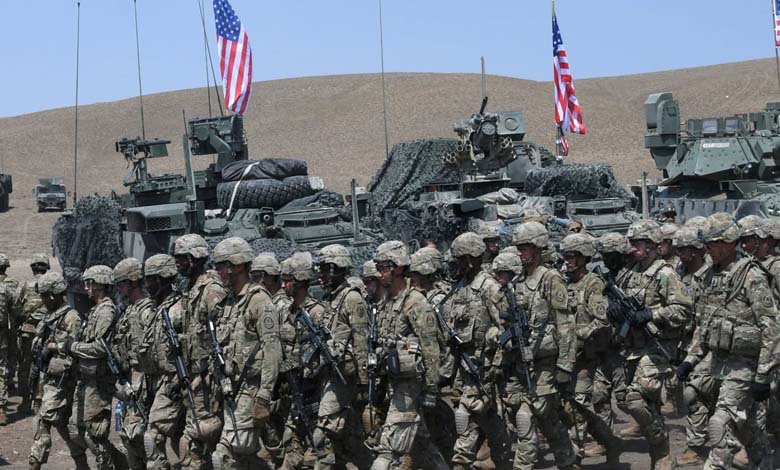
Sources indicate that the U.S. military may be ready to launch an attack by the end of the week amid intensified pressure on Tehran to reach an agreement on its nuclear program.
U.S. media outlets reported on Thursday, citing informed sources, that the American military is prepared for the possibility of striking Iran by the end of the current week—a move that would heighten pressure on Tehran during ongoing negotiations over its nuclear file and in light of President Donald Trump’s calls for a deal or the prospect of a military campaign.
-
Diplomacy races against rising tensions: anticipation of Muscat talks between Washington and Tehran
-
Washington and Tehran discuss a ‘political ceasefire’
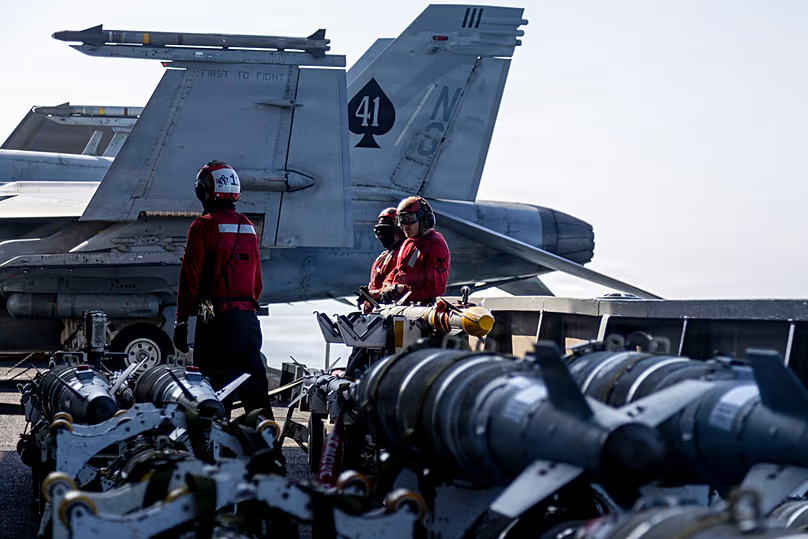
CNN, quoting unnamed sources, stated that “the White House has been informed that the military could be ready to strike by the end of the week,” adding that this readiness follows “a significant buildup of U.S. air and naval capabilities in the Middle East in recent days.”
One source said that “Trump has informally discussed, in private meetings, arguments for and against military action” against Iran. He has consulted his advisers and allies on the best course of action, though it remains unclear whether he will make a decision by the end of the week.
According to another source, “senior national security officials met Wednesday in the White House Situation Room to discuss the situation in Iran.” The president also received a briefing from Special Envoy Steve Witkoff and his son-in-law Jared Kushner regarding their indirect talks with Iran the previous day.
-
Washington Targets Tehran with Harsh Sanctions as Araghtchi Demands War Reparations
-
Tehran and Washington Resume Nuclear Talks Under the Pressure of Red Lines
It is still uncertain whether the U.S. president will decide by the end of the week. One source noted that he “is spending a considerable amount of time thinking about this issue.”
These developments come two days after a second round of indirect negotiations between Washington and Tehran in Geneva, mediated by the Sultanate of Oman. On Tuesday, Iranian and American negotiators exchanged memoranda for three and a half hours but left without reaching a clear resolution.
Iran announced that both sides had agreed on “a set of guiding principles,” while Washington said that “many details still need to be discussed.”
-
Bomb Diplomacy: The Douhet Strategy and Washington’s Options on Iran
-
U.S. military signals imminent operation against Tehran
On Wednesday, White House Press Secretary Karoline Leavitt stated that Iran is expected to provide further details regarding its negotiating position “within the next two weeks.”
The United States and its ally Israel accuse Iran of seeking to produce nuclear weapons, while Tehran maintains that its program is intended for peaceful purposes, including electricity generation.
Washington aims to reach a new agreement—after withdrawing in 2018 from the 2015 accord—that would ensure Iran does not develop nuclear weapons. Tehran has expressed openness to accepting restrictions on its nuclear program in exchange for the lifting of Western economic sanctions.
-
Israeli sources rule out a Washington–Tehran agreement in Geneva
-
Iranian Revolutionary Guard drills in the Strait of Hormuz: readiness assessment and confrontation scenarios
Iranian officials argue that Washington and Tel Aviv are fabricating pretexts to intervene and pursue regime change, and they have vowed to respond to any military attack, even a limited one.
Earlier on Thursday, CBS News also reported that Trump had discussed a potential timeline for military strikes against Iran “as early as the end of this week,” though no final decision has been made.
Sources familiar with the discussions said that senior national security officials informed Trump that the U.S. military would be ready to carry out strikes “as early as Saturday,” although the timeline for any action could extend beyond the weekend.
-
Washington continues military build-up to pressure Iran
-
On the eve of the Muscat talks, five milestones paved the way for Iran and Washington’s return to negotiations
Axios, citing two U.S. officials, reported that Trump held a meeting with his top advisers on Iran to discuss next steps. Participants included Witkoff, Kushner, and Secretary of State Marco Rubio.
During the meeting, Trump was briefed on the Geneva negotiations and a roadmap for future action was discussed.
The two officials assessed that any potential U.S. military operation against Iran could escalate into a “large-scale war that might last for weeks,” unlike the operation carried out in Venezuela.
-
Khamenei speaks of a coup attempt and outlines the response to any U.S. strike
-
Trump and Iran: three military paths on the decision table
On January 3, the U.S. military launched an attack on Venezuela, resulting in casualties and the arrest of President Nicolás Maduro and his wife, who were transferred to the United States.
On the Israeli side, the official Israeli Public Broadcasting Corporation reported on Wednesday that Tel Aviv is preparing for the possibility of receiving a “green light” from Washington to strike Iran’s ballistic missile system.
According to Israeli media, Prime Minister Benjamin Netanyahu strongly favors a U.S. strike on Iran but does not wish to appear publicly as the instigator of a new war.
Tel Aviv, the only actor in the region possessing a nuclear arsenal, argues that Iran’s reconstruction of its long-range ballistic missile program, damaged in the recent war, poses a threat to Israel.
-
Washington open to dialogue with Iran, while keeping its finger on the trigger
-
Iran protests put Trump to the test between escalation and dialogue