Bomb Diplomacy: The Douhet Strategy and Washington’s Options on Iran
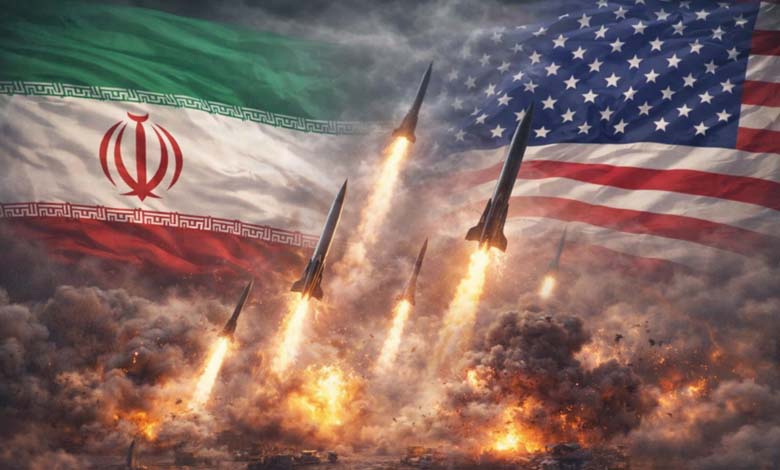
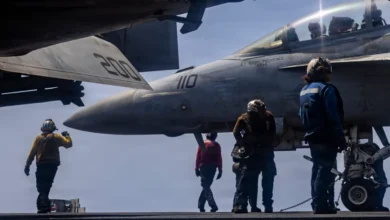
In recent weeks, U.S. President Donald Trump has deployed a substantial naval and air fleet around Iran, marking a notable return to “power diplomacy.”
Diplomatic circles describe these steps as a calculated escalation aimed at compelling Tehran to sign a nuclear agreement under terms clearly tilted in Washington’s favor.
This military buildup, documented by Responsible Statecraft, was accompanied by explicit public warnings conveying a clear message: comply with U.S. conditions or face large-scale aerial punishment.
-
On the eve of the Muscat talks, five milestones paved the way for Iran and Washington’s return to negotiations
-
Nuclear Talks: Iran Rejects Washington’s Proposal and Prepares an Alternative
Negotiations Under the Shadow of Threat
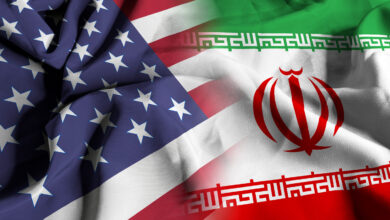
Parallel to this display of force, indirect negotiations are being conducted under the mediation of the Sultanate of Oman between Iranian and American diplomats, in a final attempt to find a diplomatic exit to the protracted nuclear crisis. The United States insists on the complete dismantlement of Iran’s uranium enrichment program, while Tehran firmly maintains that enrichment is a sovereign right guaranteed under Article IV of the Nuclear Non-Proliferation Treaty.
What is emerging is a contemporary model of 21st-century diplomacy in which aircraft carriers and strategic bombers serve as instruments of coercive bargaining rather than merely traditional deterrence tools, according to Responsible Statecraft.
-
Khamenei, Iran’s Illness and the Obstacle to Any Agreement with Washington
-
Washington Tests Military Capabilities Amid Escalation Between Israel and Iran
The Air Power Assumption
Consistent reports indicate that options under consideration in Washington range from limited airstrikes designed to pressure Tehran into signing an agreement, to a broader campaign targeting “regime facilities,” and even more escalatory scenarios that could extend to senior leadership figures, including Supreme Leader Ali Khamenei.
The underlying logic assumes that Iran’s leadership, facing mounting internal and external pressures — from domestic protests to the repercussions of regional confrontations — may urgently seek a settlement to ease economic and political strain.
-
Washington rules out Iran and its proxies’ involvement in expanding the war
-
Washington sends messages to Iran and Hezbollah via Turkey… Details
Yet this assumption revives a strategic approach dating back to the early twentieth century, when Italian military theorist Giulio Douhet argued that bombing cities would shatter civilian morale and force governments into political surrender.
Since then, this concept has remained embedded in air power doctrines, particularly among policymakers seeking to achieve political objectives without becoming entangled in prolonged and costly ground wars.
-
Washington Imposes New Sanctions on Iranian Individuals and Entities… What’s New?
-
Washington doubts the seriousness of forming a naval alliance comprising Iran and Gulf states
Lessons from History
Historical experience, however, repeatedly undermines this assumption. During Operation Rolling Thunder in the Vietnam War, the United States conducted an intensive bombing campaign between 1965 and 1968 to force Hanoi into negotiations on American terms. North Vietnam adapted by dispersing its infrastructure, strengthening its defenses, and mobilizing domestic political support, and the bombing failed to achieve its coercive objectives.
A similar pattern is evident in Russia’s war against Ukraine, where sustained aerial and missile strikes have not subdued Kyiv’s political leadership or imposed a settlement on Moscow’s terms in the absence of decisive territorial control.
-
One Single Step Trump Is Waiting for to Strike Iran
-
Five Defensive Layers: How Iran Is Preparing for a Potential War
American scholar Robert Pape of the University of Chicago reached comparable conclusions in his systematic studies of air campaigns, arguing that air power rarely achieves coercive goals through the destruction of civilian infrastructure, but rather when coupled with a credible threat of territorial conquest.
Iran: Geography, Doctrine, and Historical Memory
Iran is unlikely to be an exception to this rule. With its vast territory and significant strategic depth, it is capable of absorbing intensive airstrikes without rapid collapse, according to the same source.
Tehran has also spent decades preparing for confrontation with U.S. air superiority, developing a military doctrine based on asymmetric warfare, dispersion, and hardened fortifications.
-
Russia clarifies the nature of its drills with Iran amid rising tensions with the United States
-
Missiles Outside Iran Nuclear Talks: Israel Prepares for Any Incomplete Agreement
Clausewitz’s Warning
Prussian military theorist Carl von Clausewitz warned that war develops its own dynamics once unleashed. Political leaders may choose the moment of initiation, but they cannot fully control the course of escalation and its subsequent interactions.
If Washington proceeds on the assumption that bombs alone can compel political surrender in Tehran, it may discover — as past experiences have shown — that aerial punishment often strengthens internal cohesion rather than breaking it.
-
Israeli sources rule out a Washington–Tehran agreement in Geneva
-
Iranian Revolutionary Guard drills in the Strait of Hormuz: readiness assessment and confrontation scenarios