At odds with Trump over Iran: the story of a general who entrenched himself in his office rather than in the Tank
Behind Washington’s options toward Iran, he walks a tightrope between satisfying Donald Trump and preparing for a worst-case scenario that could set the region ablaze.
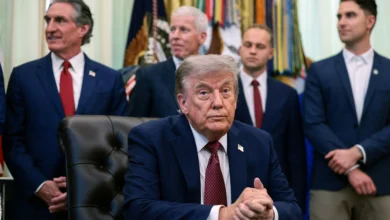
He is the Chairman of the Joint Chiefs of Staff, General Dan Caine, who balances direct pressure from the White House to escalate with Iran against his duty to provide a precise professional assessment, mindful of the potential risks to U.S. forces and to regional stability as a whole.
-
Trump and Iran: three military paths on the decision table
-
Trump and Iran: 4 Possible Scenarios, Including “Shock and Awe”
As Caine was drafting military options to strike Iran, a large number of senior officials from the Army, Navy, and Air Force were quietly summoned to his office, according to sources cited by CNN who are familiar with the matter.
Sensitive military operations are typically discussed in the Pentagon’s highly secure conference room known as “the Tank.” However, in an administration focused on preventing leaks, Caine—known for his discretion—feared that assembling top commanders at the Department of Defense command center on very short notice might raise suspicions.
-
Iran protests put Trump to the test between escalation and dialogue
-
After Trump’s threats, Iran affirms readiness for war and dialogue
The same sources said that during these and other meetings at the Pentagon, Caine spoke candidly about the potential downsides of launching a large-scale military operation against Iran, expressing concerns about the scope and complexity of such a mission and the possibility of American casualties.
The mistakes of his predecessor
These concerns did not align with the messaging from the White House, where President Donald Trump expressed considerable optimism about the ease with which the U.S. military could achieve victory, without clearly defining what that success would entail.
-
Iran Warns Trump Against Intervention and Draws the Red Line
-
Trump Announces Ceasefire Between Israel and Iran
According to sources described by CNN as familiar with his thinking, Caine is determined to avoid what he sees as the mistakes of one of his predecessors, General Mark Milley, and to preserve his influence with Trump.
Milley frequently clashed directly with Trump during his first term over issues such as deploying the military domestically to quell protests, and at times privately tempered the president’s inflammatory rhetoric to reassure anxious allies and adversaries.
Caine has avoided that approach. Instead, he has adopted a cautious posture in dealing with Trump, refraining from direct intervention in policy decisions, including those concerning Iran.
-
Behind Trump’s Deal: How Iran and Israel Agreed to End the War
-
Energy Investments: Iran’s New Card to Woo Trump and End Sanctions
CNN characterized this as a delicate balance Caine has sought to maintain during his first year as Trump’s top military adviser: avoiding open confrontation with a president known for his volatility while continuing to provide professional military guidance.
Excessive caution?
Some of Caine’s associates believe his caution has gone too far and that he softens his tone with Trump compared to what he says inside the Pentagon. Nonetheless, alongside his reservations, he is overseeing one of the largest U.S. military buildups in the Middle East since the invasion of Iraq, reflecting the seriousness with which Washington views the prospect of confrontation.
-
Trump’s Pressure Pushes Iran to Accept U.S. Demands on Nuclear File
-
Iran’s Nuclear Program Back in the Spotlight… and Trump Seeks Political Breakthrough
Joint Chiefs spokesperson Joe Holstead told CNN that Caine “never hesitates to speak the truth when discussing military options that could put our forces in harm’s way.”
He added: “The Chairman’s role and approach are grounded in his statutory duty to provide military advice to the president, the secretary of defense, and the National Security Council. He fulfills these responsibilities by presenting a full range of military options, along with a careful and thorough examination of the second-order effects, consequences, and risks associated with each. He does so with complete confidentiality.”
-
Between Escalation and De-escalation: How Will Trump Handle Iran?
-
Trump’s Return Pushes European Powers to Demand Increased Pressure on Iran
Restraint does not mean halting mobilization
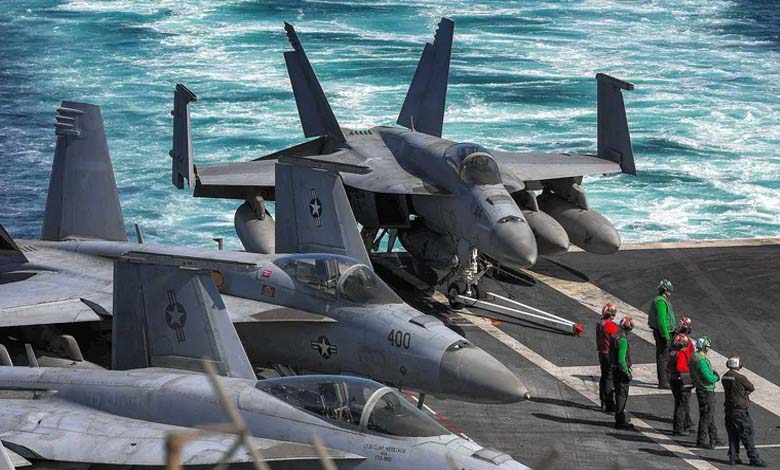
Despite his internal reservations, this month has witnessed an unprecedented mobilization of U.S. military capabilities in the Middle East, the largest buildup of its kind since the invasion of Iraq.
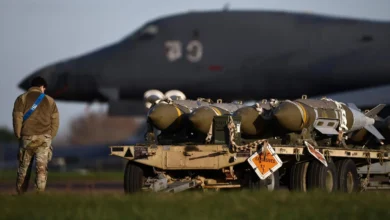
Caine personally oversaw the deployment of naval vessels, bombers, and advanced defense systems to the region, sending a clear message that Washington is preparing for all contingencies.
-
Iran Keeps Door Open for Dialogue with Trump and Prepares for New Sanctions
-
Continuous U.S. military buildup in Israel in preparation for an attack on Iran
Influence struggles within Trump’s inner circle
Caine presented these military options during a series of meetings attended by senior officials, including Vice President J. D. Vance, Secretary of State Marco Rubio, CIA Director John Ratcliffe, Defense Secretary Pete Hegseth, White House Chief of Staff Susie Wiles, and Director of National Intelligence Tulsi Gabbard.
Becoming part of this inner circle has given him an exceptional ability to present his options directly, without intermediaries.
-
At odds with Trump over Iran: the story of a general who entrenched himself in his office rather than in the Tank
-
Bomb Diplomacy: The Douhet Strategy and Washington’s Options on Iran
However, this position has also created tension with Defense Secretary Pete Hegseth, who believes Caine’s influence has extended beyond the traditional boundaries of the Chairman’s role.
Sources familiar with the matter say Hegseth felt that certain decision-making channels at times bypassed his office, placing the two men in a quiet rivalry within the defense establishment.
Even so, Caine understands the need to handle the secretary carefully, especially following a series of controversial dismissals of senior officers accused—according to the department—of leaking information or failing to align with the administration’s vision.
-
One Single Step Trump Is Waiting for to Strike Iran
-
As Soon as Possible… Serbia Urges Its Nationals to Leave Iran
Although Caine disagreed with some of these decisions, he avoided direct confrontation, choosing to preserve institutional stability within the military, even at the expense of his personal stance.
During a sensitive meeting in the White House Situation Room, Caine was asked to assess the prospects for “regime change” in Iran. Unlike the confidence he had previously shown in discussions of rapid U.S. operations, such as in Venezuela, he hesitated to offer a definitive assessment of the potential consequences.
-
Harsh… Poll raises concerns for Trump and Republicans ahead of midterms
-
Breaking the constraints of the post-Nazi era: Germany prepares to expand intelligence powers
To him, Iran represented a different equation: a vast country, a sizable military, a network of regional allies, and the capacity for both direct and indirect retaliation.
This hesitation did not satisfy some of Trump’s close advisers, who wanted a more decisive stance. Nevertheless, Caine continued to provide the professional advice as he saw it, refusing to offer “rosy forecasts” unsupported by realities on the ground, according to the same sources.
-
US Military Prepares for Prolonged Military Operation Against Iran
-
Axios: Trump moves closer to a major war with Iran