Pressure to ban the Muslim Brotherhood and Iran’s Revolutionary Guard: the UK House of Lords escalates the debate
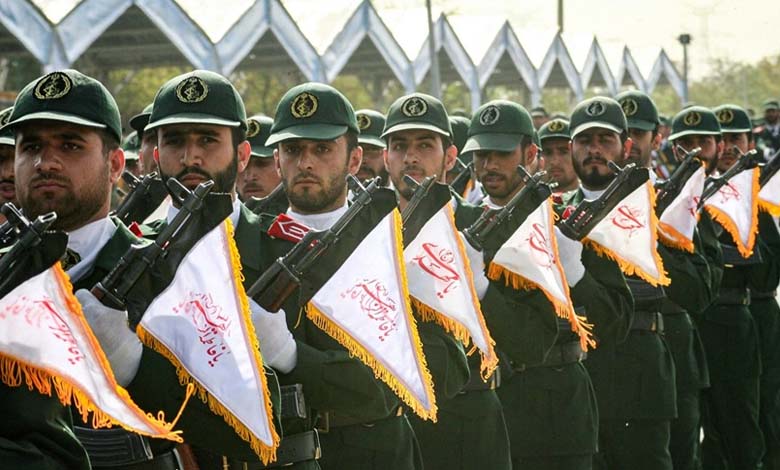
The UK House of Lords hosted a well-attended parliamentary briefing calling on the British government to designate Iran’s Islamic Revolutionary Guard Corps and the Muslim Brotherhood as proscribed organizations, amid warnings that sanctions alone do not provide adequate protection for national security.
The session brought together peers from across the political spectrum, members of the House of Commons, parliamentary advisers, experts in security and foreign policy, as well as representatives of civil society, reflecting the breadth of discussion surrounding the issue.
-
Iranian Revolutionary Guard drills in the Strait of Hormuz: readiness assessment and confrontation scenarios
-
The relationship between the Polisario and Iran’s Revolutionary Guard under American scrutiny
From sanctions to prohibition
Participants emphasized that the sanctions currently imposed on the Revolutionary Guard fall short of a full ban, leaving—according to their assessment—legal loopholes that allow certain activities or support networks to continue indirectly.
Several speakers addressed the legal dimension, noting that existing British legislation grants the government the authority to proscribe organizations when sufficient evidence is available. In their view, the matter is as much about political will as it is about security assessment.
Concerns were also raised that internal pressures facing the Iranian regime could prompt it to expand its external activities, including through affiliated networks and proxies, thereby increasing the need, as presented in the discussion, for a clear deterrent measure.
-
Europe bans the Islamic Revolutionary Guard Corps: how will Iran’s arms be affected?
-
With major powers backing the move, Europe edges closer to designating Iran’s Revolutionary Guard as a terrorist organization
The Muslim Brotherhood at the heart of the political debate
Regarding the Muslim Brotherhood, a number of speakers recalled the British government’s 2015 review, which examined the group’s activities and recommended close monitoring.
Some peers argued that keeping the group off the list of proscribed organizations, while branches or affiliated entities are designated in other countries, raises questions about the consistency of Britain’s counter-extremism policy.
Participants noted that the issue extends beyond intelligence considerations to encompass political and ideological dimensions, particularly in relation to the influence of transnational groups on public discourse and institutions.
-
Pressure in Britain to designate Iran’s Revolutionary Guard as a terrorist organization
-
Fears of a New Revolutionary Guard: Iraq Divided Over the Popular Mobilization Forces Law
A matter under review
This parliamentary initiative comes within the context of a broader debate earlier this year, during which questions were raised about whether London would adopt an approach similar to that announced by the administration of Donald Trump concerning certain branches of the movement.
In a previous response in the chamber, a Home Office minister stated that the government does not consider itself an “outlier,” explaining that international reports are still being finalized and that the question of designation is subject to careful review.
He emphasized that the government has a wide range of tools at its disposal, including counterterrorism legislation, regulation of charities, and oversight of funding and public activities, stressing that any decision would be based on a comprehensive assessment of national interests.
-
Mohammad Pakpour: From the War Fronts to the Helm of Iran’s Revolutionary Guards
-
Hossein Salami’s Death Reveals the Extent of Israeli Infiltration into the Revolutionary Guards
Interlinked security and legal considerations
During the briefing, questions were raised about the effectiveness of proscription decisions in themselves, given that some organizations may change their names or reorganize under new identities.
The role of the Charity Commission was also discussed, particularly in monitoring organizations that may be ideologically or organizationally linked to controversial groups, as well as the need to strike a balance between safeguarding national security and protecting civil liberties.
-
Sweden Calls for Classifying Iran’s Revolutionary Guard as a “Terrorist Organization” in Europe
-
“Controversial” Scenes inside the Revolutionary Guard Operations Room
Between pressure and decision
The latest briefing reflected mounting pressure within Parliament to settle the issue, while at the same time indicating that the government prefers to keep the matter under ongoing review rather than taking immediate action.
Between those who believe the time has come for a decisive step and those who advocate caution pending the completion of security and legal assessments, the question of the Revolutionary Guard and the Muslim Brotherhood remains one of the most sensitive items on the British political agenda, intersecting security imperatives with diplomatic and domestic considerations.
-
Pager Explosions Lead Iran’s Revolutionary Guards to Ban the Use of Communication Devices
-
New Details on Haniyeh’s Assassination: What is the Involvement of Mossad and Iran’s Revolutionary Guard?