Pressure in Iran to acquire a nuclear weapon
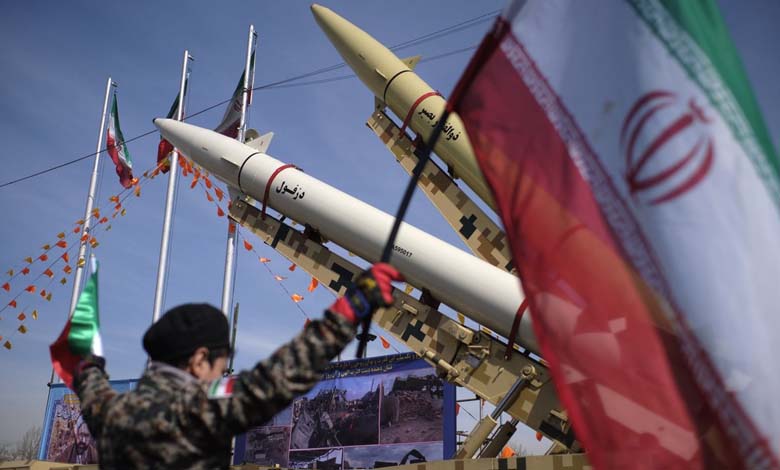
Ultraconservatives are pushing toward withdrawal from the Nuclear Non-Proliferation Treaty.
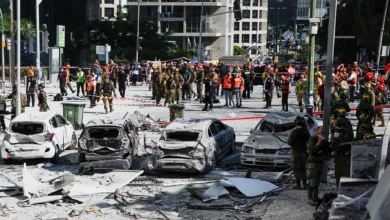
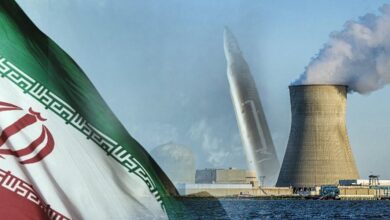
Sources inside Iran indicate that the ongoing debate among ultraconservatives over whether Tehran should seek to possess a nuclear bomb has become more intense and more public, as the country faces escalating American-Israeli attacks.
-
Western Maximum Pressure Campaign to Prevent Iran from Acquiring Nuclear Weapons
-
Joint British, French, and German statement on Iran’s approach to nuclear weapons… What was stated?
Two senior Iranian sources said that with the Islamic Revolutionary Guard Corps currently in control, following the death of the veteran Supreme Leader Ayatollah Ali Khamenei at the beginning of the war on February 28, hardline views regarding Iran’s nuclear approach are on the rise.
While Western countries have long believed that Iran seeks to build the bomb, or at least to acquire the capability to produce one very rapidly, Tehran has consistently denied this, stating that Khamenei had banned nuclear weapons as forbidden in Islam, and pointing to its membership in the Nuclear Non-Proliferation Treaty.
-
Gulf states will act to bolster security if Iran acquires nuclear weapons
-
Weather against the flames… can storms alter the course of the Iran war?
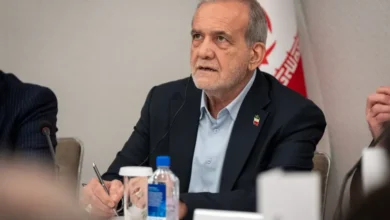
One of the two sources said there is currently no plan to change Iran’s nuclear doctrine and that Iran has not decided to pursue the bomb, but that serious voices within the state apparatus are questioning the current policy and calling for change.
The American-Israeli attacks on Tehran, which occurred in the middle of negotiations over Iran’s nuclear program, may have altered the equation and convinced Iranian strategists that they have little to gain from abandoning the bomb or remaining in the Non-Proliferation Treaty.
-
Military escalation threatens Kharg, Iran’s oil lifeline
-
Natanz under fire again: escalation targeting Iran’s nuclear program
The hardliners’ stance
The idea of withdrawing from the Non-Proliferation Treaty, a step previously threatened by hardliners, is now increasingly appearing in state media, alongside another idea that was previously taboo in public discourse: that Iran should unequivocally seek to obtain a nuclear bomb.
Tasnim News Agency, affiliated with the Revolutionary Guards, published an article on Thursday stating that Tehran should withdraw from the Non-Proliferation Treaty as soon as possible while continuing its civilian nuclear program.
-
Trump and Iranian nuclear fuel: a strategic move to decide the war
-
Iran proposes a new framework to regulate navigation in the Strait of Hormuz after the war
State media this week quoted hardline politician Mohammad Javad Larijani, brother of senior official Ali Larijani, who was killed in a raid this month, as urging Iran to suspend its membership in the Non-Proliferation Treaty.
He said: “The Non-Proliferation Treaty must be suspended. We must form a committee to assess whether this treaty is beneficial for us. If it proves useful, we will return to it. If not, they can keep it.”
-
Nuclear Threat: Worst-case scenario raises WHO concerns amid Iran war
-
Aircraft Carriers: A Strategic Weapon Whose Influence Extends Beyond the Seas
Earlier this month, state television aired a segment featuring conservative commentator Nasser Torabi, who said that Iranian public opinion is calling for the following: “We must move toward building a nuclear weapon. Either we build it or we obtain it.”
The two sources said that nuclear policy was also a topic of private discussion within ruling circles, adding that there is a divergence between the most hardline elements, including the Revolutionary Guards, and officials in the political leadership regarding the usefulness of such a step.
-
Israel strikes central nuclear development site in Iran
-
Iran opens a energy war front and threatens the world with oil at 200 dollars
It is certain that Iranian officials have in the past threatened to reconsider membership in the Non-Proliferation Treaty as a negotiating tactic during more than two decades of talks with the West over Iran’s nuclear program, without ever doing so.
The growing public debate may therefore be such a tactic. It is also unclear to what extent Iran would be able to pursue building a nuclear bomb after weeks of airstrikes on its nuclear, missile, and scientific facilities, as well as a shorter aerial campaign carried out last year by Israel and the United States.
-
U.S. intelligence rules out the collapse of the Iranian regime
-
The war against Iran disrupts Washington’s calculations: India returns to Russian oil despite US pressure
Over many years, Israel has repeatedly warned that Tehran is only months away from being able to produce a nuclear bomb, citing intelligence reports, Iran’s enrichment of uranium to a purity level close to that required for weapons, and its missile program.
No change in nuclear policy so far
Analysts say the Islamic Republic’s objective has been to reach the status of a “nuclear threshold state,” meaning capable of rapidly producing a bomb if needed, without entering into the international isolation that could result from actually possessing a nuclear weapon.
-
The war against Iran: four possible scenarios for the end of the conflict
-
Tehran signals the economic nuclear option in the Strait of Hormuz
The Revolutionary Guards and senior officials have previously warned that Iran would be compelled to directly pursue building a bomb if the country were threatened, a possibility now being discussed in light of the ongoing war.
Khamenei’s fatwa banning nuclear weapons in Islam was issued in the early 2000s, although it was never published in written form. Khamenei reaffirmed this fatwa in 2019.
-
Iran war and munitions: $5.6 billion spent in the first two days, laser is the solution
-
Operation behind enemy lines: a U.S. plan to take control of Iran’s nuclear material
One senior Iranian source said that with the deaths of Khamenei as well as Ali Larijani, who according to the source also opposed the ultraconservatives, it becomes more difficult to counter the most hardline proposals.
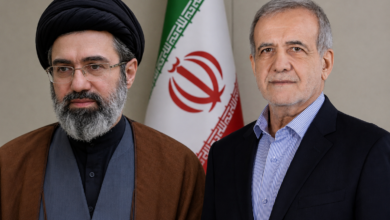
It remains unclear whether adherence to Khamenei’s unwritten fatwa will continue after his death, although it will likely remain in effect unless it is revoked by the new Supreme Leader, his son Mojtaba Khamenei, who has not appeared publicly since his father’s death.
-
Could the confrontation between Iran and the United States turn into a war of attrition benefiting China and Russia?
-
War Objectives in Iran Portend Rift Between Trump and Netanyahu