Report: Iran cannot open the Strait of Hormuz, even if it wanted to
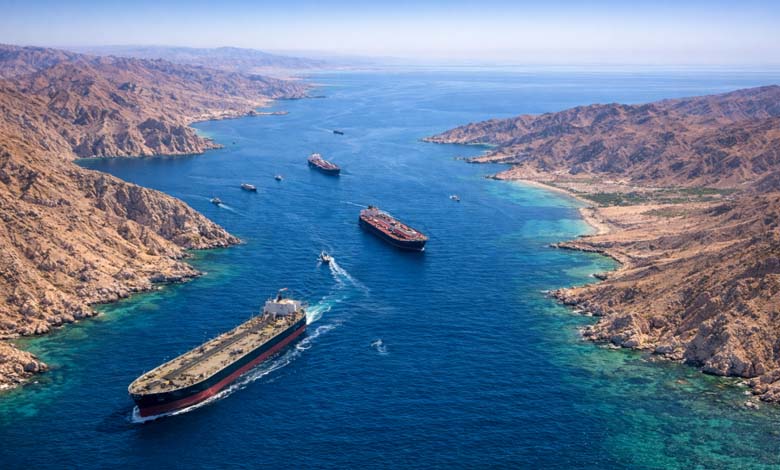
U.S. officials told The New York Times that Iran is unable to determine the locations of all the mines it laid in the waterway and lacks the capability to remove them.
The newspaper noted that these drifting mines are one of the reasons Tehran has been unable to quickly comply with warnings from the administration of U.S. President Donald Trump, which demanded that more vessels be allowed to pass through the strait.
These drifting mines represent a factor that could further complicate the situation as Iranian negotiators meet, late Saturday in Pakistan, with a U.S. delegation led by Vice President JD Vance for peace talks.
Iran had used small boats to lay these mines in the strait last month, following the outbreak of the U.S.–Israeli war against it.
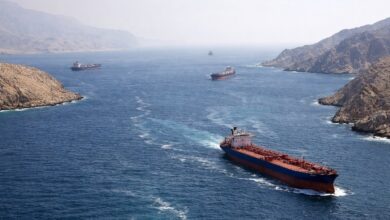
These mines, along with threats of Iranian drone and missile attacks, reduced the number of oil tankers and other vessels passing through the strait to a minimum, driving up energy prices and giving Iran one of its strongest sources of leverage in the war.
Despite this, Iran left a corridor open through the strait allowing vessels that pay “transit fees” to pass. The Islamic Revolutionary Guard Corps also issued warnings about the possibility of ships striking naval mines, while semi-official news agencies published maps showing routes considered safe.
Drifting mines and limited capabilities
U.S. officials stated that these routes remain highly limited because Iran laid the mines randomly in the strait, and it is unclear whether it recorded the position of every mine. Even where locations were recorded, some mines were designed to drift or move with sea currents.
As with land mines, removing naval mines is far more difficult than planting them. The U.S. military lacks strong capabilities in this area, relying mainly on littoral combat ships equipped with mine-clearing gear. Iran, for its part, also lacks the ability to quickly remove the mines, even those it laid itself.
In a social media post on Tuesday regarding the “truce” in the U.S.–Israeli war with Iran, President Trump said that the two-week ceasefire was conditional on the “full, immediate, and safe reopening” of the Strait of Hormuz.
Iranian Foreign Minister Abbas Araghchi stated on Wednesday that the strait would remain open to traffic “with due regard to technical constraints.” U.S. officials interpreted this reference to “technical constraints” as an indirect acknowledgment of Iran’s inability to quickly locate or remove the mines.
Araghchi is currently in Islamabad to participate in Saturday’s meetings with Vance. Given Trump’s demands, the issue of the “speed of securing the waterway” is likely to be a central point in the discussions.
The challenge of small boats
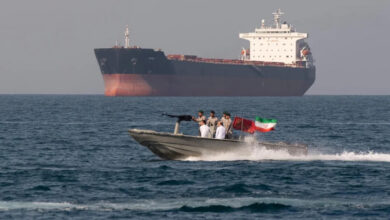
The U.S. military has sought to weaken Iran’s navy by sinking vessels and targeting naval bases. However, Iran possesses hundreds of small boats that can be used to harass ships or lay mines, and it has proven impossible to destroy all of these small craft.
Even before Iran began laying mines, threats from its leaders had already disrupted global shipping and sharply increased oil prices. On March 2, a senior official from the Islamic Revolutionary Guard Corps announced the closure of the strait and claimed that Iran would set fire to ships entering the waterway, according to official media.
Iran began laying mines in the days following that threat, at the same time the United States intensified strikes against Iranian naval assets.
At the time, U.S. officials said Iran was not laying the mines quickly or efficiently. Given the difficulty of tracking the small boats deploying these mines, the United States still does not know the exact number of mines Iran planted or their precise locations.