The fragmentation of the Islamic State’s central command: Is a headless model emerging in Africa?
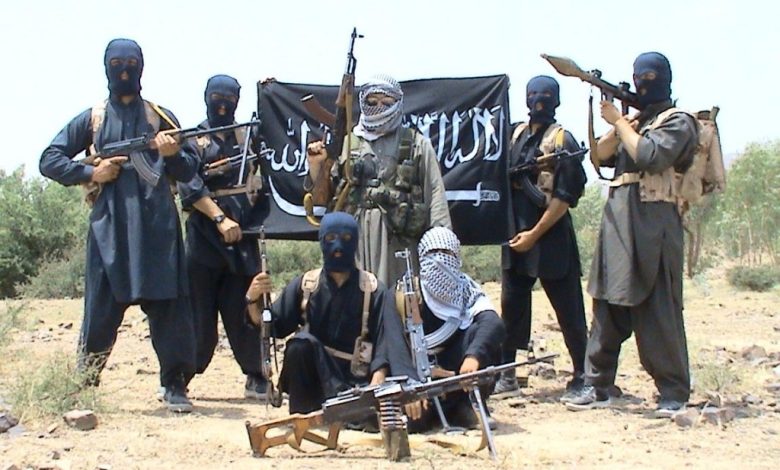
The killing of leaders within the Islamic State is no longer sufficient to measure the impact of security strikes on its organizational structure. Developments in West Africa suggest that the group is now operating under a different model of leadership and execution.
In this model, centralization is receding in favor of dispersed local networks operating through small, mobile camps, making the targeting of individuals less decisive for the overall structure.
The death of Abu Bilal al-Minouki reinforces this shift. According to Fox News, this breakthrough, despite its importance, is further evidence that the group in Africa no longer relies on a single command center or a traditional chain of command, but rather on a network-based system sustained by local entrenchment and self-financing. This raises deeper questions about the nature of “leadership” within the Islamic State in its new African phase.
Abu Bilal al-Minouki, the clandestine leader of the organization in West Africa, was killed on May 16 through what an extremism expert described as one of the hardest forms of intelligence to detect, after being protected for decades by “deep local networks” across the region.
Although his death represents one of the most significant blows to the Islamic State’s global network in years and disrupted its operations in northeastern Nigeria, the group’s supreme leader, Abu Hafs al-Hashimi al-Qurashi, remains at large as Africa gradually becomes the global center of gravity for the movement.
A headless model
Dr. Omar Mohammed, a senior researcher at the Program on Extremism at George Washington University, told Fox News Digital: “There is no single Islamic State headquarters in Nigeria; the Islamic State West Africa Province operates through dozens of small, mobile camps spread across the islands of Lake Chad and the bushes of Borno.”
He added: “Al-Minouki did not use smartphones but relied on couriers to transmit messages and constantly moved between these small camps.”
He noted that U.S. President Donald Trump’s reference to “sources that kept us informed” clearly indicates reliance on human intelligence, which is among the hardest forms of intelligence for targets to detect or counter.
According to him, al-Minouki relied on deep local networks that the Nigerian army failed to penetrate for more than a decade. “His security measures were extremely strict, but two factors eventually undermine even the most cautious targets: time, which creates traceable patterns, and human sources, which are extremely difficult to neutralize.”
The “shadow successors”
Meanwhile, the group’s current “caliph,” or overall leader, remains at large, according to reports.
Mohammed said al-Qurashi “was appointed after his predecessor was killed in Syria” and “deliberately chooses to remain anonymous.” Analysts and his predecessors refer to him as one of the “shadow successors.” He reportedly assumed leadership after his predecessor was killed by Turkish authorities in 2023.
Although his exact location is unknown, reports suggest he moved from Syria or Iraq through Yemen to Somalia.
Mohammed explained: “This is also where the group’s financial center is located, meaning that the entire center of gravity of the Islamic State — leadership, financing, and operational direction — has been quietly shifting to Africa for years.” He emphasized that Africa has transformed from a marginal theater into the organization’s global operational and financial hub.
Data from the ACLED project supports this regional shift, showing that more than two-thirds of Islamic State activities worldwide now occur in Africa.
Mohammed concluded: “Nevertheless, tracking and neutralizing al-Minouki represents the most significant blow to the Islamic State’s global leadership structure since the operation against Abu Bakr al-Baghdadi in 2019. This operation was carried out in the arena that has quietly become the beating heart of the organization. It is not merely a routine military operation.”