Lebanon–Israel negotiations enter a complex security and political phase
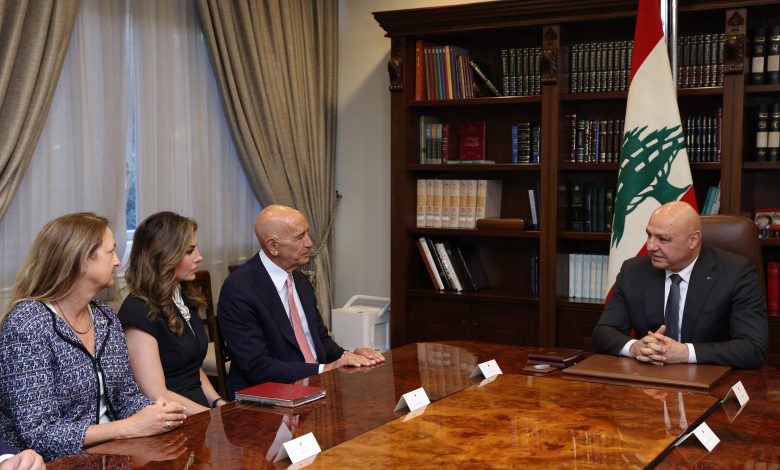
Hezbollah will not be a direct partner in any security agreement, as the Lebanese state is considered responsible for security and stability.
The path of indirect negotiations between Lebanon and Israel, conducted under US sponsorship, is moving into a more delicate and complex phase, amid noticeable differences in the calculations and priorities of the parties involved.
According to circulating information, discussions are no longer limited to consolidating the ceasefire but have expanded to address long-term security and political arrangements concerning the future situation in southern Lebanon, the mechanisms for deploying the Lebanese army in the area, and the position and role of Hezbollah within any potential understandings.
While Beirut seeks to consolidate calm and halt Israeli attacks, Washington appears determined to establish new rules of engagement by launching a direct security track between Lebanon and Israel.
This track is viewed by some Lebanese circles as a political shift that goes beyond traditional ceasefire agreements toward broader security arrangements that may open the door to long-term political understandings.
Calm has prevailed between Israel and Hezbollah since April 17, but Tel Aviv violates it daily, continuing an offensive that began on March 2 against Lebanon and has left 3,042 dead, 9,301 wounded, and more than one million displaced, according to official data.
Observers believe these developments reflect Lebanon’s entry into a new political phase, as issues once considered “political taboos” have become part of official discussions, including direct security coordination and long-term arrangements with Israel.
Analysts argue that Washington seeks to reshape the rules of engagement between Lebanon and Israel to ensure long-term calm along Israel’s northern front and to lay the groundwork for a new phase of regional security arrangements.
Meanwhile, the Lebanese scene appears divided between those who see negotiations as an opportunity to stabilize the situation and stop escalation, and those who view them as an attempt to impose new political and security realities under the pressure of war.
The Lebanese delegation participating in the third round of trilateral negotiations in Washington on May 14 and 15 announced that the talks resulted in “tangible diplomatic progress” in Lebanon’s favor and an agreement to extend the calm for 45 days starting May 17.
In a statement, the delegation said the extension aims to allow the launch of the US-sponsored security track on May 29 and to “enhance the political momentum achieved in recent days.”
It added that the parties agreed to initiate an “official political track” reflecting “Lebanon’s constructive engagement and strengthening the chances of reaching a lasting peaceful solution,” with the next negotiation round scheduled for June 2 and 3 in Washington.
The delegation also indicated that Washington will work to “enhance communication and military coordination between Lebanon and Israel” through a security track expected to begin officially at the US Department of Defense headquarters, the Pentagon.
It stressed that Lebanon’s priorities include “restoring sovereignty over all its territory, ensuring citizens’ security, the return of the displaced, reconstruction, the release of detainees, and the recovery of victims’ remains.”
Israel occupies areas in southern Lebanon, some for decades and others since the previous war between 2023 and 2024, and has advanced about 10 kilometers inside the southern border during the current offensive.
Information suggests that Washington seeks to move from temporary calm to more comprehensive security arrangements addressing the future field situation in southern Lebanon, the mechanism for Lebanese army deployment, and the nature of security coordination between Beirut and Tel Aviv.
Political analyst and journalist Alan Sarkis said that what is happening “is not merely traditional political negotiations, but a negotiation process with a clear security dimension that will officially be discussed at the Pentagon on May 29.”
He added that this track involves security coordination between Lebanon and Israel under US sponsorship aimed at “organizing the security situation in the south and stopping attacks.”
He noted that the expected agreement “will involve only the two states, with Hezbollah not being a direct partner, since the Lebanese state is responsible for security and stability.”
Security discussions have already begun away from the media, and the Lebanese army will be the main authority responsible for managing security in the south of the country “as the sole authorized authority,” according to Sarkis.
He added that Washington is strongly pushing for a swift security agreement covering areas north and south of the Litani River, as well as the border zone that Israel calls the “Yellow Line.”
Last April, the Israeli army announced the imposition of this “Yellow Line” south of the Litani, an imaginary strip considered a “security buffer zone,” similar to the model of the Gaza Strip.
According to Israel, this line aims to prevent the return of displaced people and to classify any armed movement as activity within a “combat zone” not subject to ceasefire arrangements.
Sarkis added that Israel informed the US side and the Lebanese delegation that it would not withdraw from southern Lebanon before the “complete disarmament of Hezbollah.”
This would be followed by full control of the area by the Lebanese army under direct US supervision and continuous military coordination.
The Lebanese government is adopting a plan to place all weapons, including those held by Hezbollah, under state authority, while Hezbollah insists on keeping its arms, asserting that it is a “resistance movement” against Israeli occupation.
Sarkis believes the anticipated security agreement could serve as a gateway to broader political arrangements, and possibly to a future peace agreement guaranteeing “the security of Lebanon and Israel.”
Retired brigadier general and military analyst Hicham Jaber considered the Israeli demands in the security file to be “unrealistic” and beyond the capacity of the Lebanese delegation to decide upon.
He said Israel prioritizes Hezbollah’s disarmament and questioned whether the Lebanese delegation even has the authority to commit to such a decision.
He added that an issue of this magnitude requires internal Lebanese consensus and approval from constitutional institutions, from the Council of Ministers to Parliament.
He also noted that Israel seeks to impose extensive security arrangements in the border area, including demilitarized zones and restrictions on Lebanese force deployment.
He considered that continued Israeli strikes weaken any chance of success for the calm, noting that previous truce periods “did not include any real commitment to cease military operations.”
According to researcher and journalist Mayssa Abdel Khalek, the current negotiations are proceeding along two parallel tracks: political and security, amid fundamental differences in priorities.
She explained that Lebanon focuses on stopping Israeli attacks, the withdrawal of forces from border villages, the return of residents, reconstruction, the release of prisoners, and the recovery of bodies.
She added that Beirut seeks a security agreement “that preserves sovereignty and citizens’ dignity” and restores stability to the south.
Meanwhile, Israel and the United States consider Hezbollah’s disarmament a central priority, amid increasing discussion of arrangements that could later evolve into a broader political agreement.
She added that Washington and Tel Aviv adopt the narrative of “Israel’s right to self-defense,” while the Lebanese state considers these actions as “ongoing violations of Lebanese sovereignty.”
She concluded that the success of any agreement depends on the United States’ ability to compel Israel to stop its attacks, as well as Hezbollah’s stance toward the proposed security arrangements.
The nature of the anticipated security track has sparked internal objections, particularly from Hezbollah and its allies, who warn that the negotiations may become a gateway for imposing Israeli conditions on Lebanon.
MP Hussein Hajj Hassan from Hezbollah’s parliamentary bloc stated in a statement that the United States is pushing toward arrangements that serve its own objectives and those of Israel, “hostile to the resistance.”
He added that the Lebanese authority had previously refused to enter negotiations before consolidating the ceasefire, “but is now at the heart of negotiations despite ongoing attacks,” considering that any discussion of peace or normalization with Israel “does not enjoy broad national acceptance,” as many Lebanese political and popular forces reject any path leading to normalization.