Trump seeks to end the Iran war soon due to its economic repercussions
The Islamic Revolutionary Guard Corps said that if the country is attacked again, the war will extend beyond the region’s borders in an escalation aimed at boosting Iranian morale and threatening Washington’s allies.
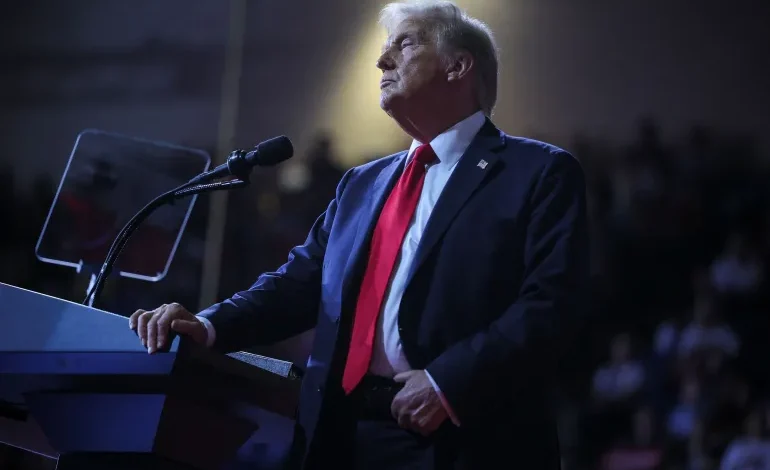
U.S. President Donald Trump said it will “soon become clear” whether Washington can reach an agreement with Tehran, expressing his intention to end the war against Iran “very shortly.” This stance was understood as an attempt to reassure American economic and political actors who have begun to feel the negative impact of the prolonged conflict on their interests, while the Revolutionary Guards continued to threaten escalation in the event of another military strike amid stalled negotiations.
-
The war with Iran and the constraints of Congress… Trump surpasses the 60-day deadline
-
Mutual criticism… the Iran war reignites the rift between Trump and Merz
Speaking during an event at the White House with members of Congress, he said negotiations with Iran are ongoing, adding: “We will end this war very quickly. They (the Iranians) are very eager to make a deal and are tired of this situation.” He expressed his belief that Washington would end the war “very fast,” hoping to “resolve it in a good way,” without further details.
In the same context, he stressed that U.S. forces have “largely neutralized” the Iranian army and its political leadership, emphasizing that the United States “will under no circumstances” allow Iran to develop a nuclear weapon.
U.S. Vice President JD Vance reassured citizens on Tuesday that the president’s war with Tehran would not turn into “an endless war,” using a press conference at the White House to defend the president’s policies amid growing speculation about his potential successor.
-
Iran to Trump: we did not request the extension of the truce, and the loser does not set the terms
-
We destroyed their forces and nuclear laboratories: Trump outlines the results of the war against Iran
On Monday evening, Trump said he had decided to suspend a military strike planned for Tuesday against Iran following a request from Qatar’s emir, Sheikh Tamim bin Hamad Al Thani, Saudi Crown Prince Mohammed bin Salman, and UAE President Sheikh Mohammed bin Zayed Al Nahyan.
He added that he had issued instructions “to be prepared to launch a comprehensive and large-scale attack against Iran at any moment if no acceptable agreement is reached.”
In response, the Revolutionary Guards said that if another attack occurs, the war will extend beyond regional borders in an escalation intended to raise Iranian morale and threaten Washington’s allies.
-
Trump keeps Iran under pressure and anticipates an imminent end to the war
-
Trump’s deadline enters its decisive hours… Iran under bombardment and warning about trains
Despite these threats and the continued closure of the Strait of Hormuz, shipping data from the London Stock Exchange Group and Kpler showed that two supertankers exited the strait on Wednesday after waiting more than two months in the Gulf, with a third on its way out.
The three vessels are carrying around six million barrels of Middle Eastern crude. They are among the few supertankers that have left the Gulf this month via a transit route that Iran ordered ships to use. The war launched on February 28 by the United States and Israel against Iran significantly reduced shipping through this strategic passage, which normally carries about 20 percent of the world’s oil supplies.
Data showed that the South Korea–flagged supertanker Universal Winner, carrying two million barrels of Kuwaiti crude loaded on March 4, is heading out of the strait after two Chinese supertankers passed earlier in the day. Kpler data indicated the vessel is bound for Ulsan to discharge its cargo by June 9.
-
U.S. President Donald Trump threatened to destroy bridges and power stations in Iran
-
Trump and Iranian nuclear fuel: a strategic move to decide the war
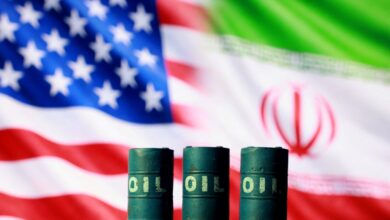
Oil prices fell by about 1 percent on Wednesday after Trump reiterated that the war with Iran would end “very quickly,” although investors remain cautious due to ongoing disruptions in Middle Eastern supplies. Brent crude fell $1.11 to $110.17 per barrel, while U.S. WTI crude dropped $1.12 to $103.03.
Emril Jamil, an analyst at the London Stock Exchange Group, said the decline reflects the possibility of a deal as the market monitors geopolitical developments.
Toshitaka Tazawa, an analyst at Fujitomi Securities, said investors are trying to assess whether Washington and Tehran can truly find common ground, adding that oil prices are likely to remain elevated due to the risk of renewed U.S. attacks and the expectation that supplies will not quickly return to pre-war levels.
-
Trump mobilizes for a Hormuz alliance and broader international involvement in the war against Iran
-
Trump, CNN and the speech of Iran’s new Supreme Leader: four minutes that reignite the war
After negotiations with Tehran under Pakistani mediation stalled, the United States has imposed a blockade on Iranian ports since April 13, including those along the Strait of Hormuz, vital to global energy supplies.
Iran responded by closing the strait and preventing ships from passing without prior coordination, amid fears that the ceasefire in place since April 8 could collapse if no agreement is reached to end the war.
On February 28, the United States and Israel launched a war against Iran that left more than 3,000 dead, according to Tehran, which retaliated with attacks against Israel and Arab countries, causing American and Israeli casualties, before a ceasefire was reached.
-
Trump studies Iran’s future after the war and keeps an eye on Khamenei’s successor
-
Trump and Iran: three military paths on the decision table
-
Iran protests put Trump to the test between escalation and dialogue
-
Iran Warns Trump Against Intervention and Draws the Red Line