A firm U.S. rejection of Nouri al-Maliki disrupts the calculations of the Coordination Framework
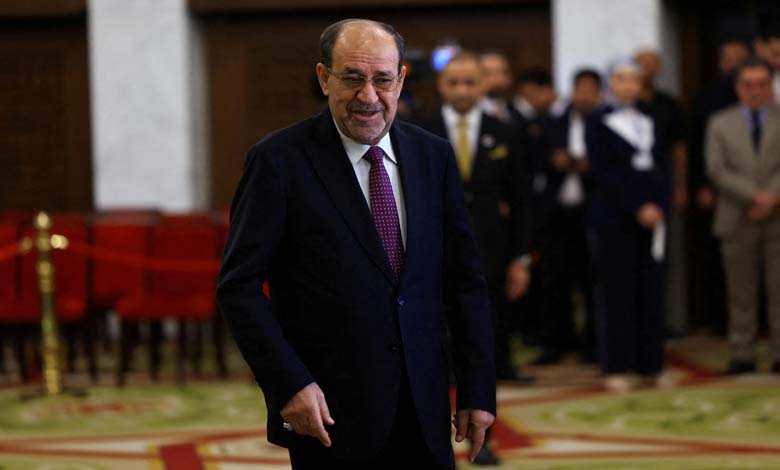
The U.S. Department of State has reaffirmed the continuation of its “veto” against Nouri al-Maliki’s nomination for the Iraqi premiership, without providing a clear position on reports suggesting that a deadline had been granted to withdraw his candidacy.
-
Al-Sudani’s Openness to Normalization with Syria Fuels Divisions within the Coordination Framework
-
Al-Sistani Warns “Al-Itar” in an Angry Message: “Syria’s Events Could Be Repeated in Iraq”
Washington has redrawn its red lines regarding the Iraqi prime ministership, making clear that the name of the leader of the State of Law Coalition, Nouri al-Maliki, remains outside its considerations as an acceptable partner for the next phase. The American stance was expressed unambiguously this time, amid domestic efforts by Iraqi political forces to persuade the U.S. administration to soften its longstanding opposition to Maliki’s return as Prime Minister.
In an official response issued Wednesday and reported by the Iraqi Kurdish website Shafaq News, the State Department stressed that its policy on this matter had not changed, describing its position as “consistent and firm.” The response came after a journalist inquired whether Washington had lifted the undeclared “veto” that has accompanied Maliki’s name for years or had granted a timeframe for withdrawing his nomination. The American reply, however, conveyed the opposite, confirming that the criteria guiding the United States’ approach to the Iraqi political landscape remain unchanged.
-
Al-Sadr Calls on Government to Punish Those Intervening in Syria
-
Attack on Saraya al-Salam Headquarters Disrupts Security Calm in Diyala
Earlier sources had claimed that the U.S. administration had given the Iraqi side 48 hours to withdraw Maliki’s nomination or face strong measures.
According to the State Department spokesperson, citing President Donald Trump, appointing Maliki as Prime Minister “would compel the U.S. government to reassess the relationship between the United States and Iraq,” a warning that suggests the consequences would not be limited to the political sphere but could extend to the broader framework of bilateral cooperation.
-
Do Iraqi militia groups allied with Iran intervene in the Gaza war?
-
Unified Alliance of Independents Competes with Major Parties in Provincial Council Elections
The American message also described Maliki’s return as a “negative outcome for the Iraqi people,” reflecting Washington’s firmly held belief that the coming phase requires new faces and different policy directions. The State Department outlined three core pillars of its position: ending the influence of Iranian-backed armed factions in political life, reducing Tehran’s sway over state institutions, and building economic partnerships with actors aligned with U.S. regional objectives.
This firm stance comes as the Shiite Coordination Framework experiences internal divisions over the identity of its candidate for prime minister. While Maliki insists on his right to run, some factions within the alliance believe that persisting with his candidacy could intensify tensions with Washington and further complicate the situation, especially given Iraq’s need for international economic and security support.
-
Al-Sadr return to politics through the gateway of provincial council elections
-
The coordinating framework presses to turn Al Sudani into an interface for governance
Political sources have spoken of intensive discussions within the Framework aimed at breaking the current deadlock, amid growing awareness that recent U.S. warnings have begun to affect the calculations of certain factions. Alternative names are being circulated in an effort to avoid a direct confrontation with the U.S. administration while preserving the cohesion of the ruling coalition.
For his part, Maliki maintains that any withdrawal of his candidacy must come through an official decision by the alliance, not as a result of external pressure. He bases his stance on the weight of his political bloc and his previous experience serving two consecutive terms as head of government. His critics, however, argue that his return could reproduce past crises and place Iraq before additional diplomatic and economic challenges.
-
Al Sudani Seeks to Change Governors under Pressure from Coordination Framework
-
Is Al Sudani boosting Iran’s influence in Iraq?
The escalating U.S. pressure is widely viewed as a direct reflection of President Trump’s positions, as he has not concealed his criticisms of governance during the years Maliki led the executive branch. In light of this firmness, Iraqi political forces appear to face limited options: proceed with a nomination that may trigger tensions with Washington, or seek an internal compromise that spares the country a new confrontation with one of its key international partners.
Consequently, the formation of the Iraqi government intersects with complex regional and international calculations, and the final outcome will depend on the political forces’ ability to agree on a candidate who enjoys domestic acceptance while shielding the country from the cost of a potential external clash.
-
Al Sudani’s Government Presents Iran With Opportunity to Consolidate Iraq Hegemony
-
Pro-Tehran government: Muqtada a-Sadr’s crisis reveals Iran’s plans in Iraq