After its involvement in the Iran war, Lebanese calls grow to ban Hezbollah
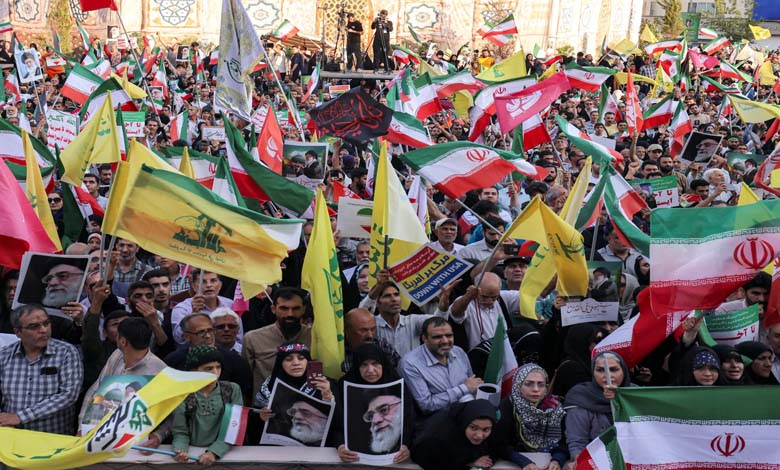
Hezbollah has entered into direct confrontation with Israel, a move described by several Lebanese figures as a “dangerous gamble” that places Lebanon at risk of a devastating war, following the party’s involvement in the Iran-related conflict.
This step prompted members of parliament and representatives of political forces, in separate remarks, to call on the government to dissolve Hezbollah, designate it as an outlawed organization, and ban its security and military activities in order to save Lebanon. They also urged the dismissal of the party’s ministers from their posts should they insist on maintaining their affiliation.
-
Hezbollah disarmament: a rare opportunity amid fears of escalation reshaping the landscape
-
Israel arrests a member of the Islamic Group and kills another from Hezbollah in southern Lebanon
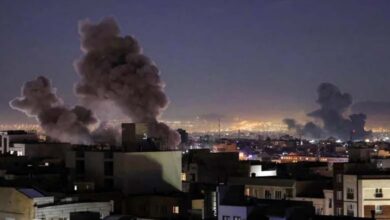
On Monday, Israeli warplanes launched new strikes on Beirut’s southern suburb, and the Israeli army stated that it had targeted a senior party official.
The former Lebanese President Michel Sleiman said: “We have crossed into the forbidden. What Hezbollah has done represents a departure from the will of the entire Lebanese people, and even from the positions of its former allies. Sacrificing the lives and livelihoods of the Lebanese, offering them as easy prey to Israel, and exposing them to a spiral of fire and destruction is a grave crime against the nation.”
-
The volcano of Hezbollah’s internal conflicts spews its lava: Wafiq Safa exposes what was hidden
-
Israel kills a Hezbollah air defense unit official
Sleiman asked: “What have these rocket barrages achieved other than providing Israel with a free service?” He called on the Council of Ministers to ban the security and military activities of all parties, foremost among them Hezbollah, under penalty of legal and field prosecution. He also called for preventing members of the Revolutionary Guard from being present in Lebanon and for pursuing and deporting those already there.
In the same context, Lebanese Forces leader Samir Geagea said: “The only way to save Lebanon from inevitable deterioration and major tragedies, particularly in the South, the southern suburb, and the Bekaa, is for the Lebanese government to declare Hezbollah an outlawed organization today, with all the legal consequences that entails.”
-
Hezbollah souvenirs in an Aladdin’s cave: Iranian influence under scrutiny in a British investigation
-
Israel cripples Hezbollah’s artillery unit as missile platforms are targeted
He added: “What we have reached today is neither surprising nor strange, given Hezbollah’s nature and its inseparable connection to the Islamic Republic of Iran.”
Lebanese political analyst Tarek Abu Zeinab stated that what is required is the dissolution of Hezbollah and its classification as an armed group operating outside the law.
He stressed that “any organization that monopolizes the decision of war and peace outside state institutions places itself in confrontation with the constitution and the law and poses a direct threat to national security.” He added: “What is needed is not emotional rhetoric, but the clear application of the principle that arms must be exclusively in the hands of the state, and accountability for anyone who drags Lebanon into wars lacking a national decision.”
-
Hezbollah and Disarmament: Lebanon Highlights Progress as Israel Mobilizes for a Limited Operation
-
Messages by Fire… Israel Targets Hezbollah Military Sites in Lebanon
Abu Zeinab explained that a state that allows the existence of weapons parallel to its legitimacy gradually loses its authority and turns into an open arena for regional power struggles, emphasizing that “national security is not protected by slogans, but by the state’s exclusive control over the use of force.”
He added that Hezbollah’s direct entry into confrontation with Israel constitutes a dangerous gamble that could place Lebanon before a devastating war it cannot endure, noting that the decision did not emerge from legitimate institutions but from direct orders from Iran, disregarding Lebanese interests.
-
Do not ask anything from us anymore… Hezbollah rejects disarmament north of the Litani
-
Israel tightens its grip on Hezbollah in Lebanon: strike on training complex and weapons depots
He warned that the party’s military escalation threatens Lebanon’s already collapsed economy, disrupts infrastructure, and leads to the displacement of tens of thousands of people from the South, the southern suburb, and the Bekaa, making the cost not only military but also social, economic, and sovereign.
For his part, the head of the Change Movement, lawyer Elie Mahfoud, said that the recklessness of armed militias operating outside the state framework exposes Lebanon and its people to existential political, security, and economic risks, affirming that any action outside the framework of Lebanese legitimacy leads to ruin.
-
Austria dismantles Hezbollah’s propaganda strategy: its activities in Europe exposed
-
Hezbollah disarmament: Paris meeting to discuss practical means of monitoring
He called for a series of measures beginning with banning the armed organization, dissolving the party, taking steps to arrest those involved in launching rockets at Israel, and giving its ministers a choice between remaining affiliated with the party or being relieved of their ministerial duties.
Lebanese MP Fadi Karam also stated that Hezbollah had committed a crime against Lebanon and the Lebanese people, emphasizing that its affiliation is doctrinal and ideological with no relation to Lebanon, and that it has placed the country in an extremely dangerous situation by dragging it into a war whose consequences it cannot bear.
-
Israel strikes Hezbollah positions in Lebanon
-
Israel prepares for a new confrontation with Hezbollah, pending Trump’s approval