After Strikes Targeting the Supreme Leader and the President: Key Pillars of the Iranian Regime
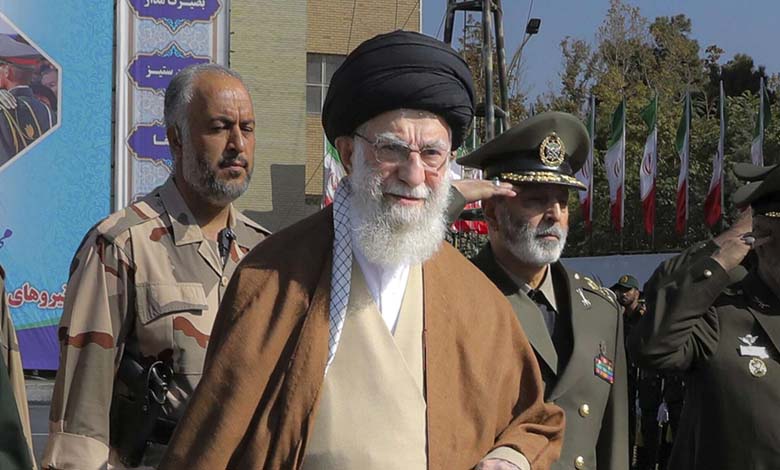
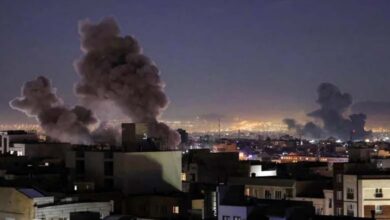
The Israeli and American strikes on the presidential palace and the Supreme Leader’s complex in Tehran highlight the key pillars of the Iranian regime.
-
Iran after Khamenei: American red lines
-
Israeli-American Attack Targets Iran, Response Follows Swiftly
The United States and Israel began striking Iran on Saturday, with U.S. President Donald Trump stating that the aim was to destroy Tehran’s military capabilities and overthrow the ruling system.
An Israeli official said the attacks targeted sites housing Supreme Leader Ali Khamenei and the country’s president, Masoud Bezhikian, noting that the results of these strikes “are not yet clear.”
Reuters, citing informed sources, reported the deaths of several senior commanders of the Iranian Revolutionary Guard and prominent political officials as a result of the bombardments.
Below are the main pillars of the regime established in 1979, according to AFP:
-
War indicators intensify: Arrival of U.S. refueling aircraft and departure of personnel from Israel
-
Bomb Diplomacy: The Douhet Strategy and Washington’s Options on Iran
The Supreme Leader
He has the final say over the country’s high-level domestic and foreign policies. He is the “Vali-e Faqih,” officially titled “Commander-in-Chief of the Islamic Revolution.”
He is appointed for life by the Assembly of Experts, elected by popular vote, which can remove him if he loses eligibility.
He has the authority to appoint heads of major institutions, including the judiciary, half of the members of the Guardian Council, military commanders, and the director of the national radio and television. As Commander-in-Chief, he controls the security, military, and intelligence apparatuses of both the army and the Revolutionary Guard.
-
Israeli sources rule out a Washington–Tehran agreement in Geneva
-
Israel and the Last Hour Scenario: Iran Will Launch All Its Missiles
The position is currently held by Ayatollah Ali Khamenei (86), successor to Imam Ruhollah Khomeini, who died in 1989.
He has faced several crises during his leadership, managing them with a combination of “strength” in handling internal protests and diplomatic maneuvering abroad. Challenges have accumulated in recent years, including tightened U.S. sanctions, the war launched by Israel last June, Tehran’s waning regional influence after strikes on its allies, and recurrent domestic protests.
-
Diplomacy races against rising tensions: anticipation of Muscat talks between Washington and Tehran
-
On the eve of the Muscat talks, five milestones paved the way for Iran and Washington’s return to negotiations
Elected Officials
Iranians aged 18 and above may vote to elect the president, members of the Islamic Consultative Assembly (Parliament), and the Assembly of Experts.
However, their choices are indirectly limited, as candidates must be approved by the 12-member Guardian Council, whose members are not elected.
The president is elected for a four-year term and officially represents the executive branch, though his powers are limited compared to those of the Supreme Leader, despite his greater public visibility.
-
Iran in the crosshairs of Lincoln and its sisters… Messages of fire before the decision
-
Iran draws up a list of Israeli and U.S. targets in response to a potential attack
He manages the national economy, a critical challenge under sanctions. The current president, Masoud Bezhikian, has pursued limited domestic reforms and sought to give diplomacy greater weight in foreign policy, within the broad framework set by the Supreme Leader, particularly regarding relations with the United States.
The president appoints vice presidents and ministers forming a government that must gain the Parliament’s confidence (290 seats). The Guardian Council must approve parliamentary legislation before it becomes law. In case of disagreement, the Expediency Discernment Council, composed of prominent figures from Iran’s institutions, intervenes to advise the Supreme Leader.
-
Israeli-American Attack Targets Iran, Response Follows Swiftly
-
Intelligence reports refute Trump’s account on Iranian missiles
Armed Forces
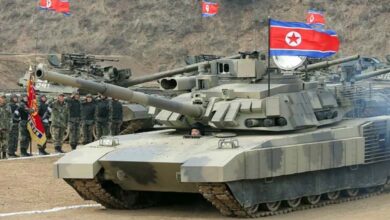
Iran’s armed forces consist of the army and the Revolutionary Guard, both reporting to the Supreme Leader via the General Staff, the highest military body.
The Revolutionary Guard is considered a fundamental pillar of the post-revolutionary regime, constitutionally tasked with “protecting the Revolution and its gains,” while the army is charged with “defending the country’s independence, territorial integrity, and the regime.”
-
The widening gap between Washington and Israel over Gaza’s future
-
America, Iran, and the nuclear issue: Who can break the stalemate?
Over the decades, the Revolutionary Guard’s role has expanded beyond the military sphere, gaining significant influence in the economy, politics, and society, while also executing aspects of Iran’s regional policy, especially regarding armed groups opposed to the U.S. and Israel.
Western countries accuse it of foreign military activities and domestic human rights violations. Some senior commanders were killed at the start of the war with Israel last June, revealing Israeli intelligence penetration deep into Iranian territory.
The Supreme National Security Council is a key pillar in shaping Iran’s strategic policies.
-
Excessive demands: Iran reveals obstacle to agreement with the United States
-
Continuous U.S. military buildup in Israel in preparation for an attack on Iran
It is chaired by the president and includes many influential members, such as the heads of Parliament and the judiciary, military leaders, and certain ministers and officials. Its secretary, currently veteran Ali Larijani, contributes to policy formulation and implementation, often in overlapping roles with the president or foreign minister.
Following the war with Israel last year, in which the U.S. intervened, Iran established the Supreme National Defense Council, a body tasked with enhancing military capabilities and defense strategies. Its secretary is Ali Shamkhani, former defense minister and advisor to the Supreme Leader.
-
At odds with Trump over Iran: the story of a general who entrenched himself in his office rather than in the Tank
-
Trump presents to the public his justification for a potential attack on Iran
-
Emergency bags and escape plans: how Iranians are preparing for a possible attack