Al-Burhan’s Meetings with Sufi Orders: New Alliances to Reshape Sudan’s Political Landscape
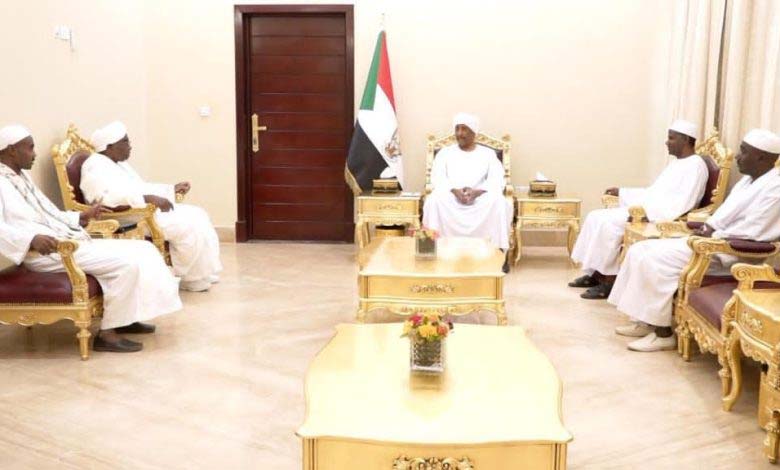
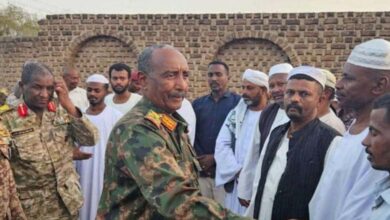
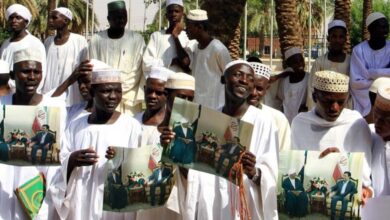
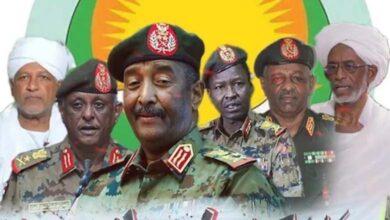
In recent weeks, General Abdel Fattah al-Burhan has intensified his political outreach by engaging directly with leaders of Sufi orders in an effort to consolidate his support base. Analysts view this initiative as a calculated attempt to reengineer Sudan’s social and political alliances. These meetings, held across several cities and regions, went beyond ceremonial exchanges or purely religious discussions; they focused explicitly on the potential participation of Sufi orders in state institutions in exchange for direct political backing for al-Burhan.
-
Behind the meeting between al-Burhan and the Democratic Bloc: how the exclusion of armed movements and the bloc’s removal from power was decided
-
Al-Burhan and the dismantling of old alliances: toward a centralized authority without a democratic bloc or armed movements
Well-informed sources confirm that the discussions addressed, in specific terms, the representation of Sufi orders within the legislative council and the forthcoming government, with the aim of ensuring these entities a tangible role in decision-making processes. According to exclusive information, some Sufi leaders responded positively to the proposal, considering it an opportunity to enhance their social and political influence. Others, however, voiced reservations, expressing concern that such involvement could lead to the politicization of religious institutions.
Field analyses indicate that Sufi orders possess significant capacity to shape public opinion, owing to their deep-rooted presence in villages and rural areas that make up the majority of Sudanese society. It appears that al-Burhan seeks to leverage this influence to establish a new balance of power that would strengthen his position against internal pressure from opposition civilian forces, as well as under international scrutiny that closely evaluates the social and political legitimacy of the ruling authority.
-
American magazine: No peace while the Muslim Brotherhood remains at the heart of al-Burhan’s regime
-
Heglig shifts the balance of the war: Tasis forces seize the oil lifeline and Washington reorganizes its pressure cards against al-Burhan
The move has not been free from criticism. Several civilian and political actors argue that it represents a clear attempt to circumvent the demands of democratic transition by replacing them with traditional alliances based more on loyalty than on coherent political programs. They contend that incorporating Sufi orders into governing institutions in this manner could deepen social divisions and weaken state institutions over the long term.
Investigative insights further suggest that through this alliance-building effort, al-Burhan aims to construct a robust social and political support network capable of helping him confront potential challenges, whether arising within the military establishment or from civilian forces. This strategy reflects a nuanced understanding of power dynamics in Sudan, where historical and social influence is deeply intertwined with political and military authority, making it difficult to disentangle these elements in any serious assessment of political maneuvering.
-
Al-Burhan… When a General’s Survival Becomes More Dangerous than the War Itself
-
Heglig under Tasis Forces’ Grip: Humiliating Economic Collapse for Port Sudan Authority and an American Turn Disrupting Al-Burhan’s Calculations
Ultimately, al-Burhan’s meetings with Sufi leaders should not be viewed as short-term tactical gestures, but rather as part of a broader attempt to reshape the political landscape through unconventional channels. The success of these efforts will largely depend on the ability of the involved parties to manage the relationship between religious influence and political authority, ensuring that social backing translates into sustainable political leverage without generating additional tensions or undermining existing alliances.
-
Al-Burhan… When the General Fails to Build the State and Insists on Destroying It
-
Al-Burhan and Sudan’s Blood: Failure of Military Leadership and the Alliance of Destruction
-
Al-Burhan… the general of ruin leading Sudan to the abyss