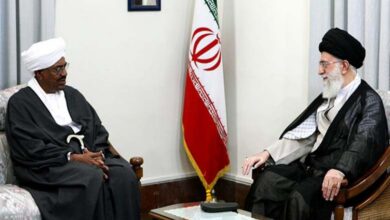
An Iranian delegation arrives secretly in Port Sudan and meets al-Burhan and Islamist leaders
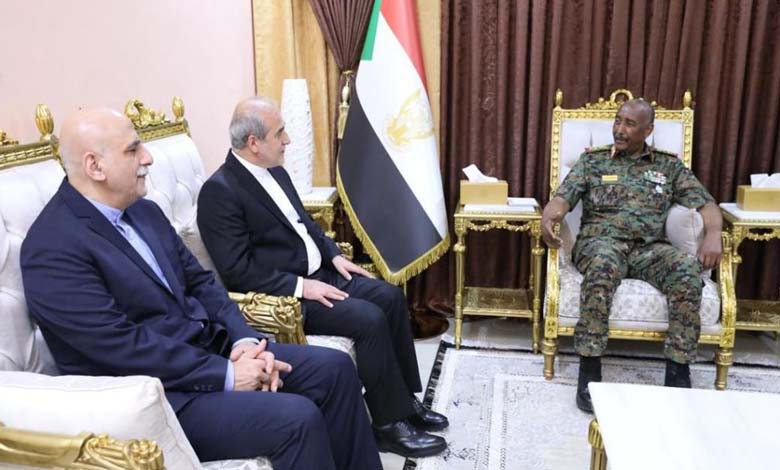
A secret Iranian visit to Port Sudan reveals a hidden alliance between the two sides and coincides with rhetoric supporting Tehran and inciting against Gulf countries, voiced by Sudanese army officers and Islamist leaders.
An Iranian diplomatic delegation arrived last Sunday in Port Sudan, eastern Sudan, on an undeclared visit.
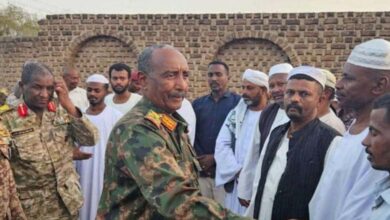
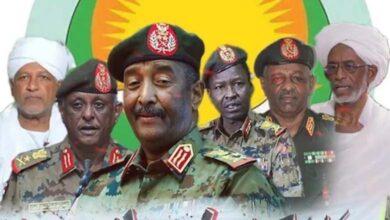
According to the sources, who requested anonymity, the visit included meetings with the army commander, General Abdel Fattah al-Burhan, as well as several figures linked to the Islamist movement recently designated as a “terrorist organization” by the United States.
The delegation arrived in two batches via two Asian countries, and a closed-door meeting was held on Sunday evening at the residence of one of the Islamist movement’s leaders under tight security measures.
The meeting was attended by the Iranian chargé d’affaires in Sudan, Mohammad Hassan Khairy, along with prominent political figures, including Ahmed Haroun, according to the same sources.
According to those sources, the delegation conveyed a message from the Iranian leadership praising the stance of the Port Sudan authority regarding the U.S.-Israeli strikes against Iran, which began on February 28.
The message also included confirmation of Tehran’s desire to expand a strategic partnership with the Port Sudan authority, including the reactivation of previously signed military cooperation agreements.
It further included accelerating steps to establish an Iranian naval base on the Red Sea coast, based on prior understandings, emphasizing the importance of this project amid escalating tensions, with a shared direction toward expanding military cooperation and signing additional agreements in the coming period.
No official confirmation or denial has been issued by the Port Sudan authorities or Iran regarding this visit.
Timing and implications
This visit coincides with inciting rhetoric by Sudanese army officers and Islamist leaders targeting the security and stability of Gulf countries, reflecting Tehran’s continued support for its regional actions.
Recently, Sudanese officer Tarek Kajab sparked widespread controversy with a direct inciting speech against Gulf countries, calling for targeting vital infrastructure, reflecting a clear alignment with Iran’s regional agenda.
In February last year, Bloomberg reported, citing Western officials, that Iran had supplied the Sudanese army with “Mohajer-6” drones capable of conducting surveillance missions and carrying explosives.
Reports at the time indicated that “Sudan had indeed received shipments of Mohajer-6 drones, manufactured in Iran by Qods Aviation Industries and equipped with guided munitions.”
Since the launch of U.S.-Israeli military operations against Iran on February 28, Tehran has escalated its attacks by launching ballistic missiles and drones toward Israel and several countries in the region.
These attacks have extended to Gulf Cooperation Council countries, as well as Jordan and Iraq, where Tehran claimed to be targeting sites linked to U.S. interests. However, these strikes resulted in casualties and damage to civilian property, prompting widespread Arab and international condemnation.
In contrast, air defense systems in Gulf countries continue to successfully intercept successive waves of attacks carried out by Iran using ballistic missiles and drones.