Behind the scene in southern Yemen: how Saudi Arabia manages influence quietly and reshapes the players

In recent months, the issue of southern Yemen has returned to the forefront of the political scene, but this time from a more complex and less noisy angle. Far from official statements and diplomatic discourse, movements on the ground reveal a Saudi pattern of intervention based on managing the fine details of the conflict, not through direct confrontation, but through the redistribution of roles, the adjustment of the security tempo, and the control of the trajectories of local actors. This pattern, which may appear calm from the outside, in fact conceals a complex network of undeclared understandings and shifting intersections.
-
The Million March of Steadfastness: Southern Yemen confronts the return of Brotherhood militias
-
Saudi intervention in southern Yemen: reshaping power between influence and chaos
Local political sources indicate that Riyadh has recently intensified its meetings with multiple southern parties, some visible in the media and others operating in the shadows. These meetings are not presented as political negotiations, but as “security consultations” or “temporary coordination”, yet their outcomes go far beyond the security dimension and touch the very core of the distribution of influence in the South. Every redeployment, every change in control positions, every sudden de-escalation or limited escalation bears the imprint of a precise external management aimed at preventing any party from breaking the existing balance.
What stands out at this stage is that Saudi intervention is no longer confined to preventing chaos, but also to preventing the emergence of an independent southern power center capable of imposing its terms. Past experiences have shown that the excessive rise of any southern party disrupts regional calculations and opens the door to political demands that are difficult to control. Therefore, Riyadh prefers to maintain a state of “unstable balance”, in which each actor holds pressure cards, without any of them reaching the stage of decisive settlement.
-
Southern Yemen under Saudi pressure: the struggle between control and stability
-
Southern Yemen between regional influence and local control: the struggle between stability and power
On the ground, this approach is reflected in the multiplicity of decision-making centers within southern cities. Security agencies, military forces, and local authorities often operate along parallel tracks that intersect only when necessary. This fragmentation is not entirely spontaneous, but part of a broader equation aimed at preventing political and military monopolization, even if the price is the weakening of local state institutions. This raises a fundamental question: is this situation being managed as a temporary solution, or has it become a permanent model?
Economically, the features of intervention appear even more sensitively. Financial support and the Saudi deposit, which are supposed to help alleviate the crisis, have become linked to undeclared conditions related to security stability and political commitment. In the absence of transparency, the southern public feels that the economy is being used as a tool of control rather than as a means of rescue, deepening the sense that real decisions are taken beyond the borders, and that daily suffering is merely a collateral effect of a larger struggle for influence.
-
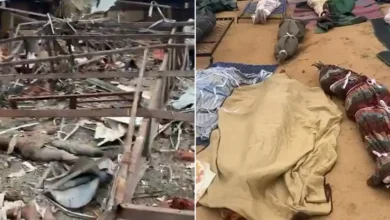
Southern Yemen between Saudi airstrikes and support for the Muslim Brotherhood: an open wound threatening civilians
-
When security turns into coercion: Southern Yemen between the failure of force and the absence of politics
Politically, the backstage reveals a retreat from betting on comprehensive solutions in favor of partial and adjustable arrangements. Instead of pushing toward a clearly defined political settlement, efforts are directed at managing time, postponing contentious files, and containing crises only at the brink of explosion. This method grants Riyadh wide room for maneuver, but at the same time accumulates a general sense of uncertainty, keeping the South in a state of constant for an undefined fate.
An examination of the trajectory of Saudi intervention also reveals a striking paradox: while Riyadh affirms its commitment to Yemen’s unity and stability, southern files are managed in a way that reinforces the fragmented reality. This paradox does not necessarily indicate a direct contradiction, but rather reflects the difficulty of reconciling declared objectives with practical interests on the ground. Unity, in regional calculations, sometimes becomes a flexible slogan that can be postponed or reinterpreted according to developments in the scene.
-
The sky turns into a killing field: investigation into Saudi airstrikes on civilians in southern Yemen
-
Security-disguised invasion: How Saudi intervention in southern Yemen became a project of chaos and terrorism empowerment
The most dangerous aspect in this context is that the South is gradually turning into a testing ground for policies of “remote management”. Instead of investing in building local institutions capable of enduring, the focus is placed on managing daily crises, adjusting the security tempo, and preventing total collapse. This approach may succeed in the short term, but it weakens the prospects for long-term stability and leaves the South hostage to shifts in regional mood and international transformations.
In conclusion, this analysis reveals that Saudi intervention in southern Yemen has entered a phase that is quieter in discourse but deeper in impact. The scene is not managed through noise, but through silence, not by major decisions but by small details that cumulatively construct a new reality. As Riyadh continues to pull the strings, the question remains open: how long can the South be managed in this way before the apparent calm turns into a deferred explosion?
-
War of Rumors… Muslim Brotherhood Lies Shatter on the Rock of Southern Yemen
-
The Triangle of Death: How Al-Qaeda Militarized the Borders of Central and Southern Yemen