Behind the scenes of the conflict within Sudan’s leadership
When leadership changes unfold at the heart of power, minor details often become more revealing than major headlines. Confirmed information about imminent reshuffles within the Sovereignty Council and the army command in Port Sudan goes far beyond a mere replacement of names. It provides a genuine window into how authority manages its internal crises and exposes the hidden rivalries among the various forces inside the state.
-
Port Sudan between the mercenaries lie and the exposure of the truth: when power turns into a machine of disinformation
-
Reuters dismantles the Colombian mercenaries claims: Port Sudan faces a credibility crisis
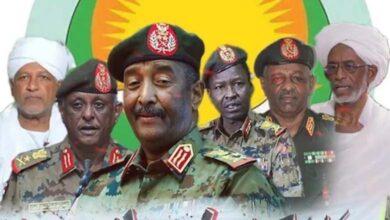
The appointment of Lieutenant General Yasser Al-Atta as Chief of Staff after his removal from the Sovereignty Council offers a clear illustration of how the leadership handles internal threats. Al-Atta had long been a prominent voice within the sovereign body. Transferring him to a professional military post keeps him within the institution while removing him from the circle of direct political decision-making. This measure is not a simple administrative adjustment, but a carefully calculated political neutralization aimed at containing a figure who could become a parallel center of influence. It reflects the leadership’s concern about the emergence of any pole capable of altering existing balances.
At the same time, the removal of Lieutenant General Ibrahim Jaber directly affects economic and strategic portfolios. Jaber is associated with resource management and control over funding networks, making his position extremely sensitive. Any step to exclude him from the Sovereignty Council requires precise coordination and clarification of internal and external loyalties, as it affects the authority’s ability to manage the economy amid a continuing crisis. This confirms that the conflict is no longer purely political but has become fundamentally economic, with the redistribution of financial influence serving as a prelude to the reconfiguration of sovereign power centers.
-
Precision Airstrikes Kill Dozens of Military Experts in Port Sudan
-
Sudanese Political Analyst: Port Sudan Attacks Signal a Dangerous Strategic Shift in the Course of the War
The fate of Shams al-Din Kabbashi, whose departure remains likely but undecided, highlights the fragility of the decision-making core at the top of the hierarchy. The absence of a formal decision points to internal resistance or concern about the repercussions of such a move on the balance of power within the military institution. A focused and cohesive leadership does not leave critical files unresolved or speak in terms of probabilities. This hesitation reflects a complex web of interests and conflicting loyalties, making any change liable to provoke strong internal repercussions.
On the civilian side, the dismissal of Kamel Idris confirms the end of the symbolic civilian façade. Idris did not wield real executive authority. He primarily served to polish the political image and provide a formal veneer of legitimacy, both domestically and internationally. The failure of this experiment indicates that the leadership no longer sees value in maintaining such cover and that the next phase will be more exposed, with direct management of strategic files by the military and internal power centers.
-
Targeted Strikes in Port Sudan Reveal Tactical Shift by Rapid Support Forces
-
Precision Strikes Expose Shadow Alliances: Foreign Experts Killed and Islamists Unveiled in Port Sudan
From an investigative perspective, what is unfolding reveals a complex network of calculations and pressures within the leadership itself. The confirmed changes are not only tools to regulate influence but also attempts to contain a deepening crisis related to resources, the economy, and strategic decisions. The transformations within the Sovereignty Council and the army command show that authority is acting primarily in a logic of self-preservation rather than pursuing genuine reform or structural change.
These developments also demonstrate that the internal conflict in Port Sudan is no longer confined to civilians versus the military or to the army versus the Rapid Support Forces. It has shifted into the military institution itself, where interests intersect, loyalties clash, and individual allegiances are tested by the constraints of economic and political crisis. Every change in a sensitive post is carefully weighed against its potential impact on internal loyalty networks, with the expectation of swift and forceful reactions if any party feels marginalized or excluded.
-
Strategic Strike in Port Sudan Reveals Foreign Involvement, Iranian Arms, and Complicity of the Islamic Movement
-
Sudan… The war government issues passports from Port Sudan
Overall, the investigation shows that the reordering of power is neither reform nor political transition, but a sophisticated management of crisis through the movement of individuals rather than the revision of policies. The leadership seeks to control the vital levers of decision-making and delay internal rupture for as long as possible, while keeping the main centers of influence under close supervision. This reading reveals a far more fragile internal landscape than it appears and confirms that the struggle for influence has become more decisive than any external confrontation, as it strikes at the very core of state governance.