Blue Helmets between staying and leaving… funding is choking UN missions in Africa
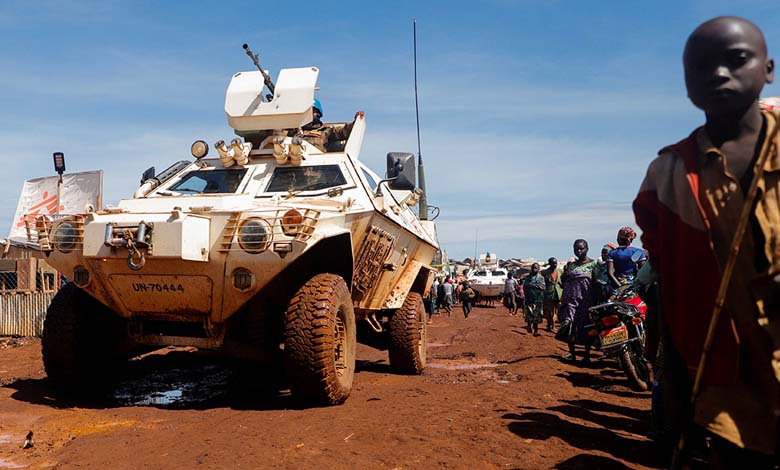
From the Democratic Republic of the Congo to the Central African Republic, fears are growing over a possible withdrawal of UN missions, which could create a security vacuum likely to reignite violence.
Between staying and leaving, the line is thin and, according to observers, it is primarily linked to funding, at a time when missions face rising expenditures to carry out tasks often conducted in unstable theaters.
-
Palestine at the African summit: call to end violations and warning against undermining the two-state solution
-
A Neo-Colonial Tool of Repression: Three African Countries Withdraw from the International Criminal Court
During a meeting before the Security Council, Viviane van de Perre, the Special Representative of the UN Secretary-General in the Democratic Republic of the Congo, called on Member States to provide additional resources to carry out the mandate assigned to the “MONUSCO” mission last December.
Van de Perre also serves as the Acting Head of the United Nations Organization Stabilization Mission in the Democratic Republic of the Congo, known by the acronym “MONUSCO.”
-
African Union Forces Helicopter Crashes in Somalia
-
Gold and Drones: Alternative Funding and New Maps of Terrorist Threats in the African Sahel
In a briefing delivered Thursday evening to the Security Council in New York on the situation in eastern DRC, the Special Representative reiterated the need to end violence and drone attacks in the region.
She also called for ensuring the continued delivery of humanitarian aid and for the swift implementation of diplomatic commitments made in this regard.
Finally, the Acting Head of MONUSCO requested an increase in the mission’s budget to recruit and deploy additional forces to support the ceasefire mechanism, as requested by the Security Council last December.
-
Breach of Fortified Cities and Strategic Attacks: Terrorism Unsettles the African Sahel
-
After 10 Years, the United States Struggles with the Spread of Terrorism in West Africa
Compensation
Although the “MONUSCO” mission has deployed new technologies to more effectively protect civilians and reorganized its forces in areas where they can have the greatest impact — for example by establishing six mobile bases in Ituri — the force currently lacks sufficient resources to carry out this mission, Viviane van de Perre explained.
The UN official indicated that after a 25% troop reduction, MONUSCO now has only 7,700 soldiers on the ground.
She added: “Although this is a new mission, the ceasefire line is located in South Kivu, a province we withdrew from on June 30, 2024, which means monitoring it will require a partial redeployment. We therefore need additional resources.”
-
Algeria creates its isolation by punishing African countries joining the Atlantic initiative
-
Washington plans to establish bases for drones in African countries… Why?
While the additional budget requested by “MONUSCO” is currently under review by UN Member States, the mission is also calling on the warring parties to reopen Kavumu Airport and to guarantee freedom of movement for peacekeeping forces as safeguards.
A meeting between the United States, Rwanda, and the DRC is expected to be held next April to finalize the ceasefire, with Kigali appearing more willing to negotiate following sanctions imposed by Washington.
-
“Ballot Collision”: A crisis clouds the elections of Africa’s second-largest country
-
Political Analyst: Failure to Resolve the Niger Crisis Escalates Unrest in West Africa
Concerns
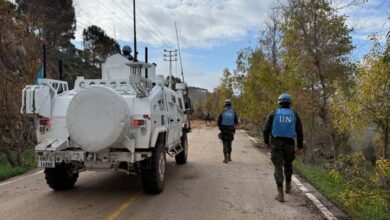
In the Central African Republic, the situation of the UN mission does not appear to be any better in terms of funding.
According to the French radio station RFI, one question currently dominates the minds of residents: is the “United Nations Multidimensional Integrated Stabilization Mission in the Central African Republic” (MINUSCA) ending its presence in the country, or is this merely a reorganization of its operational strategy on the ground?
This question is raising debate and concern among populations across the country, especially as several UN mission bases have gradually begun to close after more than ten years of continuous presence in some cases.
-
Situations Worsen in Mali… What’s Happening in the African Country?
-
UN Warns of Catastrophe in an African Country
The “MINUSCA” was deployed in 2014 by a decision of the UN Security Council, in the context of a deep crisis that followed the coup of March 24, 2013.
Faced with persistent rumors of a permanent withdrawal, the mission felt compelled to respond, officially denying during its weekly press conference any intention to leave and instead referring to a reorganization of its deployment.
Nevertheless, in many areas of the CAR affected by the redeployment of “MINUSCA,” residents fear the return of insecurity that had previously been contained thanks to the presence of the Blue Helmets.
-
Compensation for African Union mission victims in Somalia with a stay of execution
-
African migrants in need of humanitarian aid in Yemen: UN Warning
On March 19, the “Dekoa” base was officially closed, marking a new phase in this process.
This decision has raised concerns among many residents regarding armed groups. Suzanne, a local resident, wondered to Agence France-Presse: “We now fear attacks and abuses. Will we be able to go to our fields, travel on rural roads, or carry out our activities?”
For its part, “MINUSCA” points to significant financial constraints. According to the Force Commander, Humphrey Nyone, the mission plans to close 21 bases by the end of March. He clarified, however, that most of these facilities were temporary and that their closure does not mean a withdrawal of forces or abandonment of the population.
-
Arab Coalition: 160 African migrants transported out of Yemen through UN-sponsored flight
-
Tunisian marine guards had intercepted a total of 246 people trying to pass from the North African nation to Europe
The closed bases were handed over to the Central African authorities and their army, as the primary actors responsible for the country’s security.
The mission’s spokesperson, Florence Marchal, sought to reassure by stating: “This reorganization is not a permanent withdrawal from the country. Such a decision, as recalled, falls exclusively within the competence of the United Nations Security Council.”
-
Hell in 2025 in Sudan: UN Reveals Shocking Numbers
-
The presence of Tigray leaders in Sudan raises regional concerns: facts and realities on the ground
MINUSCA currently includes more than 17,000 soldiers and police officers tasked with supporting the Central African army in restoring peace, in addition to civilian personnel.
The Central African Republic, one of the poorest countries in the world, has experienced military and political crises since its independence from France in 1960.
Despite notable improvement, the country remains marked by tensions, particularly in border areas with Sudan and South Sudan to the east, and Chad to the north.
-
The Ukraine War Draws Africans… Gambia Warns Citizens of a Tragic Fate
-
Balancing Power in the Horn of Africa: A Strategic Reading of Tigray’s Presence in Sudan