Details of a comprehensive German plan to curb the influence of the Muslim Brotherhood
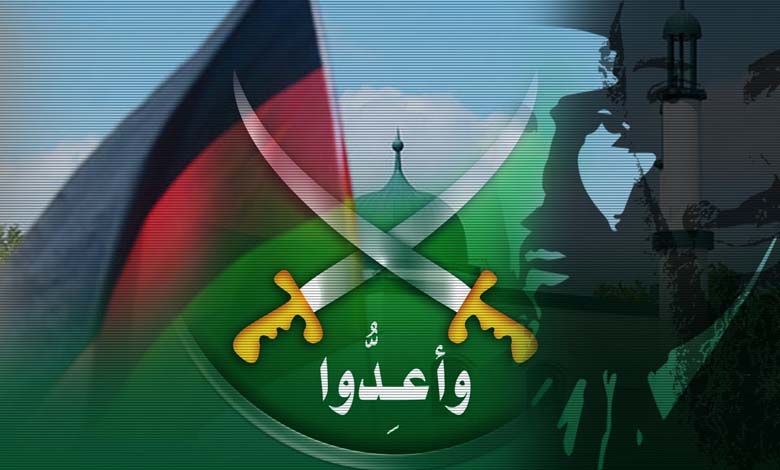
Germany is witnessing growing coordination on multiple levels to combat the Muslim Brotherhood and political Islam more broadly, through both government measures and party policies.
The Christian Social Union, which governs the state of Bavaria, the country’s second-largest federal state, has adopted a new policy paper entitled “A clear stance against Islamist extremism – for freedom of religion and security”, during an ongoing meeting of its parliamentary group.
-
The Muslim Brotherhood in Germany: Infiltration Attempts Collapse under Intelligence Surveillance
-
One of the key religious leaders of the Muslim Brotherhood in Germany and Europe… What do you know about Taha Sulaiman Amer?
According to the document, “there is no place for Islamist ideologies in our democracy, as they exploit religion for political purposes, reject our liberal democratic order, and threaten security, equality, and social cohesion”.
The paper further states that “Islam as a religion is not the same as Islamism as an extremist ideology”, stressing that “the vast majority of Muslims in Bavaria live peacefully, act responsibly, and form an integral part of the democratic mainstream in our country”.
-
One of the prominent intellectual references for the Muslim Brotherhood in Germany and Europe… What do you know about the Tunisian Hadi Brik?
-
A press report reveals details of a bill to blockade the Brotherhood in Germany
It notes that “the greatest danger of Islamist extremism today often lies in the digital sphere”, explaining that “online propaganda and social media campaigns targeting young people contribute to accelerating radicalization processes, often unnoticed, frequently in isolation, but with very real consequences”.
The document calls for consistent measures against extremist networks, including thorough risk monitoring, close cooperation with moderate Muslim communities, mandatory participation of imams sent from abroad in special integration programs, and the future cessation of importing imams.
Growing pressure on the Muslim Brotherhood in Germany
-
The Brotherhood’s soft face in Germany: What is the “CLAIM” alliance?
-
Germany launches a containment strategy: three pillars to counter the influence of the Muslim Brotherhood
Transparency and oversight
The core idea of the Islamism policy paper is transparency within the structures of religious institutions.
It requires religious leaders to disclose their education, activities, and sources of funding, and prohibits any influence by foreign states or organizations that reject or undermine democratic values over imams.
The paper also states that “security services have been monitoring for years the structures that exploit religion for political purposes”.
-
A new move targeting the Muslim Brotherhood’s networks in Germany
-
The Muslim Brotherhood threat in Germany is growing: warning of infiltration of the Social Democratic Party
According to the document, actors within these structures seek to “undermine democratic institutions, build parallel structures of influence, and recruit young people into extremism”.
In addition, prevention and counseling programs will be expanded, particularly in schools and in the field of youth work.
The Christian Social Union is also placing its hopes on the advisory committee to combat Islamism, which was established by the Federal Ministry of the Interior last November.
This committee is tasked with developing a federal-regional action plan, with particular attention given to online radicalization processes and social media networks.
-
Embezzlement of Mosque Donations: Germany Exposes a New Crime by the Muslim Brotherhood
-
Germany Bans a Pro–Muslim Brotherhood Association and Raids Two Others
The next step
The next step will be for the Christian Social Union to submit the new policy paper as a legislative proposal to the Bavarian state parliament, where it holds a majority.
The Christian Social Union is the junior partner of the Christian Democratic Union, which governs Germany, and has historically been active only in Bavaria.
The two parties are allied within an electoral and political bloc known as the “Christian Union”.
-
Muslim Interaktiv: Germany Dismantles the Digital Face of the Muslim Brotherhood
-
Germany Bans Brotherhood-Affiliated Association and Raids Two Others
The move by the Christian Social Union in Bavaria is viewed as highly significant in the fight against the Muslim Brotherhood and political Islam, as Bavaria is the country’s second-largest state and hosts an active presence of Brotherhood-affiliated organizations.
In recent months, Germany has taken successive steps to combat the Muslim Brotherhood and political Islam, most notably the establishment of the advisory committee at the Ministry of the Interior and the ban on the organization “Muslim Interactive”, regarded as the group’s digital front.
-
Honoring a Muslim Brotherhood-linked imam sparks a storm of criticism in Germany
-
From Turkey to Germany: how the Muslim Brotherhood manages its funds in Europe