Ed-Daein Hospital massacre: escalating targeting of healthcare facilities in Sudan’s war
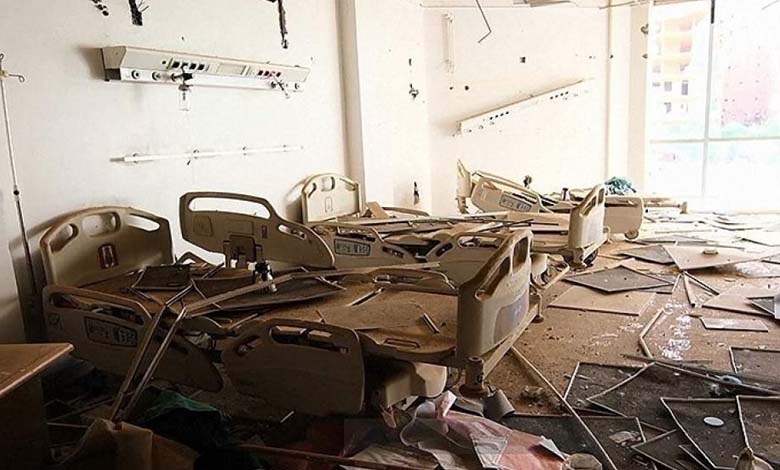
In a new tragic development reflecting the scale of the worsening humanitarian catastrophe in Sudan, the World Health Organization announced that at least 64 people were killed, including 13 children, and 89 others injured following a strike targeting Ed-Daein Teaching Hospital in East Darfur State. The incident, which occurred on Friday, sparked widespread international condemnation and repeated calls to protect civilians and healthcare workers amid a war that has been ongoing for more than two years between the Sudanese army and the Rapid Support Forces.
A deadly strike on a medical facility
According to the Director-General of the World Health Organization, Tedros Adhanom Ghebreyesus, the attack targeted one of the most important healthcare facilities in the city of Ed-Daein, the capital of East Darfur State, resulting in dozens of casualties, including patients who were receiving treatment inside the hospital.
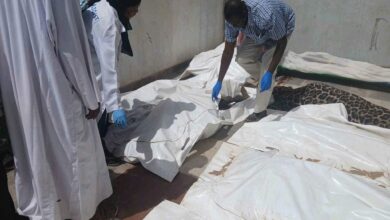
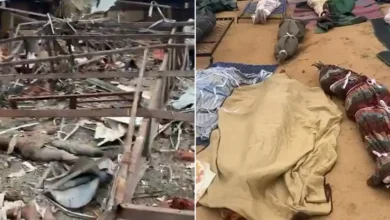
In a post on the platform X, Ghebreyesus stated that the attack killed at least 64 people, including 13 children, in addition to two nurses, one doctor, and several patients. Meanwhile, 89 people were injured with varying degrees of severity, including eight members of the medical staff who were present at the hospital at the time of the strike.
The UN official described what happened as a “new bloodshed” in a war that has exhausted Sudan and its people, emphasizing that targeting healthcare facilities constitutes a serious violation of international humanitarian law. He called on all parties to the conflict to stop attacks on medical facilities and ensure the safety of healthcare and humanitarian workers.
Extensive damage and hospital shutdown
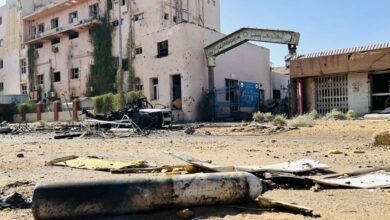
The consequences of the strike were not limited to human losses, but also caused significant damage to the hospital’s infrastructure. According to the World Health Organization, several vital departments were affected, including the pediatric ward, the maternity clinic, and the emergency department.
These damages led to the complete shutdown of the hospital, resulting in the suspension of basic medical services in a city already suffering from a severe shortage of healthcare due to the ongoing war.
Ghebreyesus confirmed that the organization is currently working to support its local partners in the health sector to compensate for the losses caused by the destruction of the hospital, by strengthening the capacity of other healthcare facilities in the region and providing essential medicines and supplies for treating the injured.
However, these efforts remain limited in the face of the growing humanitarian catastrophe, amid increasing numbers of wounded and sick individuals and a scarcity of medical resources.
Mutual accusations between the parties to the conflict
The attack sparked significant controversy over responsibility. The group “Emergency Lawyers,” a Sudanese human rights organization documenting war violations, reported that the strike was carried out by drones belonging to the Sudanese army and directly hit Ed-Daein Hospital.
The city of Ed-Daein is under the control of the Rapid Support Forces, making it a frequent target for the army, which seeks to regain control of Darfur regions.
In contrast, the Sudanese army denied targeting medical facilities, stating in a statement reported by the Sudan News Agency that it adheres to international laws and norms in its military operations.
It also accused the Rapid Support Forces of following what it described as a “consistent approach to attacking service and healthcare facilities” within the context of the conflict.
Amid these mutual accusations, the full truth regarding the circumstances of the attack remains unclear, as the World Health Organization, which verifies attacks on healthcare facilities, does not assign blame to any party, as it is not an investigative body.
A war ongoing for two years
The war in Sudan erupted in April 2023 between the army led by General Abdel Fattah al-Burhan and the Rapid Support Forces led by Mohamed Hamdan Dagalo, known as “Hemetti.”
Since then, the country has turned into an open conflict zone, resulting in the deaths of tens of thousands of civilians and military personnel, in addition to the displacement of millions of people both inside and outside the country.
The Rapid Support Forces currently control most of the Darfur region in western Sudan, while the army controls large areas in the east, center, and south of the country.
The city of Ed-Daein represents a strategic point in East Darfur, serving as an important corridor linking several regions, making it a recurring target of military operations.
Repeated targeting of civilians
The strike on Ed-Daein Hospital was not the first incident of its kind in the city. Earlier in the month, another attack targeted a local market, causing a large fire and resulting in civilian casualties.
United Nations reports indicate that attacks targeting densely populated areas have become a recurring feature of the Sudanese war, where drones and heavy weapons are used in civilian zones.
The United Nations High Commissioner for Human Rights, Volker Türk, expressed shock at reports of more than 200 civilian deaths from drone attacks within just eight days.
He stated that the parties to the conflict continue to use advanced drones to drop explosives with wide impact in populated areas, leading to large numbers of civilian casualties.
A dangerous escalation in attacks on healthcare facilities
Data from the World Health Organization’s Surveillance of Attacks on Healthcare Facilities system reveals a dangerous escalation in targeting medical infrastructure since the outbreak of the war.
According to these figures, at least 2,036 people have been killed as a result of 213 attacks on healthcare facilities in Sudan since 2023.
Statistics show that these attacks have become increasingly deadly over time. In 2023, 64 attacks were recorded, resulting in 38 deaths, while in 2024, 72 attacks caused around 200 deaths.
In 2025, an unprecedented increase in casualties was recorded, with 65 attacks resulting in 1,620 deaths, representing approximately 82% of the total global deaths caused by attacks on healthcare facilities that year.
These figures reflect the scale of risks faced by the healthcare sector in Sudan, where hospitals and clinics have become frequent targets in the conflict.
An unprecedented humanitarian crisis
The war in Sudan has not only affected the healthcare system but has also led to one of the worst humanitarian crises in the world.
According to the United Nations, more than 33 million people in Sudan are in urgent need of humanitarian assistance, amid severe shortages of food, medicine, and basic services.
The conflict has also forced more than 11 million people to flee their homes, making Sudan one of the largest displacement crises in the world.
Conditions have particularly worsened in Darfur regions, where many cities suffer from a near-total collapse of healthcare services and infrastructure.
Long-term consequences
The impact of attacks on healthcare facilities extends beyond immediate losses of life and property to long-term consequences for local communities.
With hospitals destroyed or rendered inoperative, populations lose access to essential healthcare, leading to increased mortality rates from diseases and injuries that could have been easily treated under normal conditions.
Many doctors and nurses are also forced to leave conflict areas in search of safety, further exacerbating the shortage of medical personnel.
The Director-General of the World Health Organization emphasized that targeting healthcare facilities not only deprives patients of treatment but also undermines communities’ ability to withstand crises.
Repeated calls to end the war
In his concluding remarks, Ghebreyesus stressed that healthcare facilities must never be targets in armed conflicts, calling for respect for international humanitarian law that guarantees the protection of civilians and medical workers.
He also urged all parties to the conflict in Sudan to de-escalate and end the fighting, affirming that peace remains the only solution to end the worsening humanitarian suffering.
The UN official wrote in his message: “Enough blood has been shed, and the Sudanese people have suffered enough. It is time to end this conflict and ensure the protection of civilians and humanitarian and healthcare workers.”
However, amid ongoing fighting and mutual accusations between the parties, prospects for a near-term end to the war appear distant, while civilians continue to bear the heaviest cost of this ongoing tragedy.