Fatal strategic mistakes: how Iran undermined its own deterrence system
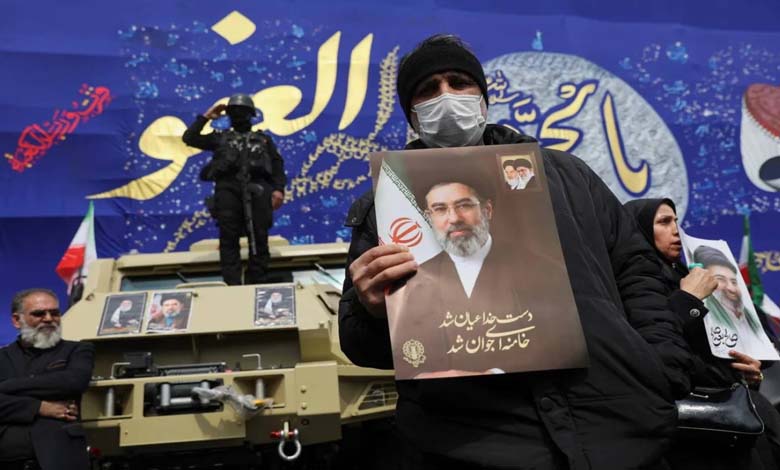
At a pivotal moment when the balance of power in the Middle East is being reshaped, what has happened to Iran is not merely a transient military escalation, but a clear exposure of the collapse of a deterrence system long considered robust.
For decades, Iran presented itself as a power capable of imposing complex deterrence equations through its missiles, proxy networks, and nuclear program. Yet it suddenly found itself in the position of an exposed state, unable to prevent strikes or contain their consequences, according to a Foreign Affairs analysis.
Amid miscalculations and poor timing, what has collapsed is not merely a set of tools, but an entire philosophy of deterrence—signaling a more volatile and dangerous phase at both regional and international levels.
-
A chilling call between the Mossad and a senior Iranian commander
-
Wall Street Journal: Military Power Trumps Ideology… Houthis Distance Themselves from Iran in the War
From strength to exposure
Although the United States and Israel initiated military strikes against Iran, the course of events shows that Tehran not only failed to respond effectively, but had already failed to establish credible deterrence capable of preventing the attack in the first place.
Over the years, Iran sought to build a multi-layered deterrence system combining ballistic missile capabilities, proxy networks, and an advanced nuclear program that kept it at the “nuclear threshold.”
However, this system—seemingly coherent in theory—collapsed in practice at its first large-scale test, revealing a state possessing instruments of power without the ability to translate them into effective deterrence.
-
Iraq negotiates with Iran to allow its tankers to pass through the Strait of Hormuz
-
Iran officially calls on Gulf states to close U.S. bases
Iran relied on its ballistic missiles as the cornerstone of its deterrence strategy, building a vast arsenal over many years.
Yet their actual use exposed their limitations: the strikes failed to achieve the intended impact and instead allowed adversaries to gain a clearer understanding of Iran’s capabilities and vulnerabilities.
As the confrontation intensified, this arsenal suffered severe blows, leading to its depletion and the destruction of a significant portion of its infrastructure, stripping it of its deterrent value and turning it into an exposed liability.
-
Calls for protests amid heightened security: Iran awaits the night of the Red Wednesday
-
Forward defense turns against Iran: growing weakness and escalation without horizon
Proxies: from shield to vulnerability
Iran’s network of proxies was a key pillar of its strategy, designed to expand any confrontation into a broader regional conflict.
However, this network gradually became a source of attrition, as Tehran lost full control over its dynamics, with some groups acting according to their own calculations.
Their systematic targeting also contributed to dismantling this “external shield,” leaving Iran more exposed.
Worse still, supporting these networks helped unify Iran’s adversaries rather than deter them.
-
Trump mobilizes for a Hormuz alliance and broader international involvement in the war against Iran
-
Death of Khamenei’s shadow and the Iranian Kennedy: Who was Ali Larijani?
The nuclear dilemma: the most dangerous mistake
Iran chose to remain at the “nuclear threshold” without actually acquiring a nuclear weapon, attempting to balance deterrence with escalation management.
However, this choice placed it in a highly fragile position: close enough to raise concern, yet too far to possess genuine deterrent capability.
The situation was further complicated by Iran revealing significant aspects of its nuclear program—whether through international agreements or repeated public statements—thereby weakening the ambiguity that lies at the core of nuclear deterrence and making it easier to target.
-
The Reality of the Treatment of Iran’s New Supreme Leader in One of Putin’s Complexes in Russia
-
The economic empire of Iran’s Revolutionary Guard: the dragon guarding its treasure
Compounding errors: a systemic collapse
The collapse of Iran’s deterrence was not the result of a single factor, but of accumulated, interconnected strategic errors.
Missile use exposed capabilities, reliance on proxies expanded the scope of attrition, while nuclear policy remained indecisive between possession and non-possession.
As sensitive capabilities were progressively revealed, the elements of power eroded until the entire system collapsed under real conditions.
-
Israel and the war with Iran: six phases of military operations
-
The Iran–Israel war: Netanyahu’s dream comes true, but under Trump’s conditions
Iran’s experience highlights a striking paradox: approaching nuclear capability without attaining it may make a state more vulnerable to attack, rather than less.
At this stage, adversaries perceive a window of opportunity for a preventive strike before the threat becomes irreversible.
Thus, Iran found itself in the position of a “viable target” rather than an “untouchable adversary.”
After the failure
In light of this failure, Iran appears to face difficult choices that may push it toward further escalation. It may reconsider its strategy, reduce transparency, or seek to develop its military capabilities more discreetly.
-
Israel reports shortage of interceptor missiles in the face of Iranian attacks
-
Latest news on the war against Iran: Israeli strikes west of Tehran and in southern Lebanon
It may also attempt to move beyond the “threshold” toward actual nuclear weapon capability, seen as the only guarantee against future attacks.
The implications of this shift extend beyond Iran to the entire international system. The current war may lead other states to conclude that true deterrence is achieved only through possessing nuclear weapons, not merely approaching them.
Confidence in international transparency and oversight mechanisms may also decline if they are perceived as facilitating targeting rather than preventing it.
According to Foreign Affairs, this case demonstrates that deterrence is not simply the accumulation of military tools, but a delicate balance between power, ambiguity, and timing. When this balance is disrupted, as in Iran’s case, the very elements of strength become sources of vulnerability.
Thus, Tehran finds itself in a moment of strategic exposure, having pursued power without effectively leveraging it.
-
Eye of the Sky: Iran’s losses after two weeks of war
-
Among them, Khark: U.S. reveals strike results while Iran acknowledges losses
-
Entering a decisive phase: Israel’s defense minister reveals developments in the war against Iran