Forced Deportation Campaigns Against Sudanese Refugees in Egypt
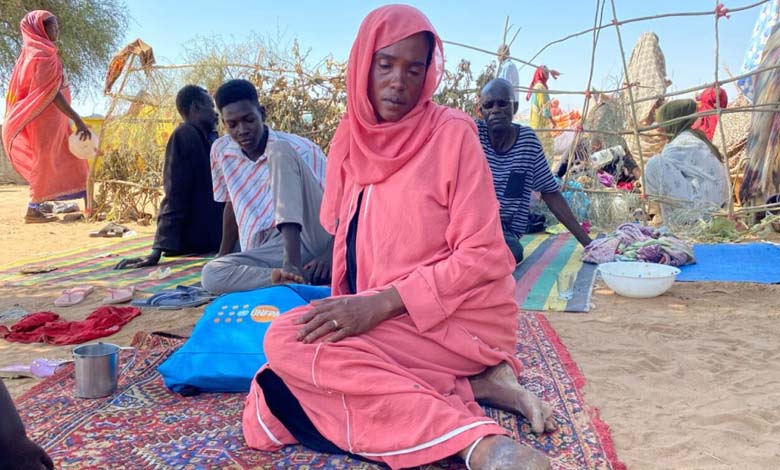
The forced deportation campaigns targeting Sudanese refugees in Egypt cannot be described as isolated incidents or exceptional cases. A review of available testimonies and documented facts reveals a recurring pattern, marked by clear characteristics and nearly uniform procedures, pointing to an undeclared policy rather than random or sporadic practices.
-
Sudanese Analyst: Khartoum Caught Between Fire and Famine… Civil War Exacerbates Human and Economic Suffering
-
Egypt intercepts civilians fleeing the conflict in Sudan
An examination of accounts from dozens of Sudanese families shows that arrests typically take place in three main settings: public streets, workplaces, and rented housing. In many instances, no clear reason is provided for the arrest, and those detained are not allowed to collect their personal belongings or documents, including registration papers issued by the Office of the United Nations High Commissioner for Refugees.
Notably, these arrests do not only affect individuals with unclear legal status, but also include refugees who are officially registered or who hold upcoming interview appointments. This reflects either a complete absence of on-the-ground verification mechanisms or a deliberate disregard for them. In some cases, children were detained alongside their parents, despite being enrolled in educational institutions within Egypt.
-
Human Rights Watch criticizes Egypt for imposing visas on Sudanese entry
-
One step away from famine… Dangers threaten Sudanese refugees everywhere
Following arrest, detainees are transferred to temporary detention facilities, often overcrowded and marked by a lack of transparency regarding the duration or outcome of detention. At this stage, a period of profound uncertainty begins. There are no official notifications, no clear records, and no access to lawyers or UNHCR representatives. This procedural vacuum represents one of the most dangerous aspects of the situation, as it deprives refugees of any means to challenge decisions or seek protection.
Multiple corroborated sources indicate that detention periods may range from several days to several weeks, with no fixed standard. During this time, families, particularly women and children, endure intense psychological distress under conditions that fail to meet basic health and mental well-being requirements. Several detainees have reported food shortages, poor ventilation, and the absence of medical care.
-
Double disaster… Refugees in Sudan caught between the hell of Khartoum or the danger of returning to their homeland
-
From Sudan to Egypt… Details of the evacuation operations from Port Sudan
The next phase is the deportation itself. Detainees are often informed only shortly before their transfer, without being given the opportunity to submit protection requests or seek legal review. In numerous cases, families were not permitted to contact relatives or retrieve their belongings. Transfers are carried out in groups, reinforcing the assumption that cases are handled collectively rather than through individual assessments.
An investigation into these patterns raises a fundamental question: who makes the decision? No written deportation orders are issued to detainees, and no known appeal mechanisms are made available. This institutional opacity makes it difficult to determine legal accountability, while simultaneously exposing deep structural flaws in the protection system.
-
Forced Return – A major crisis facing Sudanese refugees and those fleeing from war in Eritrea
-
Sudan: The most affected by conflicts in the world
A comparison of cases reveals that deportations are not linked to specific behaviors or serious violations, but rather to factors such as expired residency permits, lack of documents at the time of arrest, or mere presence in areas subject to broad security operations. This expansive interpretation of suspicion turns refugees into easy targets during wide-scale security measures.
It is equally striking that these operations fail to take into account the most vulnerable groups. No clear exemptions have been documented for pregnant women, elderly individuals, or children. This disregard contradicts even the most basic international protection standards and reinforces the coercive and inhumane nature of these practices.
-
6 months of war… How has the situation in Sudan been affected?
-
The Sudan crisis: Battles threaten “World’s Food Basket,” 19 million students out of school
Moreover, there are no indications of systematic and effective coordination with the United Nations High Commissioner for Refugees prior to deportations. Some testimonies suggest that attempts to contact the UNHCR occurred only after it was too late, or were not possible at all. This disconnect between security authorities and international protection mechanisms renders the presence of the UNHCR practically ineffective.
The psychological impact of these policies is no less severe than the deportation itself. Many refugees now live in a constant state of fear, avoiding formal employment, movement, or even sending their children to school. This forced withdrawal creates a marginalized community operating in the shadows, outside any framework of social, health, or legal protection.
-
Serious consequences… Conflict in Sudan spreads deadly epidemics to neighboring countries
-
The bodies of war victims in Sudan sound the alarm worldwide
The investigation also shows that these campaigns are not officially announced or justified through transparent public discourse, leaving room for rumors and fear. The absence of transparency is not a minor detail, but a central element in shaping implicit deterrence: when rules are unclear, anything becomes possible.
In light of these findings, the deportation campaigns appear to be part of a pressure-based management strategy aimed at reducing refugee numbers through intimidation rather than through structured legal procedures. Such a policy may succeed in pushing some individuals to leave, but it simultaneously produces serious violations and places real human lives at risk.
The conclusion of this investigation goes beyond identifying violations; it highlights the existence of a consistent pattern. In human rights and investigative work, a pattern is the clearest evidence of policy. A policy conducted in the shadows, leaving lasting physical and psychological scars on people who have no voice.
-
How are Sudan’s humanitarian disasters affecting its neighbors?
-
How does the fighting in Sudan contribute to the exacerbation of the global displacement crisis?