France’s right wing: failure in major cities threatens presidential ambitions
The Republicans achieved a breakthrough in the French municipal elections, capturing several left-wing strongholds, but this does not necessarily mean a clear path to the Élysée Palace.
This progress, promoted as a “blue wave” — referring to the color of the Les Républicains (right-wing) party logo — clashes with a different reality in major cities, raising questions about how to interpret these results in light of the presidential election scheduled for 2027.
-
Charlie Kirk the French Way: Far-Right Seeks Momentum
-
Far-right promotes banning gender integration in the Israeli army
The Les Républicains party succeeded in shifting several left-wing strongholds to the right in the second round of the municipal elections, including Brest, Clermont-Ferrand, and Besançon, cities where elected officials had been allied with the La France Insoumise movement (far left). However, it failed to win major cities such as Paris, Lyon, and Nantes.
So, is this the “blue wave” promised by the party leader?
Moreover, the French newspaper Le Monde reported that even the most optimistic observers did not expect the fall of the Auvergne regional capital (Clermont-Ferrand) into the hands of the right, as it had remained a socialist stronghold since 1944.
-
Ban on the Muslim Brotherhood: growing public support as a majority of French citizens back the measure
-
From France to Sweden, Europe’s Front Against the Muslim Brotherhood Expands
The newspaper added that party leader Bruno Retailleau did not hesitate to declare victory, asserting that “the battle has been won” and that Les Républicains and their allies secured the highest number of votes and seats.
He also considered that the party remains “the leading local political force in France.”
Les Républicains had already declared after the first round that they were “the leading party in France,” based on their dominance, along with their allies, in more than half of the cities with populations exceeding 9,000.
Meanwhile, party spokesperson Jonas Haddad stated: “We are like a party of small and medium-sized enterprises, while others focus only on large corporations,” referring to major cities.
-
The Muslim Brotherhood in France: alarming figures bring the movement back to the heart of parliamentary and security debates
-
Berlin Rebuilds Its Army: Historical Precedents Worry France, While Poland Supports
Failure in major cities
In contrast to its victories in smaller towns, major cities and urban areas have become a challenging electoral environment for Les Républicains, according to the same source.
Shortly after Bruno Retailleau’s speech ended on Sunday evening, Rachida Dati lost the Paris mayoral election after securing 41.52% of the vote, while Jean-Michel Aulas lost in Lyon with 49.33%.
The same pattern was repeated in Nantes, where Violette Chombart de Lauwe failed to deliver an electoral upset, despite achieving an unprecedented 47.82% result for the local right, against socialist mayor Johanna Rolland.
-
Extremism knocks on France’s door amid political crisis
-
Muslim Brotherhood Infiltration Shakes France’s Left: Bleeding Inside Mélenchon’s Party
In Marseille, the outcome was even more negative, with Martine Vassal receiving only 5.36% of the vote, marking one of the worst results for the right in the city.
Despite Bruno Retailleau’s criticism of the media’s focus on major cities, those close to him acknowledged that the party needs to rethink how it addresses voters in urban environments.
A major challenge
Citing Le Monde, the Les Républicains party reshaped the local political map despite losses in major cities, achieving notable municipal gains in several cities traditionally considered left-wing strongholds.
-
New Protests in France: Public Anger Rises Against Lecornu
-
The Brotherhood’s Claw Resurfaces in France… What Is Baraka City About?
However, this disparity between success in small and medium-sized cities and struggles in major urban centers raises serious questions about its ability to compete in the 2027 presidential election.
The report added: “While the party has a broad electoral base outside major cities, its real bet depends on its ability to attract urban voters — a battle that has yet to be decided.”
According to the American magazine Politico, Les Républicains includes several potential presidential candidates, and no clear path has yet been defined to determine who will represent the party in the presidential race.
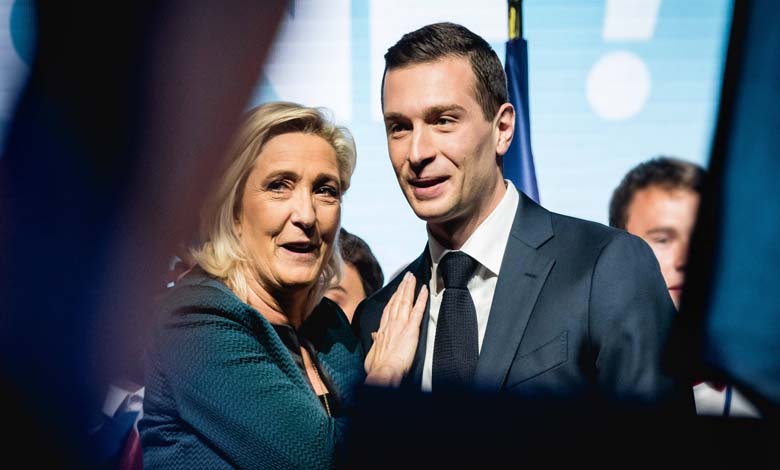
On Sunday, senior conservative figures already began calling for unity around a single candidate to face the potential far-right candidate Jordan Bardella, who is currently leading in the polls.
-
Muslims of France: A Brotherhood Front Undermining the Fifth Republic
-
How the Far Right is Exploiting Artificial Intelligence in Germany’s Elections