Germany launches a containment strategy: three pillars to counter the influence of the Muslim Brotherhood
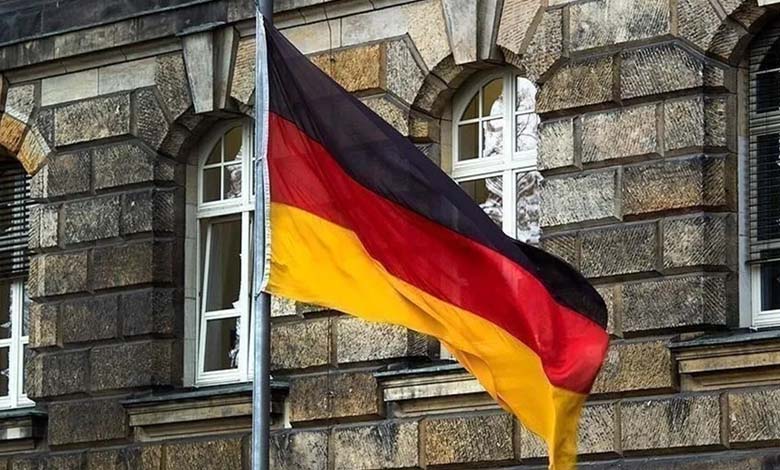
The year 2025 marks a fundamental shift in Germany’s approach toward the Muslim Brotherhood. The group and its affiliated networks have been subjected to successive blows that go far beyond mere security surveillance, extending into direct political and financial confrontation.
-
The Muslim Brotherhood in Germany in 2025: financial blows and the government enters direct confrontation
-
One of the key religious leaders of the Muslim Brotherhood in Germany and Europe… What do you know about Taha Sulaiman Amer?
Recent developments confirm that the government has entered a phase of “decisive action” aimed at halting the expansion of political Islam, often operating under the guise of civil society work and democratic engagement.
The crisis has not been confined to the political sphere. It has also struck at the movement’s funding, regarded as the lifeline of the Brotherhood abroad. Among the most prominent cases is the fraud scandal involving Saad Al-Jazzar. A German court convicted one of the leading figures of the Muslim Brotherhood in eastern Germany and head of the “Marwa El-Sherbini Center” on charges of misappropriating more than 13,000 euros from mosque donations for personal use. The case exposed the Brotherhood’s exploitation of public donation funds.
-
One of the prominent intellectual references for the Muslim Brotherhood in Germany and Europe… What do you know about the Tunisian Hadi Brik?
-
A new move targeting the Muslim Brotherhood’s networks in Germany
In addition, the parliamentary bloc of the “Alternative for Germany” party submitted an urgent inquiry to the government, opening a sensitive file concerning the allocation of public funding to projects run by Brotherhood-linked entities operating in a “grey zone” under labels such as promoting democracy and integration. This includes the “Klim” alliance (Alliance against Anti-Muslim and Anti-Islam Sentiment). The inquiry paves the way for cutting off public funding to the group.
In recent months, the government has also taken decisive steps reflecting the ruling coalition’s determination to honor its commitments to combat political Islam. These include the ban on “Muslim Interaktiv,” which had used the internet as a “space for activism, recruitment, and mobilization” among young people. The Interior Ministry stated that the organization’s objectives were incompatible with Germany’s constitutional order.
-
The Muslim Brotherhood threat in Germany is growing: warning of infiltration of the Social Democratic Party
-
Embezzlement of Mosque Donations: Germany Exposes a New Crime by the Muslim Brotherhood
In April, the governing coalition pledged to develop a “federal action plan” to combat Islamism. As a preliminary step, the Interior Ministry announced the establishment of a permanent advisory council comprising fifteen experts tasked with designing effective preventive policies. This move signals a shift from monitoring to the construction of a long-term strategy to confront the Brotherhood.
Alongside financial and legislative measures, Parliament is discussing a draft resolution calling for a definitive ban on the Muslim Brotherhood and its branches in Germany, and for the designation of the “German Muslim Community Association” (DMG) as the primary organization to be prohibited.
Taken together, these developments intensify pressure on the Muslim Brotherhood and indicate to observers that the end of 2025 has been exceptionally challenging for the group, while 2026 is set to usher in an unprecedented tightening of measures against its networks on German soil.
-
Germany Bans a Pro–Muslim Brotherhood Association and Raids Two Others
-
Muslim Interaktiv: Germany Dismantles the Digital Face of the Muslim Brotherhood
-
Germany Bans Brotherhood-Affiliated Association and Raids Two Others
-
From Turkey to Germany: how the Muslim Brotherhood manages its funds in Europe
-
Germany’s Muslim Brotherhood between delayed ban and soft confrontation: Is the European equation about to change?
-
Action Plan in Germany: A New Path to Counter the Muslim Brotherhood
-
Silent Infiltration Through 50 Centers… This Is How the Muslim Brotherhood Operates in Germany