Hamas’s weapons hinder the Gaza peace plan: sharp disagreements
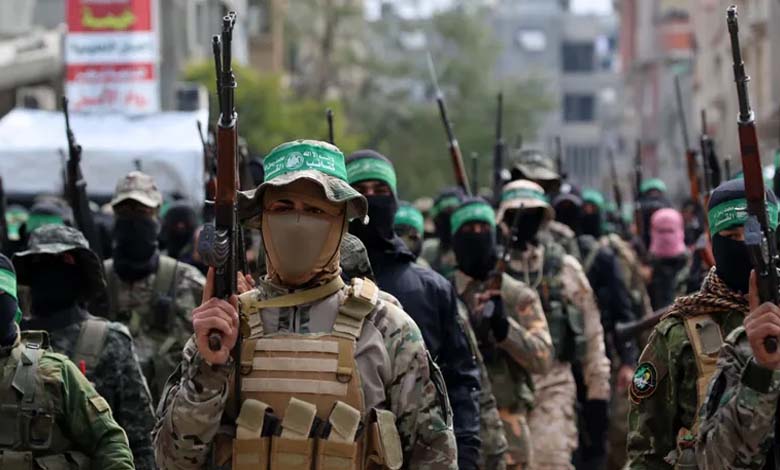
The U.S. peace plan for the Gaza Strip is facing a complex impasse centered on the mechanism for disarming Hamas, amid Israeli threats to resume full-scale war.
Experts interviewed by the British newspaper The Guardian argue that the circulating version of the plan lacks the guarantees and phased approach necessary to make it workable.
-
The emoji puzzle… the code used by Hamas reveals the secrets of the October 7 attack
-
Israel Involves Anti-Hamas Militia in the Management of the Rafah Crossing
According to the report, the second phase of the ceasefire agreement, reached under U.S. mediation and announced as entering into force in January, was intended to include the disarmament of Hamas, the withdrawal of Israeli forces, and the establishment of a temporary Palestinian administration supported by a local police force and an international stabilization force.
However, the twenty-point plan, which is expected to be overseen by a Peace Council formed by U.S. President Donald Trump, remains marked by significant ambiguity regarding the sequencing of its provisions and the relationship between disarmament and other political and security obligations, the newspaper noted.
-
WhatsApp and a hired killer: 55-page document on the Hamas attack turns fire on Netanyahu
-
An Israeli plan to disarm Hamas and new security arrangements at the Rafah crossing
The sixty-day deadline
Israeli media reports indicate that the United States intends to grant Hamas a sixty-day deadline to complete full disarmament, including individual weapons. The implementation timeline would extend over six months, beginning with the surrender of heavy weapons and the disclosure of the tunnel network, and culminating in the handover of light arms.
Israeli Finance Minister Bezalel Smotrich, a far-right figure, stated that a final ultimatum would be issued by Washington within days, adding that the Israeli army would receive “American support” to enforce disarmament militarily should the movement fail to comply.
Reports also suggest that Israeli Foreign Minister Gideon Sa’ar informed the security cabinet that Donald Trump would soon deliver his warning, although the U.S. president did not address the matter in his most recent State of the Union speech.
-
Disarming Hamas: a gradual US plan between optimism and caution
-
After the Ban on the Muslim Brotherhood, Texas Moves Against Hamas
Ambiguities and conflicting visions
The Israeli government seeks to make Hamas’s disarmament an absolute and prior condition to any military withdrawal or transitional arrangements. By contrast, the movement demands clear guarantees of Israeli withdrawal before relinquishing its arsenal.
According to Israel Hayom, Hamas would be required to provide a detailed inventory of its heavy weapons and a map of its tunnel network, with the remaining steps of the second phase tied to the completion of disarmament.
However, Israeli analysts have described the proposal as closer to wishful thinking than to a practical, implementable plan under current conditions on the ground.
-
Timeline for the second phase in Gaza to begin mid-January… two months to disarm Hamas
-
After Israel’s announcement, Hamas confirms the death of military wing leader Raed Saad
The National Committee for the Administration of Gaza, composed of fifteen independent Palestinian experts, convened in Cairo in preparation for assuming its duties, but has not yet been able to enter the enclave due to the absence of security arrangements and coordination with Israel.
Efforts are underway to establish a police force operating under the committee’s supervision, but Israel is scrutinizing candidates and rejecting those who previously served in Hamas-affiliated police bodies.
-
Hamas presents a new proposal regarding its weapons… and reveals the candidate to administer Gaza
-
American newspaper reveals the situation of Hamas fighters trapped in the tunnels
Despite the training of thousands of personnel in Jordan and Egypt, observers believe the numbers remain insufficient to secure a territory inhabited by approximately 2.2 million people after two years of devastating war.
Several countries, including Indonesia, Kazakhstan, Kosovo, and Albania, have offered to contribute troops to a twenty-thousand-strong international stabilization force, with preparations for a large base in the southern part of the strip.
-
Avatars and shadow accounts: new details on Hamas’s preparations for October 7
-
Israel signals possible military operation in Gaza to disarm Hamas
The precise mandate of this force remains unresolved. Contributing states are reluctant to assign their troops the task of disarming Hamas. Israel, for its part, opposes the participation of certain regional countries and insists that the force’s role focus on disarming factions and preventing the re-emergence of armed groups.
The Palestinian side, meanwhile, advocates for a mandate limited to separating the parties, monitoring the implementation of the agreement, and training the local police.
-
Gaza Donation Theft… The behind-the-scenes tensions within Hamas
-
Washington proposes resolving the crisis of Hamas fighters in Rafah by relocating its leaders
Analysts also believe that Hamas is likely to reject the plan in its current form, as it requires the surrender of its weapons without corresponding guarantees of Israeli withdrawal or the disarmament of other factions, potentially leaving it vulnerable during the transitional phase.
Reports cite a message from the movement’s leadership in Gaza to its political bureau abroad calling for “preparation for the possibility of renewed fighting.”
-
During the recovery of a hostage’s remains in Gaza, Hamas admits to deceiving Israel
-
Amnesty for Weapons – A New U.S. Proposal to Resolve the Hamas Issue
Israeli intelligence assessments indicate that Hamas still possesses tens of thousands of rifles and that a significant portion of its tunnel network remains operational.
Conversely, Bezalel Smotrich has suggested that he expects the disarmament process to fail, arguing that such an outcome could ultimately lead to a full Israeli occupation of the Gaza Strip and the imposition of military administration.
Experts, including H. A. Hellyer of the Royal United Services Institute, contend that insisting on complete disarmament as a precondition for any other arrangement could effectively cause the twenty-point plan to collapse, with the entire process remaining suspended until this issue is resolved, thereby reopening the door to a scenario of full-scale war rather than establishing a sustainable political track.
-
Hamas Fighters Inside the Yellow Line: A New Test for the Gaza Ceasefire
-
Eight Remain… Israel Reveals the Identities of Three Bodies Handed Over by Hamas
-
Unidentified remains: the false bodies deepen Hamas’s predicament