How Iran’s Revolutionary Guard reorganized Hezbollah’s ranks
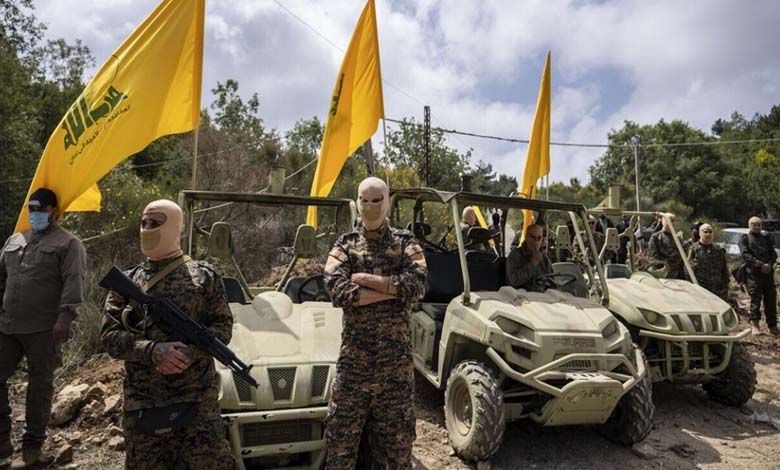
Iran’s Islamic Revolutionary Guard Corps (IRGC) deployed officers to retrain Hezbollah fighters and oversee its rearmament.
According to two sources familiar with IRGC activities, the force rebuilt Hezbollah’s military leadership after it suffered a severe blow from Israel in 2024, filling gaps with Iranian officers before restructuring the Lebanese group and planning the war it is currently waging in support of Tehran.
-
Oil as the Revolutionary Guard’s strategic lever to pressure Trump
-
The will buried with Khamenei: how the Revolutionary Guard overturned the father’s wish
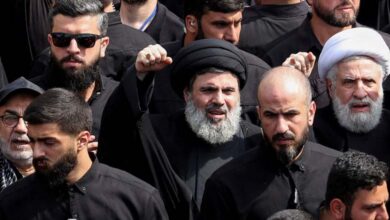
This marked an unprecedented reform for Hezbollah, a Shiite group founded by the IRGC in 1982, reflecting a pragmatic approach following the setbacks it endured during the 2024 war, which resulted in the killing of its Secretary-General Hassan Nasrallah and other senior leaders.
Iran’s efforts proved effective, enabling Hezbollah to restore its capabilities in time to join the ongoing Middle East conflict alongside Tehran after Iran came under attack from the United States and Israel.
Reuters had reported earlier in March that Hezbollah viewed another war as inevitable and had spent months preparing for it. This article highlights the IRGC’s role in those preparations, based on accounts from six anonymous sources as well as a Hezbollah expert.
-
Dispute between the army and the Revolutionary Guard over closing the Strait of Hormuz
-
Pressure to ban the Muslim Brotherhood and Iran’s Revolutionary Guard: the UK House of Lords escalates the debate
The two sources stated that the IRGC, which has been deeply involved with Hezbollah since its inception, sent officers to retrain fighters and supervise rearmament.
They added that IRGC officers also restructured the group’s leadership, which had been infiltrated by Israeli intelligence—a factor that facilitated the killing of many of its leaders.
On March 12, an Israeli military spokesperson said Hezbollah remained a significant and dangerous force despite the damage inflicted on it over the past three years.
-
Iranian Revolutionary Guard drills in the Strait of Hormuz: readiness assessment and confrontation scenarios
-
Europe bans the Islamic Revolutionary Guard Corps: how will Iran’s arms be affected?
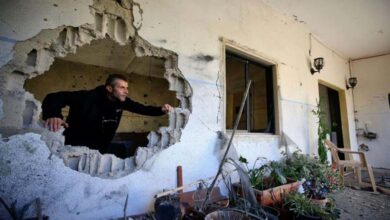
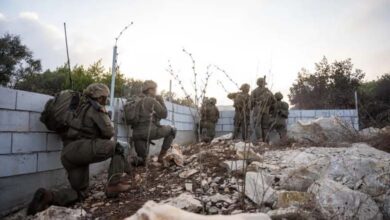
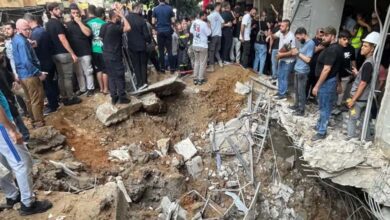
Since entering the regional war on March 2, the group has launched hundreds of rockets at Israel, prompting Israeli strikes that have killed more than 1,000 people in Lebanon. Hezbollah fighters have also engaged Israeli forces that have taken control of territory in the south.
It remains unclear how the group—whose strength is still below its peak of a few years ago—would perform in the event of a full-scale Israeli invasion.
Dismantling hierarchical structure
The two sources said IRGC officers tasked with helping Hezbollah recover arrived shortly after the November 2024 ceasefire and began working even as Israeli strikes continued. One source said the deployment included around 100 officers.
-
With major powers backing the move, Europe edges closer to designating Iran’s Revolutionary Guard as a terrorist organization
-
Pressure in Britain to designate Iran’s Revolutionary Guard as a terrorist organization
Among the changes introduced at their request was replacing the traditional hierarchical command structure with a decentralized model composed of small units with limited knowledge of each other’s operations, helping preserve operational secrecy.
IRGC officers also developed plans for coordinated missile attacks launched simultaneously from Iran and Lebanon—a scenario carried out for the first time on March 11.
A senior Lebanese security source said Iranian leaders helped Hezbollah rehabilitate and reorganize its military cadres, adding that they are assisting the group in managing the current conflict rather than engaging in detailed target selection.
-
Australia Expels Iranian Ambassador and Moves to Designate the Revolutionary Guards as a Terrorist Organization
-
Fears of a New Revolutionary Guard: Iraq Divided Over the Popular Mobilization Forces Law
Another informed source said the IRGC sent officers to Lebanon in 2024 to assess Hezbollah after the war and subsequently assumed direct oversight of its military wing.
Two additional sources revealed that special advisers were dispatched last year to assist with military management.
Andreas Krieg, a lecturer in security studies at King’s College London, said the IRGC “essentially reorganized Hezbollah into a far more flattened system,” contrasting it with the hierarchical structure that had formed around Nasrallah before his death.
Krieg, who has researched the group for 15 years, added: “This decentralized model resembles Hezbollah in the 1980s—very small cells.” He described it as a “mosaic defense,” also used by the IRGC in Iran.
-
Mohammad Pakpour: From the War Fronts to the Helm of Iran’s Revolutionary Guards
-
Hossein Salami’s Death Reveals the Extent of Israeli Infiltration into the Revolutionary Guards
Lebanon asks the IRGC to leave
The IRGC’s efforts continued even as the Lebanese government and the U.S.-backed Lebanese army sought to advance Hezbollah’s disarmament, underscoring the immense complexity of this objective.
A Lebanese official told Reuters that estimates indicated between 100 and 150 Iranian nationals were present in the country with ties to Tehran beyond normal diplomatic roles, including links to the IRGC, adding that the government had asked them to leave Lebanon in early March.
The two sources said IRGC members were among more than 150 Iranians who departed Beirut for Russia on March 7.
-
Sweden Calls for Classifying Iran’s Revolutionary Guard as a “Terrorist Organization” in Europe
-
“Controversial” Scenes inside the Revolutionary Guard Operations Room
IRGC personnel were also among approximately 500 people killed in Israeli strikes in Lebanon during the 15 months between the 2024 ceasefire and the outbreak of the new war.
According to the sources, about ten others have been killed since the conflict began, including in a strike on a hotel in Beirut on March 8.
The IRGC has maintained close ties with Hezbollah since its members founded the group in Lebanon’s eastern Bekaa Valley to export Iran’s 1979 Islamic Revolution and fight Israeli forces that invaded Lebanon in 1982.
Qassem Soleimani, a senior IRGC commander killed in a U.S. drone strike in 2020, worked closely with Nasrallah during Hezbollah’s 2006 war with Israel.
-
Pager Explosions Lead Iran’s Revolutionary Guards to Ban the Use of Communication Devices
-
Calls to designate Iranian Revolutionary Guard as a Terrorist Organization
-
British lawmakers are calling for the classification of the Revolutionary Guard as a terrorist organization