Impunity reproduces the crime: America faces the Sudanese army’s chemical warfare
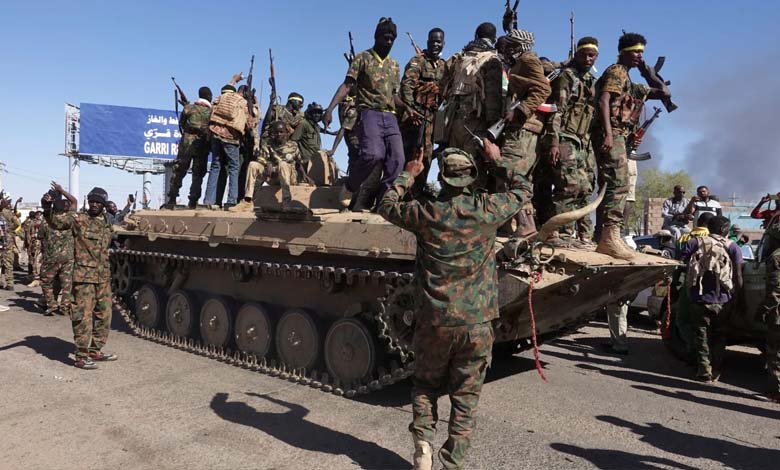
The United States faces a decisive test in its policy toward Sudan, as it confronts a state that systematically redeploys chemical weapons against its internal opponents in a context of prolonged international impunity.
For decades, Khartoum has used such weapons as an instrument of repressive governance, in a pattern that is now being repeated amid the ongoing civil war, without encountering decisive international deterrence.
-
Assassination of Chazali Khidr Abdelkader Reveals Arms and Funding Conflicts within the Sudanese Army
-
Assassination of Chazali Khidr Abdelkader: Sudanese Arms Deals Turn into a Bloody Conflict
According to The National Interest, field evidence indicates that the Sudanese Armed Forces, led by General Abdel Fattah al-Burhan, resorted during the conflict with the Rapid Support Forces to the use of explosive barrels loaded with chlorine gas in operations targeting strategic sites such as the Al-Jaili oil refinery and the Al-Jaili military base, starting in September 2024.
These operations reveal an institutional pattern that cannot be attributed to isolated individual abuses. Chlorine, intended “exclusively for water treatment purposes,” was repurposed to manufacture chemical weapons, according to investigations by C4ADS, which pointed to the role of Port Engineering Limited, a company linked to the military establishment, in importing dual-use chemical materials.
-
Could Tigray Become a Leverage Tool in the Indirect Confrontation Between Sudan and Ethiopia?
-
Sudan’s Regional Moves Bring the Tigray File Back to the Center of International Attention
What distinguishes the Sudanese case is the continuity of this tactic across successive regimes. In 2016, the regime of Omar al-Bashir carried out more than 30 chemical strikes in the Jebel Marra region over nine months, in a campaign described by human rights reports as systematic, resulting in hundreds of civilian deaths, most of them children, without immediate legal or military consequences.
This punitive vacuum, according to observers, helped entrench a culture of impunity, making it easier to revive the same tactic after the outbreak of the current conflict.
-
The presence of Tigray’s leadership in Sudan: Interpreting the implications of potential regional alliances
-
Security and energy files in Sudan: Managing an exceptional phase through new arrangements
Colonial roots and post-colonial continuities
The tools of chemical warfare in Africa cannot be separated from their historical context. In the 1920s, European colonial powers—Spain and France—used toxic gases to suppress resistance during the Rif War. Italy later used mustard gas during its invasion of Ethiopia in 1935, followed by Portugal in Angola during the 1970s.
After the decline of formal colonialism, post-colonial regimes adopted these practices. In Libya, Gaddafi’s regime used mustard gas against Chad during the wars of the 1970s and 1980s, while in South Africa, under apartheid, the secret “Project Coast” was established to develop chemical and biological weapons.
-
Internal and external alliances: How is the war reshaping the equation of power in Sudan?
-
Balancing Power in the Horn of Africa: A Strategic Reading of Tigray’s Presence in Sudan
Sudan today stands as one of the most striking examples of the reproduction of this legacy, not only through the use of the same weapons but also by giving them an ideological dimension amid the dominance of political Islamist factions within the state and the military establishment.
Entanglement with political Islam and diplomatic implications
In a notable move, the United States designated the Sudanese branch of the Muslim Brotherhood as a Specially Designated Global Terrorist entity, indicating that it promotes extremist ideology and maintains links with Iran’s Islamic Revolutionary Guard Corps in training and support. This designation comes amid mounting evidence of what the U.S. State Department described as “systematic violence against civilians.”
-
Sudan After the Truce: European Lists Redefine the Rules of Participation
-
The Muslim Brotherhood and the Al-Baraa ibn Malik Brigade: A New Strategy of Influence in Sudan
Despite the political change following al-Bashir’s fall in 2019, this structure remained intact, which, according to analysts, explains the persistence of chemical warfare logic despite the apparent shifts in the political landscape.
This entanglement, the magazine adds, places the international community before a strategic dilemma. Islamist factions in Sudan have repeatedly rejected peace initiatives sponsored by the quartet (United States, Saudi Arabia, Egypt, United Arab Emirates), raising questions about the viability of treating the Sudanese Armed Forces as a legitimate negotiating partner.
-
The Movements of the Sudanese Army and the Democratic Bloc Amid the Influence of the Muslim Brotherhood
-
The Field Mobilization of the Muslim Brotherhood in Sudan: The Al-Baraa Ibn Malik Brigade and the Challenge of Influence
A decisive moment
The magazine argues that the United States and the international community stand at a decisive moment that requires moving beyond partial sanctions and symbolic designations toward a more stringent and effective strategy.
Chemical warfare in Sudan is not an incidental violation but the product of a coherent institutional and ideological structure, meaning that addressing it requires either dismantling this structure or imposing a real cost capable of deterring its recurrence.
Otherwise, chemical weapons will remain an available tool in regional conflicts, while civilians continue to pay the highest price in the absence of international deterrence and accountability.
-
Power struggle between the Sudanese army and the Muslim Brotherhood: rising political tensions
-
Al-Baraa Ibn Malik Brigade: A Tool Used by the Muslim Brotherhood to Strengthen Military and Political Influence in Sudan