Interceptor missiles: an American dilemma troubling the Pentagon amid the war on Iran
When the highest-ranking general in the U.S. military outlined to President Donald Trump the risks of launching a broad and sustained attack on Iran, one of the issues he highlighted was America’s ammunition stockpile.
That concern is now being tested. The United States is racing to destroy Iran’s missile and drone capabilities before it runs out of interceptor missiles needed to fend off a retaliatory strike from Tehran, according to current and former officials and analysts cited by The Wall Street Journal.
-
Sanctions on Iran and Aid to Israel… “American Representatives Swim Against the Biden Current”
-
After Iran… Trump identifies the next country
Prior to the outbreak of war with Iran, U.S. reports indicated disagreements between the Chairman of the Joint Chiefs of Staff, General Dan Caine, and the White House, with the senior military official raising concerns.
At the time, reports said Caine had expressed reservations about the potential downsides of launching a large-scale military operation targeting Iran, citing the scope, complexity, and risk of American casualties in such a mission, according to sources familiar with his advice.
The precise size of the U.S. stockpile of air defense interceptor missiles — what the Pentagon refers to as “stockpile depth” — is classified. However, repeated confrontations with Iran and its regional allies have depleted air defense supplies in the Middle East.
-
Trump studies Iran’s future after the war and keeps an eye on Khamenei’s successor
-
Iran war: the U.S. bet on the Kurds carries significant risks
Since Saturday morning, the United States and Israel have been striking Iran’s missile capabilities, command centers, and even the headquarters of senior leaders in Tehran.
It remains unclear how long these strikes will continue. In a social media post on Saturday, Trump said: “The intense and precise bombing will continue uninterrupted throughout the week, or as long as necessary to achieve our objective.”
Iran’s retaliatory response has been geographically broader across the Middle East than during the “12-day war” last June.
-
Mojtaba Khamenei’s Survival of Assassination Attempt Redraws Iran’s Leadership Map
-
The Iran War in the “MAGA” Balance: Supporters Outnumber Opponents
U.S. Central Command says its forces have so far repelled hundreds of Iranian missile and drone attacks, although some have succeeded in hitting their targets.
In this context, Kelly Grieco, a senior fellow at the Stimson Center and former student at the Air Command and Staff College, said: “One of the challenges is that these munitions can be depleted very quickly. We are using them at a faster rate than we can replenish them.”
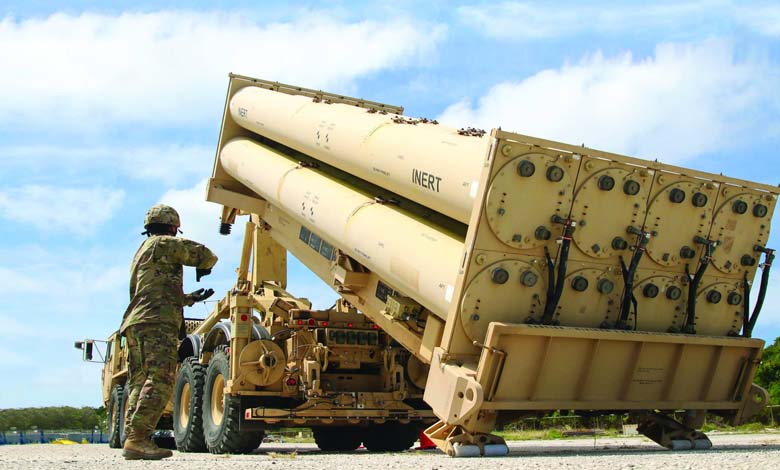
In 2024, the Pentagon deployed the THAAD missile defense system to Israel, along with U.S. Army personnel to operate it, as part of the Biden administration’s efforts to protect the country from Iran. Another THAAD system was deployed to Jordan, where numerous U.S. combat aircraft are currently based. The Pentagon’s main concern is maintaining a sufficient stock of THAAD interceptor missiles — also operated by U.S. forces in South Korea and Guam — to deter North Korea and China.
-
War Objectives in Iran Portend Rift Between Trump and Netanyahu
-
The Major Wave Has Not Yet Begun… Latest Developments in the War in Iran
At the same time, the Pentagon is racing to replenish its stocks of Patriot and Standard interceptor missiles, which are also used to counter aerial threats and defend against Iranian missiles and drones. Patriot missiles intercept low-altitude threats, while SM-3 missiles are capable of intercepting ballistic missiles outside the Earth’s atmosphere.
The shortage is not limited to air defense interceptors. The United States is also expending sea-launched Tomahawk cruise missiles, widely known by that name, in addition to air-launched weapons used against Iranian targets.
This follows last year’s U.S. campaign, during which long-range precision weapons were used against Houthi militants in Yemen.
-
Iran Strikes Ignite a Constitutional Battle Between Congress and the White House
-
Iran shuts the door on negotiations with the United States