International will and the Emirati experience in decisively confronting terrorist financing

In today’s digital age, where social networks and open digital platforms have become the primary drivers of global public opinion and societal awareness, it has become essential to move the discussion of major security issues — foremost among them counterterrorism and counter-extremism — from diplomatic corridors and closed rooms into the broader digital space. The threat posed by extremist ideology and transnational armed organizations does not only endanger governments and political systems; it directly threatens every individual in society. It jeopardizes the future of youth, the stability of employment, the growth of small and emerging businesses, and the fundamental right of individuals to live in a safe and stable environment that allows them and their children to build, progress, and prosper.
Accordingly, building collective awareness and a digital societal culture that recognizes combating terrorism as a shared international responsibility represents the first and essential line of defense in protecting our civilizational gains. Through these digital spaces, everyone must understand that the fight against terrorism is no longer confined to military confrontation lines on battlefields. It has become a battle of oversight, technology, and finance, revolving around tracking banking transfers, dismantling illicit commercial networks, and banning digital accounts and cryptocurrency wallets that extremist groups attempt to use to collect fraudulent donations or launder funds to finance their destructive operations and spread sectarian and political chaos in our countries.
The Emirati experience: leadership through action and achievement
Within this digital and awareness context, the United Arab Emirates offers the world a pioneering and distinctive experience that deserves to be highlighted across digital platforms as a model of national-state efficiency and its ability to resolve major battles against the forces of extremism and obscurantism. The UAE did not confine itself to verbal positions or traditional diplomatic statements; instead, it moved from rhetoric to concrete action on the ground by formulating an integrated and sustainable security and oversight strategy aimed at protecting its society and national economy while simultaneously providing effective and qualitative support to the international system seeking to preserve regional and global peace and security.
The true strength of the Emirati experience lies in its ability to integrate advanced digital technologies and artificial intelligence solutions with strict legal and legislative frameworks. The country possesses a highly advanced digital financial infrastructure that enables oversight authorities and banking institutions to monitor and analyze all cross-border financial flows in real time with great precision, thereby closing the gray areas that terrorist organizations and their regional partners attempt to exploit to pass suspicious funds through major financial hubs in the region.
Successive strikes and the encirclement of regional destabilizing networks
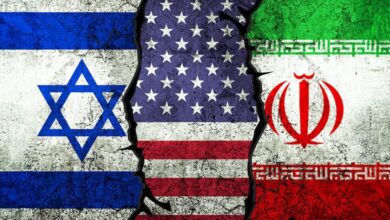
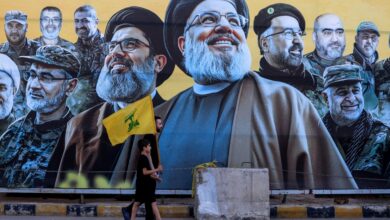
This firm leadership is reflected in the repeated and continuous preemptive actions undertaken by the UAE against financing networks, entities, and commercial fronts linked to terrorist organizations and their sponsors in the region, particularly the complex financial networks and shell companies associated with the Tehran regime and Hezbollah. The sovereign and courageous decisions to regularly issue updated “lists” that designate individuals and companies involved in supporting these entities, freeze their assets, and immediately and comprehensively prohibit dealing with them represent a powerful example of how the authority of law can be used to safeguard national security and societal stability.
These firm measures, which allow no leniency or retreat, directly contribute to dismantling the logistical and military machinery of these militias that have spread corruption, destruction, and displacement across several Arab countries. When a shipping company is banned, a currency exchange account is frozen, or a front construction company used to move funds or circumvent international sanctions is shut down, the UAE effectively cuts the material lifelines of these organizations, forcing them to contract and weaken. This directly serves regional stability and protects its economy and vital trade routes from the persistent threats posed by terrorism.