Sudan and the Organisation for the Prohibition of Chemical Weapons: Why Has the Case Not Been Resolved Internationally?
The chemical weapons issue in Sudan has entered a more complex phase since the United States announced in April 2025 that it had concluded that the Sudanese government had used chemical weapons during 2024, in violation of the Chemical Weapons Convention. Since then, Washington has imposed sanctions, while Khartoum has rejected the allegations and established a national committee to investigate them. Meanwhile, the Organisation for the Prohibition of Chemical Weapons has continued to monitor the case without, to date, announcing a final finding confirming or disproving the use of chemical weapons.
With new reports and investigations emerging during 2026 alleging additional evidence linked to the use of chlorine and the development of chemical munitions, the question has returned to the forefront: why has the international organisation responsible for the issue still been unable to resolve the case?
The answer lies in the very nature of the mechanisms established under the Chemical Weapons Convention, the need for independent technical evidence, and the absence of a fully completed international field investigation inside Sudan.
A Clear U.S. Allegation, but Not an International Judgment
The current process began when the United States announced in April 2025 that, under its specific legislation concerning chemical and biological weapons, it had determined that the Sudanese government had used chemical weapons in 2024.
On that basis, Washington imposed a series of sanctions on Sudan in June of the same year, and then tightened the measures again in 2026 after stating that Khartoum had failed to meet the conditions required for the sanctions to be lifted. The United States also continued to apply pressure within the Organisation for the Prohibition of Chemical Weapons in favour of an independent verification process.
However, the U.S. decision, regardless of the strength of the intelligence on which it was based, does not constitute a ruling issued by the Organisation for the Prohibition of Chemical Weapons or by an international court.
This is where one of the main sources of confusion in the case begins.
The United States says it has an intelligence assessment establishing the use of chemical weapons, while Sudan rejects the allegation. The international organisation, meanwhile, requires an institutional and technical process through which it can examine and verify the available evidence.
In other words, there is a difference between a state claiming that it possesses evidence of chemical weapons use and a competent international body issuing a technical and legal finding that can be independently verified by the States Parties.
Sudan Is a Party to the Chemical Weapons Convention
Sudan is not outside the international chemical weapons prohibition regime.
It has joined the Chemical Weapons Convention, which requires States Parties not to develop, produce, stockpile or use chemical weapons.
The Convention currently has 193 States Parties, and the Organisation for the Prohibition of Chemical Weapons is responsible for monitoring its implementation and verifying compliance with its obligations.
The allegations concerning Sudan therefore constitute an issue of compliance with an international treaty, rather than merely a political dispute between Khartoum and Washington.
However, the Convention does not give the Organisation’s Technical Secretariat the authority to act at will simply because a media report or political allegation emerges.
This point, in particular, explains much of the reason for the case’s slow progress.
The Organisation Monitors Allegations, but Cannot Open an Investigation on Its Own Initiative
In an official document submitted by the Director-General of the Organisation for the Prohibition of Chemical Weapons to the Conference of the States Parties in December 2025, the Organisation stated that it continued to monitor allegations concerning the use of chemical weapons in Sudan, particularly through its Operations Centre.
The Director-General made clear, however, that the Technical Secretariat had not, at that time, received a sufficiently complete request to undertake any additional activity and that the Secretariat did not have the authority to take up the case on its own initiative. The matter falls within the powers of the States Parties and the Executive Council.
This is one of the most important facts for understanding the case.
The Organisation is not an independent criminal investigative body capable of entering any country simply because an allegation has been brought to its attention.
Its powers are defined by the Convention, and formal procedures must be followed.
The Initial Move Came from Other States
In June 2025, Benin, Chad and Mauritania, with the support of Guinea-Bissau, requested clarification from Sudan under Article IX of the Chemical Weapons Convention.
The questions included whether chemical weapons had actually been used in the Sudanese war, what measures had been taken by the Sudanese national committee to ensure that its investigation was fair, objective and transparent, and whether Sudan possessed chemical weapons or was aware of their presence on its territory.
Sudan responded to these requests, and its responses were circulated to the States Parties.
In March 2026, the Executive Council of the Organisation for the Prohibition of Chemical Weapons confirmed that it continued to follow the case after receiving the requests for clarification addressed to Sudan and Khartoum’s responses.
The case therefore was not completely frozen, but it had not reached the stage of a comprehensive international field investigation.
The Sudanese Committee: Why Was It Not Enough for Washington?
Khartoum responded to the allegations by establishing a national technical committee to investigate them.
According to the information presented by the Sudanese government to the Organisation for the Prohibition of Chemical Weapons, the committee’s interim report concluded that, based on the information it had reviewed, its field visits and the interviews it had conducted, it had found no material, technical or documentary evidence establishing the use of chemical weapons at the sites it had examined.
Washington, however, did not consider this sufficient.
At a meeting of the Executive Council of the Organisation for the Prohibition of Chemical Weapons in July 2026, the United States said that internal bureaucratic mechanisms could not substitute for treaty compliance and independent verification. It called on Sudan to provide the Organisation’s Technical Secretariat with transparent and unhindered access.
This is where the central problem lies:
The accused party is itself leading the internal investigation, while the party making the allegation is demanding an independent investigation.
Consequently, the Sudanese findings were not sufficient to resolve the dispute.
Sudan Says Washington Has Not Provided Sufficient Evidence
Sudan, for its part, maintains its position and rejects the allegations.
In June 2026, Sudan’s representative to the United Nations rejected the U.S. allegations and said that Washington had provided no evidence of the Sudanese army’s use of chemical weapons, despite a year having passed since the process concerning the case began.
In July, the Sudanese government said that the United States had, according to its account, ignored a proposal to send U.S. experts to Sudan to conduct field verification of the allegations.
This position reflects Khartoum’s strategy in handling the issue: reject the allegation, emphasise the existence of a national investigation, and demand that the evidence be presented.
For the international community, however, the problem remains: who will conduct an investigation that both sides accept?
Journalistic Evidence Has Increased the Pressure
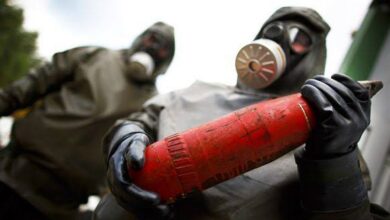
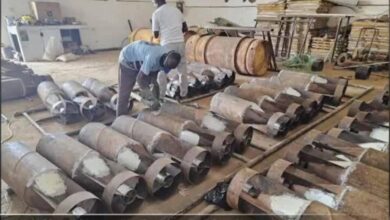
In September 2026, the case gained renewed momentum following the publication of international investigations referring to documents, photographs, videos and communications allegedly indicating the existence of a chlorine-based chemical munitions production program within the Sudanese army.
An investigation published by the New York Times reported on an intelligence dossier obtained by the newspaper from a Middle Eastern intelligence organisation. The dossier reportedly contained material indicating the production and use of chemical munitions in 2024.
Other investigations have also presented material that they said pointed to the manufacture, storage and testing of chemical munitions.
Yet even these reports, despite their significance, do not amount to an official investigation by the Organisation for the Prohibition of Chemical Weapons.
Journalists can gather and analyse evidence, examine photographs and documents, and consult experts, but they cannot give their findings the official status provided by the mechanisms of the Convention.
Why Is the Discovery of Chlorine Not Enough?
Chlorine is a central element in many of the allegations concerning Sudan.
However, the presence of chlorine by itself does not prove that a chemical weapon was used. Chlorine is a legitimate industrial substance used in water treatment, disinfection and various industrial processes.
The legal and scientific question concerns how it was used and for what purpose.
Was chlorine used as a weapon to produce a toxic or choking effect against people? Was it placed in a munition designed to disperse it? Are there residues of the substance at the site of the attack? Do the medical effects correspond to exposure to chlorine?
Can the munition be linked to a specific manufacturing source? Is there evidence establishing that its use was deliberate?
This is why the Organisation for the Prohibition of Chemical Weapons emphasises the importance of chemical forensic evidence.
In July 2026, the Organisation explained that a chemical sample can not only identify the substance used, but can also provide indications of how it was produced, whether it is linked to other samples, and what it reveals about the incident.
These are the types of evidence the Sudan case needs in order to move from allegations to an established finding of fact.
The Biggest Problem: Access to the Scene
The war in Sudan has made access to sites where chemical attacks are believed to have occurred extremely difficult.
This is a fundamental problem in any investigation of this kind.
The longer the delay, the lower the chances of finding clearly identifiable chemical residues. Sites may also be destroyed, altered or contaminated.
Furthermore, the collection of samples requires precise procedures to preserve them and ensure the integrity of the chain of custody, so that the findings can be used in official investigations.
A chemical investigation is therefore not simply a matter of sending experts to a particular site and collecting a sample. It is an integrated scientific and legal process.
What Could Happen If the Organisation Obtained Full Access?
If the Organisation for the Prohibition of Chemical Weapons were able to gain access to the sites and evidence, the case could enter an entirely different phase.
Experts could examine remnants of munitions, analyse environmental and medical samples, study documents and compare chemical evidence with other materials.
If coherent evidence emerged, the findings could help determine the nature of the substance used and potentially its origin.
They could also provide a stronger basis for establishing responsibility.
Conversely, if the investigation failed to find sufficient evidence, this would weaken the existing allegations and give Sudan a stronger basis for challenging them.
This is why, in theory, an independent investigation serves the interests of both sides.
Why Does the Case Appear Different from the Syrian Case?
Syria provides an important example of the Organisation for the Prohibition of Chemical Weapons’ ability to operate when cooperation and field access are available.
In May 2026, the Organisation announced that a team of experts, with the support of the Syrian authorities, had discovered previously undeclared chemical weapons, materials, equipment and documents.
The comparison does not mean that the two situations are identical, but it illustrates the importance of access to the field.
International investigations are stronger when the Organisation can access sites, collect evidence, examine it and compare it with official documents.
In Sudan, this stage remains incomplete.
Could the Case Become a Larger International Issue?
If an independent investigation establishes that chemical weapons were used, the case could expand beyond a dispute over compliance with the Convention into an issue of responsibility and accountability.
The Sudanese government could face increased international pressure, while States Parties could call for additional measures to ensure that such use does not recur and potentially identify production or storage sites for verification and destruction in accordance with the Convention.
The evidence could also become important in investigations concerning war crimes and individual responsibility.
But reaching this stage first requires the facts to be established.
U.S. Sanctions Are Not a Substitute for an International Investigation
Despite the U.S. sanctions, the technical question remains.
Washington has already imposed punitive measures and confirmed in July 2026 that it continued to press for an investigation into the alleged use of chemical weapons.
However, sanctions are a U.S. political and legal decision; they are not the result of an investigation conducted by the Organisation for the Prohibition of Chemical Weapons.
This distinction is essential in order to avoid conflating the different processes.
The United States can impose sanctions based on its own information and assessments, but the international organisation requires a different verification mechanism.
Saying that the chemical weapons case in Sudan “has not been resolved internationally” does not mean that the international community has failed to act.
On the contrary, the case has reached the Executive Council of the Organisation for the Prohibition of Chemical Weapons; several states have submitted requests for clarification to Sudan; Khartoum has responded; the United States has announced its assessment and imposed sanctions; and new journalistic investigations have presented additional evidence.
But the missing link remains independent, international and field-based verification that can be properly scrutinised.
The Organisation itself says that it is monitoring the allegations, but it cannot take up the case on its own initiative without the appropriate procedures being triggered.
Sudan says that its national investigation found no evidence establishing the allegations, while Washington is calling for transparent and unrestricted access for the Organisation’s experts.
Between these two positions, the resolution of the case ultimately depends on the ability to access and verify the evidence.
If the use of chemical weapons is established, significant international responsibilities and consequences could follow. If it is not established, an independent investigation would be the most effective means of bringing the allegations to an end.