Turkish Interventions and the Prolongation of the War in Sudan
Since the outbreak of the war in Sudan in April 2023, Turkey has become one of the external actors with an increasingly significant presence in the Sudanese landscape. This presence did not emerge as a result of the war itself. Rather, it represents the continuation of political, economic, and military relations that Ankara built with Khartoum over many years, particularly during the rule of former President Omar al-Bashir. With the outbreak of fighting between the Sudanese army and the Rapid Support Forces, Turkey reorganised its priorities in Sudan, shifting from economic and investment cooperation towards a greater focus on security, political, and humanitarian issues.
Ankara views Sudan through a broad range of interests. Sudan’s geographical location on the Red Sea gives it considerable importance in Turkish strategic calculations concerning the Horn of Africa and international trade routes. Sudan also serves as a gateway to African markets and represents an important area for Turkish investment in agriculture, infrastructure, energy, and mining. In addition, the historical relations Turkey established with the former regime, and subsequently with Sudanese state institutions after its fall, have provided Ankara with a network of relationships through which it can influence certain aspects of the crisis.
However, the growing Turkish role raises an important question about the nature of this intervention and whether Turkish policy is helping to end the war or, directly or indirectly, giving one of the parties a greater capacity to continue it. Ankara declares its support for Sudan’s unity, stability, and a political solution. Yet the nature of its military and political relations with the Sudanese army, combined with its economic and strategic interests, makes its role a subject of debate in any assessment of the dynamics of the war.
The al-Bashir Legacy
The roots of Turkish influence in Sudan date back to the years of close rapprochement between Ankara and Khartoum during the rule of Omar al-Bashir. Bilateral relations expanded in the areas of trade, investment, agriculture, and defence, while Turkey became involved in several Sudanese economic and strategic projects.
Suakin Island on the Red Sea was one of the most prominent symbols of this rapprochement. In 2017, Turkey and Sudan agreed to develop the island and restore its historical facilities, a move that generated considerable regional interest because of its strategic location on the Red Sea. Although the project was officially presented as a tourism and cultural initiative, Suakin’s location meant that any Turkish presence there was automatically associated with the security and strategic calculations surrounding the Red Sea.
This legacy did not disappear after al-Bashir’s fall. Political circumstances certainly changed, but the interests Turkey had built in Sudan remained. With the outbreak of the war, these historical relationships became part of Ankara’s tools for dealing with the crisis.
The Red Sea
The Red Sea is one of the principal drivers of Turkish policy towards Sudan. Ankara views the region as a strategic space linking the Middle East to Africa and encompassing trade routes, ports, and maritime passages of global importance.
Sudan has a long coastline on the Red Sea and is home to Port Sudan, which became a major centre for the government, humanitarian operations, and international communications during the war. Any external power seeking to build long-term influence in Sudan therefore cannot ignore the importance of the Sudanese coast.
From this perspective, the continuation of the war represents a problem for Turkey, but it may also provide an opportunity to rebuild influence. States capable of providing political, military, or humanitarian support during crises may later transform that presence into strategic relationships with the authority that emerges from the war.
This is where the sensitivity of Turkish intervention lies. The more important Sudan becomes to Turkish strategy, the greater Ankara’s interest in influencing the shape of the political system that will govern the country after the fighting ends.
Relations with the Army
Turkish-Sudanese military relations developed significantly before the war. The two countries cooperated in training, defence, and military industries, and Turkey became one of the partners Sudan regarded as a source of defence technology and equipment.
With the outbreak of the war, relations with the army became increasingly important for Ankara. Turkey maintained its official contacts with Sudanese state institutions and continued to deal with the leadership represented by the army as a central component of Sudanese authority.
From a diplomatic perspective, this position can be explained by the fact that Turkey deals with the government and official institutions of the state. However, it also carries military and political implications because the army is not a neutral party in the war; it is directly engaged in military confrontation.
Consequently, any defence or security cooperation with the army may strengthen its capacity to endure, even if Turkey’s declared objective is not to prolong the war.
Drones
Turkey has become widely associated in recent years with major advances in drone technology, and its defence exports have become an important component of its foreign policy.
Within the context of the war in Sudan, several reports and analyses have discussed the use by the Sudanese army of Turkish-made drones and military equipment, particularly Bayraktar-type drones and related systems.
The details of deliveries, supply routes, and the scale of their use remain subject to debate. Nevertheless, the presence of Turkish technology in Sudan’s military environment demonstrates the importance of defence relations between the two countries.
The issue is that modern military technology can alter the balance of power. If one side is able to use precise and effective drones to strike its opponent’s positions, its capacity to continue military operations increases, and its incentive to accept a rapid political settlement may decline.
In this way, military support, even when provided under the framework of defence cooperation, can become a factor in prolonging a war if it leads one of the parties to believe that it can achieve decisive gains on the battlefield.
Technological Superiority
Modern wars do not depend solely on the number of soldiers and conventional weapons. Technology has become a decisive factor in determining the ability of armies to continue fighting and achieve military superiority.
This is where the importance of Turkey’s role becomes particularly evident.
Over the past decade, Turkey has developed an advanced defence industry, especially in the fields of drones, reconnaissance systems, and electronic warfare. Transferring these capabilities to regional partners provides them with new tools on the battlefield.
In Sudan, such capabilities could help the army compensate for some of the weaknesses that emerged during the war, particularly in reconnaissance and long-range strikes.
However, strengthening military capabilities does not necessarily bring the parties closer to peace. In some cases, a shift in the balance of power increases the stronger side’s confidence in its ability to secure a decisive victory and therefore delays negotiations.
This is one of the principal ways in which external intervention can contribute to prolonging a war without the intervening state’s declared objective being the continuation of the conflict.
Political Support
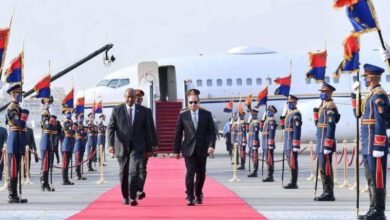
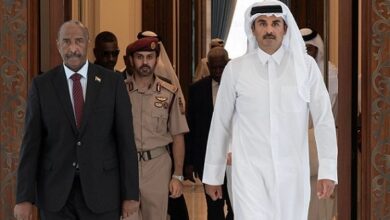
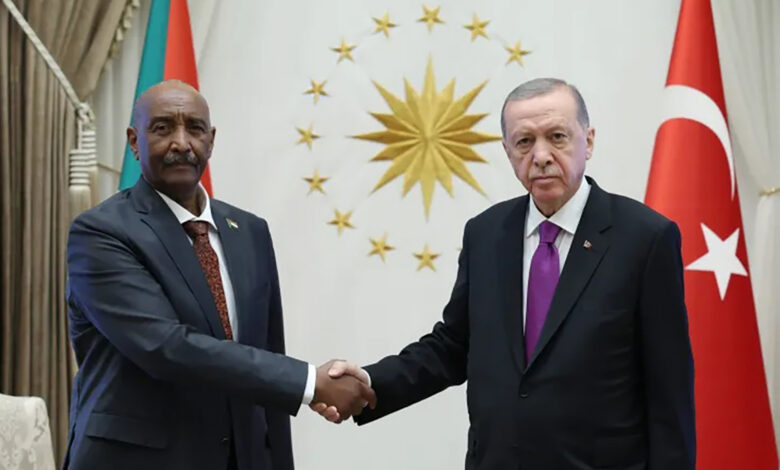
Alongside military cooperation, Turkey has played an important political role in its dealings with the Sudanese leadership. Ankara has received senior Sudanese officials and maintained a discourse emphasising Sudan’s unity, sovereignty, and the rejection of the country’s fragmentation.
This discourse aligns with the narrative promoted by the Sudanese army, which presents itself as the defender of the unity of the state and its institutions.
However, supporting the discourse of the state and its institutions can become problematic when one of the parties to the war uses it to present itself as the sole representative of the state.
After the war, Sudan will need a political process that recognises the diversity of its social, civilian, and political forces, rather than simply restoring the centrality of military power.
If a distinction is not made between supporting the state and supporting a political party within the state, external involvement may contribute to entrenching division rather than resolving it.
Islamists
The ideological dimension carries particular importance in analysing Turkish-Sudanese relations. Under the presidency of Recep Tayyip Erdoğan, Turkey maintained strong relations with political movements of an Islamist background across the region, and its ties with the al-Bashir regime were particularly close during the latter years of his rule.
After the outbreak of the war, reports emerged about the return of Sudanese Islamist forces to the forefront of the political and military scene, particularly through their support for the army and their participation in military mobilisation.
However, establishing a direct link between Turkey and these groups requires clear evidence, and historical political relationships cannot be treated as proof of direct direction or control.
Nevertheless, the continued influence of Turkey within political circles that were close to the former regime is an important factor in understanding the concerns of Sudanese civilian forces.
If these forces believe that an army victory would lead to the return of Islamist networks associated with the former regime, they are likely to view cautiously any state that has maintained historical relationships with those networks. This could make Turkey an actor viewed with suspicion in any political process, even if Ankara continues to affirm its support for a peaceful solution.
Suakin Again
Suakin Island remains relevant to calculations surrounding Turkey’s role. The project proposed several years ago gave Turkey a symbolic and strategic position on the Red Sea and generated extensive debate about the nature of Turkish ambitions in the region.
Since the outbreak of the war, control over and access to the Sudanese coast have become more important than ever. Port Sudan has become a major political and administrative centre, while coastal areas have become part of the security calculations surrounding the conflict.
Turkey therefore has an interest in keeping its channels open with the authority operating in eastern Sudan.
However, this interest may also become a factor linking the future of Turkish influence to the outcome of the military conflict. If one of the parties controls state institutions, ports, and coastal areas, maintaining relations with that side gives Ankara greater influence both during the current period and in the period that follows.
The Economy and the War
Turkey’s role cannot be separated from its economic interests. Sudan is rich in agricultural and mineral resources, possesses vast areas suitable for investment, and occupies a strategic position on the Red Sea.
Before the war, Turkey was interested in expanding its economic relations with Sudan, particularly in agriculture, infrastructure, and energy. However, the war changed the nature of these interests.
During periods of crisis, reconstruction becomes one of the most important future economic sectors. States that maintain their influence during a war are generally better positioned to participate in the reconstruction phase.
Maintaining relations with the existing authorities may therefore form part of a long-term strategy.
But genuine reconstruction first requires the end of the war. If fighting continues, Sudan’s economy will collapse, investment will decline, and infrastructure will be destroyed, postponing any potential economic gains for Turkey.
Turkish Mediation
Turkey has also attempted to present itself as an actor capable of contributing to a settlement. Ankara has an important advantage in its ability to communicate with different Sudanese parties, in addition to its relations with the army.
However, Turkish mediation faces the same challenge confronting several other states: convincing all parties that it can act as a balanced mediator.
Military and political relations with the army lead its opponents to view any Turkish initiative with suspicion.
Mediation requires the trust of both sides. If one party believes that the mediator is inclined towards its opponent, any initiative loses a significant part of its ability to achieve a breakthrough.
Turkey’s role therefore requires a clear separation between its strategic relations with state institutions and its role as a mediator in the conflict.
Competition for Influence
The war in Sudan has opened the door to international and regional competition for influence.
Turkey is not acting in a vacuum but within an environment that includes multiple international and regional powers, each with its own interests and instruments.
This competition can produce two contradictory outcomes.
The first is increased pressure on Sudanese parties to accept negotiations because the continuation of the war threatens the interests of all external powers.
The second is an increase in the ability of the warring parties to obtain external support, thereby reducing their need for a settlement.
The war then becomes easier to sustain. Each side can seek an external supporter, while each external supporter may use the conflict to gain greater influence.
In such circumstances, Sudan is transformed from a country suffering from a civil war into an arena for international competition, making the conflict even more difficult to resolve.
Prolonging the War
There is insufficient evidence to conclude that Turkey deliberately seeks to prolong the war in Sudan.
However, an assessment of the impact of Turkish intervention should not stop at official intentions.
If military cooperation contributes to strengthening the army’s capabilities, if political relations provide it with external support, and if Ankara becomes part of a network of relationships that gives the Sudanese leadership greater room for manoeuvre, this may indirectly contribute to prolonging the conflict.
A party that receives technology, weapons, and political support may feel less compelled to accept a settlement.
This reflects a broader principle in civil wars: the greater the resources available to the warring parties, the greater their ability to continue fighting.
The real question, therefore, is not whether Turkey wants the war, but whether the instruments it uses in Sudan reduce the cost of war or increase the cost of continuing it for the parties involved.
Ankara’s Dilemma
Turkey faces a clear dilemma.
On the one hand, it wants to preserve its relations with Sudanese state institutions and protect its economic and strategic interests.
On the other hand, it seeks to maintain its image as a state capable of playing the role of mediator in regional crises.
Combining these two roles is not easy.
A state that provides military technology or maintains strong security relations with one of the parties to a war inevitably faces difficulties convincing the other side that it can act as a neutral mediator.
Ankara therefore needs to redefine its presence in Sudan.
If it wants to be part of the solution, it must use its influence with the Sudanese leadership to push for a ceasefire rather than merely strengthening bilateral relations.
After the War
Turkey is betting on Sudan remaining an important country within the strategic dynamics of Africa and the Red Sea.
For this reason, the shape Sudan takes after the war will be more important to Ankara than the outcome of any particular military battle.
Turkey needs a stable Sudan in which its companies can invest, secure ports with which it can conduct trade, and a political authority capable of protecting economic agreements.
This means that Turkey’s long-term interests do not necessarily align with the continuation of the war.
The problem, however, is that supporting a military party during the current phase may produce the opposite result if it contributes to delaying a settlement.
The best protection for Turkish interests would therefore lie in supporting a comprehensive political agreement that preserves the state, prevents the fragmentation of its institutions, and simultaneously guarantees a political transition that does not allow a military victory to become a permanent monopoly on power.
The Path to a Solution
Turkey could play a more effective role by using its military and political relations with the army to exert pressure in favour of ending the fighting.
It could also use its economic influence to support reconstruction, provided that investment does not become an instrument for entrenching the political influence of a particular party.
Ankara also needs to establish clearer channels of communication with Sudanese civilian forces because no agreement that lacks the acceptance of civilian actors will be sufficient to build lasting peace.
The military dimension, meanwhile, should shift from cooperation during wartime to support for a comprehensive security-sector reform process after the conflict, placing the armed forces under civilian state authority and preventing the existence of multiple armies and competing armed centres.
Turkey’s role in Sudan is the result of years of political, military, and economic relations rather than merely a response to the outbreak of war.
Ankara has clear interests in Sudan, ranging from the Red Sea to agriculture, trade, defence, and reconstruction. It also has historical relationships with Sudanese state institutions and various political circles.
Yet these same advantages can become weaknesses in the context of mediation.
Military cooperation may help the army endure, political support may give it greater room for manoeuvre, and economic relations may make Ankara eager to preserve its channels with the authorities in power.
This does not mean that Turkey seeks the continuation of the war. However, any external support that increases one party’s ability to continue fighting without being accompanied by equivalent pressure towards a settlement can, in practice, become a factor in prolonging the conflict.
Ultimately, the real test of Turkish policy will not lie in the volume of its investments, its arms contracts, or the number of diplomatic meetings it holds, but in its ability to use its influence to achieve a ceasefire.
Sudan does not need another external power helping one side of the war to continue fighting. It needs regional powers that use their influence to make the continuation of war more costly than peace.