Iran proposes a new framework to regulate navigation in the Strait of Hormuz after the war
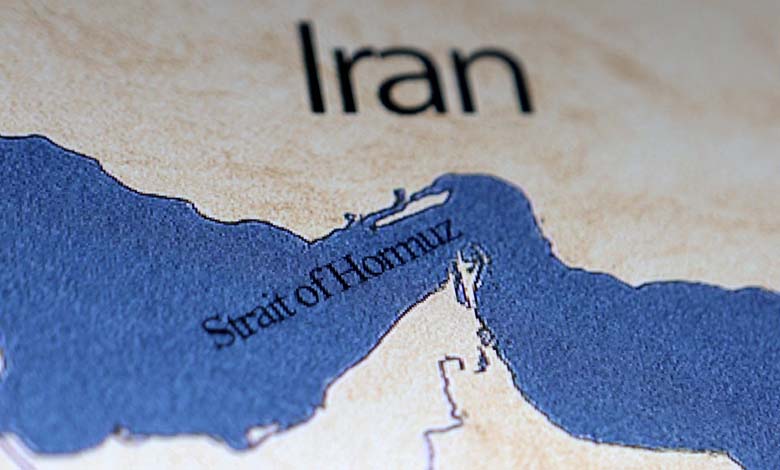
Araghchi stated that the new protocol will be developed in cooperation with the countries bordering the Strait of Hormuz and will ensure safe passage under “specific conditions,” in line with Iranian and regional interests.
Iranian Foreign Minister Abbas Araghchi outlined his country’s vision for the future of the Strait of Hormuz, emphasizing the need for the littoral states to work together to formulate a new protocol governing navigation after the end of the war. He explained that the proposed framework would ensure safe passage, but under “specific conditions” that take into account Iranian and regional interests, signaling a potential shift in the management rules of one of the world’s most strategic maritime routes.
Amid ongoing escalation between Iran and Western powers, the Islamic Revolutionary Guard Corps announced that it effectively controls the strait, through which around 20 percent of global petroleum products pass, threatening to block vessels belonging to countries it considers hostile. This move aims to strengthen deterrence capabilities and demonstrate military power in the region. Despite these threats and the execution of attacks against several tankers, Tehran has not officially declared the closure of the strait under international law, leaving formal maritime traffic theoretically protected, while in practice vessels face significant security risks.
The Revolutionary Guards are also using what is known as an “anti-access zone” as a tool of military and political pressure on the United States and its allies. Iranian officials have indicated that the strait represents a critical strategic lever capable of disrupting nearly 20 percent of global oil trade if the conflict escalates further. These threats also serve as political messaging intended to strengthen Iran’s position in regional and international negotiations and to demonstrate its capacity to safeguard its vital interests.
However, Iran’s official position differs from that of the Revolutionary Guards, as the government has affirmed its respect for freedom of navigation in the strait in accordance with international law, while placing responsibility for the current escalation on the United States. This contrast between military rhetoric and official policy reflects Tehran’s effort to maintain flexibility between demonstrating military strength and preserving international legal legitimacy.
For his part, U.S. President Donald Trump called for participation in an international force to reopen the Strait of Hormuz and ensure freedom of maritime navigation, prompting mixed international reactions ranging from support to rejection and caution.
In remarks on developments on the ground, Araghchi stated in an interview with Al Jazeera that Tehran sees no benefit in entering negotiations with Washington under military pressure, arguing that any dialogue must be based on balanced terms free from coercion. He added that Iran is currently focused on defending itself against attacks, which postpones the diplomatic track until conditions change.
He further stressed that Iran is prepared to face various scenarios, including an expansion of the conflict, noting that Iranian military capabilities have significantly advanced in recent years, giving it, in his view, greater deterrence and response capacity.
Araghchi also sought to attribute part of the responsibility for the war to Gulf countries, stating that strikes carried out by Iran near urban areas in those states were due to the relocation of U.S. forces from military bases to hotels within cities.
He said, “Wherever U.S. forces have gathered, and wherever their facilities are located, they have been targeted. Some of these locations may be close to residential areas.”
He acknowledged that countries in the region “are dissatisfied and that their populations have been affected or disturbed” by Iranian strikes, but added that full responsibility lies with the United States for initiating the war on February 28.
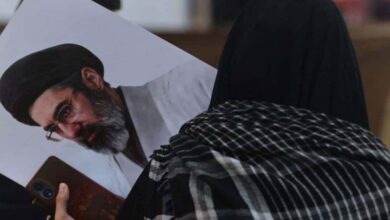
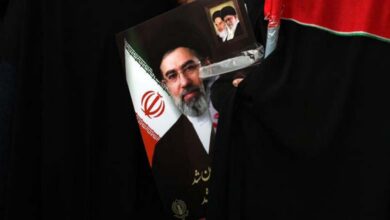
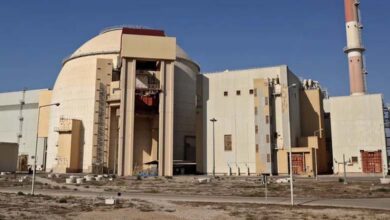
Regarding the nuclear issue, he reaffirmed Iran’s commitment to its right to develop a peaceful nuclear program, denying any intention to acquire nuclear weapons and describing Western accusations in this regard as a tool of political pressure. He stressed that Iran’s stance rejecting the production of nuclear weapons will not change significantly, noting that the new Iranian Supreme Leader, Mojtaba Khamenei, has not yet publicly expressed his position on the matter.
The former Supreme Leader, Ayatollah Ali Khamenei, who was killed at the beginning of the U.S.-Israeli war against Iran, had issued a fatwa in the early 2000s prohibiting weapons of mass destruction.
Araghchi added that fatwas depend on the Islamic jurist who issues them, noting that he is not in a position to judge the legal or political views of the new Supreme Leader.
On relations with the United States, Araghchi accused Washington of undermining diplomatic efforts, stating that the military escalation occurred despite the existence of communication channels, reflecting, in his view, a preference for confrontation over political solutions.
He concluded by affirming that Iran will not accept any attempts to impose a new reality or undermine its internal stability, while emphasizing that the door to diplomacy will remain open, but under conditions that ensure balance and respect for sovereignty.