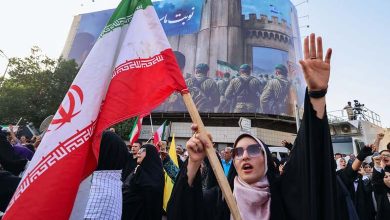
Iran War Reveals Trump’s Failures in Negotiation
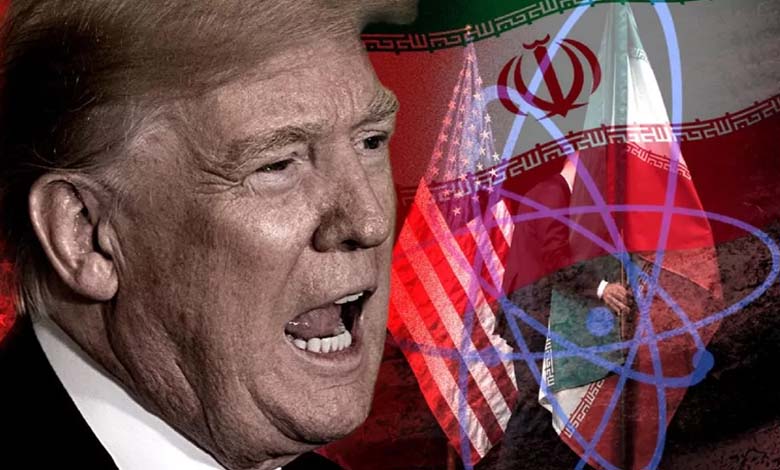
Donald Trump’s sudden retreat from his threat to wipe out Iranian civilization highlights the risks of his statements and their negative implications for regional and international security.
This reversal exposes the limits of the U.S. president’s negotiation style, often unpredictable, and the increasing dangers associated with it.
The decision he took on Tuesday to approve a two-week ceasefire, mocked by critics and cited as a recent example of his backtracking, represents the largest step so far toward defusing a 40-day war that shook the Middle East and disrupted global energy markets.
His frequent reversals are referred to as “Taco,” an acronym for “Trump Acts Like a Coward.”
However, Trump’s declaration of “victory” over Iran ignored questions about the effectiveness of combining tough demands, volatile rhetoric, and escalating extreme threats.
His threats peaked on Tuesday morning when he tweeted: “An entire civilization will be destroyed tonight and never return,” unless Iran reached an agreement.
After a day of intense anticipation, Trump abruptly withdrew his threats – which experts described as potential war crimes – and announced a truce mediated by Pakistan just two hours before the deadline he set for Iran to open the Strait of Hormuz.
In his post, he stated that the United States had “already achieved and exceeded all military objectives.”
Despite the president’s triumphant tone, analysts expect Iran to remain a challenge for Washington after the conflict: while militarily weakened, its leadership has become more hardline, maintains effective control over the vital oil shipping corridor, and possesses an underground stock of highly enriched uranium.
Trump portrays himself as a skilled negotiator since his real estate career, but some analysts argue that his negotiation style could put him in trouble and undermine U.S. credibility globally.
John Alterman of the Center for Strategic and International Studies in Washington said, “The president fell into the trap of his own exaggerations… He could not destroy Iranian civilization, and the cost of even attempting it would have been enormous.”
This approach also carries the risk that adversaries, including China and Russia, will detect the strategy.
A Republican legislator in contact with the White House Tuesday evening said, “The element of surprise is fading,” referring to Trump’s habit of retreating from threats to appear strong.
White House spokeswoman Caroline Levitt denied that Trump had backtracked, telling reporters Wednesday that his tone was part of his “tough negotiating style” and that the world should “take his words seriously.”
Trump follows a pattern of taking hardline positions in negotiations which he later abandons.
Analysts say this approach sometimes appears deliberate, while at other times it seems random, without consulting advisors, with the administration reversing positions under pressure from financial markets or his political base of “Make America Great Again” supporters.
The shift in the president’s approach toward Iran followed a sharp rise in U.S. gasoline prices and a drop in his approval ratings.
The term “Taco” emerged about a year ago when Trump faced $6.5 trillion in stock market losses over four days, prompting him to ease the steep tariffs announced days earlier during the White House “Liberation Day” celebration.
Weeks later, he also rescinded another set of tariffs imposed on China.
In both cases, stock markets, often cited by Trump as a measure of his performance, surged sharply after he reversed course.
Continuing this pattern, the S&P 500 jumped 2.5% Wednesday after the ceasefire announcement.
Trump also backtracked on his threats to seize Greenland from Denmark, a NATO member, and on his initiatives regarding war-damaged Gaza.
While deadlines he set for a ceasefire between Israel and Hamas produced results, those set for the Palestinian movement to surrender arms did not resonate.
Nevertheless, Trump issued military threats that he carried out during his second term, far exceeding what occurred from 2017 to 2021.
In a military operation following massive U.S. naval reinforcements off Venezuela and severe presidential warnings, special forces arrested Venezuelan President Nicolás Maduro in January and installed a more compliant U.S.-aligned government.
Trump escalated threats against Iran when he joined Israel in the conflict against the Islamic Republic on February 28, while Washington and Tehran were already negotiating over Iran’s nuclear program.
The question now is whether Trump remains unable to achieve his declared goals, including preventing Iran from acquiring nuclear weapons, despite some military successes. Iran, which denies seeking nuclear arms, still possesses enriched uranium stocks believed mostly buried after U.S.-Israeli airstrikes last June.
The U.S. president and his advisers have long asserted that making his actions unpredictable is a negotiation tactic aimed at confusing adversaries.
Jonathan Panikoff, former deputy U.S. National Intelligence Director for the Middle East, now at the Atlantic Council, said: “I wouldn’t call it a retreat. He pushed Iran to the edge and managed to escape with at least a temporary way out he had anticipated.”
Alexander Gray, former senior official in Trump’s first administration and current CEO of American Global Strategies, rejected calling this another example of Trump’s backtracking, stating the heated rhetoric aimed instead at “escalating to achieve de-escalation.”
Trump is widely believed to have been influenced by elements of the “madman theory,” famously used by Richard Nixon during the Vietnam War, positing that extreme threats can force enemies to concede at the negotiation table. Nixon wanted North Vietnamese to believe he was unstable and could use nuclear weapons.
Mark Dubowitz, CEO of the Foundation for Defense of Democracies, a hawkish U.S. think tank, said he sympathizes with Trump’s view that “you literally have to be crazier than the Iranians,” despite its flaws.
He added, “The problem with the madman theory in geopolitics is that you not only scare your enemy, you also scare your allies and your own people.”