Iranian Revolutionary Guard drills in the Strait of Hormuz: readiness assessment and confrontation scenarios
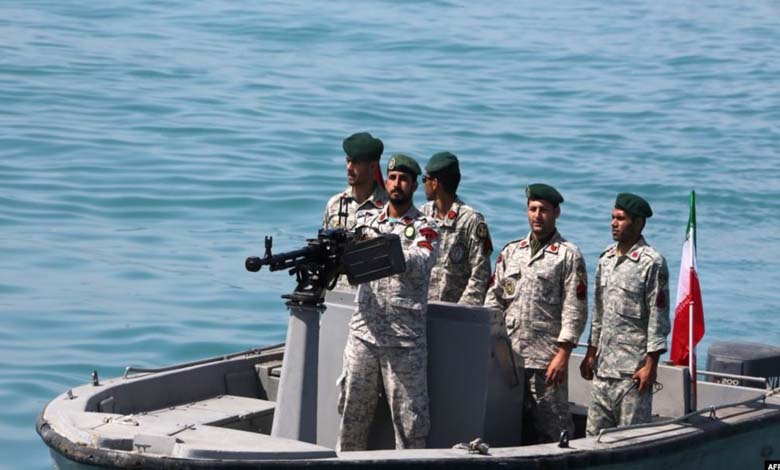
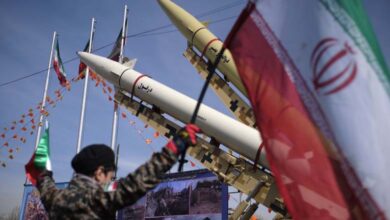
Iran’s Islamic Revolutionary Guard Corps has launched combined live military exercises under the title “Smart Control of the Strait of Hormuz.”
The drills come one day after an Israeli army exercise in the settlement of Modi’in-Maccabim-Re’ut near the West Bank, within the Central Command, amid escalating tensions with Iran. These tensions had previously been accompanied by intensive training in Eilat on the Red Sea coast.
-
Europe bans the Islamic Revolutionary Guard Corps: how will Iran’s arms be affected?
-
With major powers backing the move, Europe edges closer to designating Iran’s Revolutionary Guard as a terrorist organization
Details of the exercises
The drills are being conducted by the naval forces of the Islamic Revolutionary Guard Corps, under the direct field supervision of its commander-in-chief, Major General Hossein Salami, in the strategic Strait of Hormuz, a vital artery for global energy flows, according to the Fars news agency.
The agency reported that the exercises began under the leadership of the IRGC Navy and are subject to direct operational oversight by the Guard’s general command, underscoring their operational nature.
The drills aim to assess the readiness level of participating units, review scenarios for responding to potential threats, and test mechanisms for leveraging Iran’s geostrategic position in managing maritime security dynamics.
-
Pressure in Britain to designate Iran’s Revolutionary Guard as a terrorist organization
-
Australia Expels Iranian Ambassador and Moves to Designate the Revolutionary Guards as a Terrorist Organization
Intelligence and operational training components focus on demonstrating rapid response, decisiveness, and comprehensive engagement in confronting any plans that might threaten maritime security. The exercises serve as a message underscoring Tehran’s determination to showcase its ability to control its strategic maritime environment.
The Strait of Hormuz is a pivotal point in maritime security equations and global energy markets, meaning that any military movement in the area carries implications that extend beyond training, conveying broader political and security messages.
-
Fears of a New Revolutionary Guard: Iraq Divided Over the Popular Mobilization Forces Law
-
Mohammad Pakpour: From the War Fronts to the Helm of Iran’s Revolutionary Guards
Complex negotiations
Amid the field escalation, U.S. Secretary of State Marco Rubio, during a visit to Budapest, stated that reaching an agreement with Iran “would be difficult,” highlighting the complexity of the ongoing negotiation track.
His remarks come as senior Iranian and U.S. diplomats prepare to resume a new round of indirect negotiations in Geneva, amid concerns of another potential diplomatic failure.
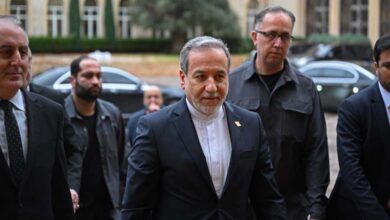
Iranian Foreign Minister Abbas Araghchi arrived in Geneva at the head of a diplomatic and technical delegation following a first round of indirect talks held in the Sultanate of Oman last week.
-
Hossein Salami’s Death Reveals the Extent of Israeli Infiltration into the Revolutionary Guards
-
Sweden Calls for Classifying Iran’s Revolutionary Guard as a “Terrorist Organization” in Europe
The Sultanate of Oman is set to mediate the new round of talks, while Switzerland continues to play a key role in facilitating communication between Washington and Tehran since diplomatic relations were severed in 1980 following the hostage crisis.
Similar talks collapsed last year after a twelve-day conflict in June, during which Israel carried out strikes against Iran and the United States targeted Iranian nuclear sites.
In Geneva, Abbas Araghchi is scheduled to meet his Swiss and Omani counterparts, as well as the Director General of the International Atomic Energy Agency, in an effort to keep negotiation channels open amid heightened regional tensions.
-
“Controversial” Scenes inside the Revolutionary Guard Operations Room
-
Pager Explosions Lead Iran’s Revolutionary Guards to Ban the Use of Communication Devices
U.S. President Donald Trump continues to signal the possibility of using force to compel Iran to curb its nuclear program, while his administration maintains that Tehran must not enrich uranium under any circumstances. Iran rejects this position, insisting that its nuclear program is peaceful.
After deploying the aircraft carrier USS Abraham Lincoln and accompanying vessels to the Gulf in January, Trump announced on Friday that a second aircraft carrier, the Gerald Ford, would sail “very soon” to the Middle East.
For its part, Iran has threatened to respond with a counterattack, while regional countries have warned that any strike could escalate into a new regional conflict.
-
New Details on Haniyeh’s Assassination: What is the Involvement of Mossad and Iran’s Revolutionary Guard?
-
Report: Houthis Received Training in Iran under the Supervision of the Revolutionary Guard
-
Calls to designate Iranian Revolutionary Guard as a Terrorist Organization
-
The Revolutionary Guard reviews the plans for the deployment of Iranian militias in Iraq… What’s the connection with Gaza?