ISIS prisons in Syria raise Iraqi concerns: vigilance and border measures
Iraqi authorities are closely monitoring the situation along their western border with Syria and are bracing for a double threat as events accelerate in the neighboring country.
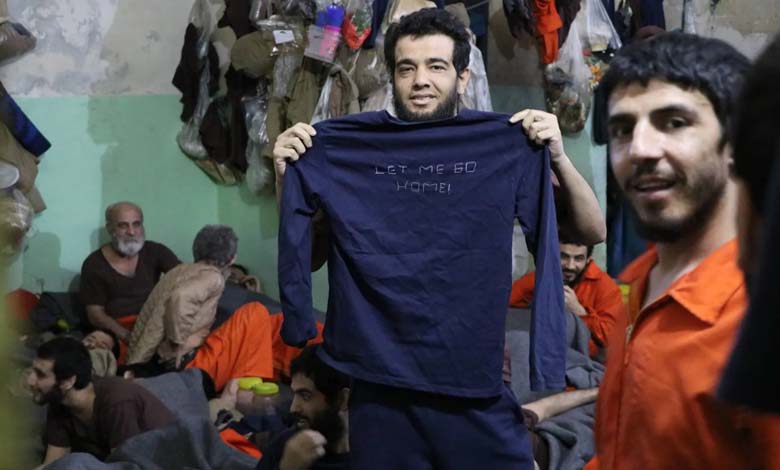
In Syria, the withdrawal of the Syrian Democratic Forces, known as the SDF, from Deir ez-Zor and Raqqa, under the agreement announced last Sunday, has once again brought the issue of prisons holding members of the terrorist organization ISIS into the spotlight.
-
Germany Refuses to Repatriate ISIS Fighters: Syria’s Delayed Justice Dilemma
-
Alarming Resurgence of ISIS in Syria Following al-Assad’s Fall
On Sunday, Syrian President Ahmad al-Shara announced that an agreement had been reached with the SDF, after government forces advanced at their expense in several areas of the north and east of the country over recent days.
Among the fourteen clauses of the agreement are the integration of SDF forces and Kurdish security forces into the Ministries of Defense and Interior, and the handover by the Kurdish autonomous administration of the governorates of Deir ez-Zor and Raqqa to the government, which will assume responsibility for the file of ISIS detainees and their families currently held by the Kurds.
-
ISIS Seeks to Redefine Global Conflict: How It Exploits Global Economic Tensions
-
ISIS Prisons under Al-Joulani’s Control… Warnings Issued
Iraqi fears of a “double threat”
In light of these developments, Iraqi concerns have emerged over the possible smuggling of SDF fighters and members of the Kurdistan Workers’ Party into Iraqi territory, potentially creating pretexts for military intervention in northern Iraq, according to Al-Sumaria News.
The channel reported that “since the SDF’s retreat in northeastern Syria and the growing scenes of the opening of some prisons, Iraqi questions and fears about this new reality have been escalating.”
Estimates indicate that around 12,000 ISIS members are being held by the SDF, most of them in the prisons of Al-Shaddadi and Al-Baghuz, which Damascus government forces have never entered.
-
The Emir of the Turkestan Islamic Party Leads Fighters in Syria from Kabul… What’s the Story?
-
“ISIS’ ticking time bomb” threatens the Middle East with chaos… Details
Although ISIS prisons and the Al-Hol camp remain under SDF control, this number alarms Baghdad, as it represents four times the current number of active ISIS fighters in Iraq and Syria, and six times the number active in Iraq alone.
Despite the announcement of ISIS’s defeat in Iraq eight years ago, some of its cells remain active in several regions and continue to launch attacks, particularly targeting security forces in remote areas outside cities.
In response to this new reality, Al-Sumaria News noted that the Iraqi army has begun reinforcing its forces along the border, while the leader of the Shiite National Movement, Muqtada al-Sadr, called for securing the borders.
-
How ISIS Fighters in Northern Syria Could Benefit from Turkey’s Ambitions
-
Will al-Assad’s Regime Collapse Help ISIS Expand in Africa?
According to the channel, Iraqi fears center on “the possibility that a number of SDF and Kurdistan Workers’ Party fighters may flee to Iraqi Kurdistan, which could eventually lead to further concerns about the new Syria and its forces having pretexts to enter northern Iraq or conduct military operations there to pursue PKK fighters.”
It added that “other concerns have intensified following scenes showing the opening of several prisons, after al-Shara’s forces began taking control of areas that had been under SDF control for more than ten years.”
-
ISIS Awakens in Syria: The Organization Awaits the Perfect Moment to Return to the Global Stage
-
American Failure in Managing the SDF and Tribal Crisis Warns of Escalation in Battles
Syrian-American cooperation
An international coalition led by the United States has been carrying out air strikes and ground operations in Syria over the past few months targeting individuals suspected of belonging to ISIS, often with the participation of Syrian security forces.
Damascus is cooperating with the US-led international coalition in confronting ISIS, following an agreement reached late last year during Syrian President Ahmad al-Shara’s visit to the White House.
Last December, the Syrian Ministry of Interior announced that a suicide bomber suspected of links to ISIS had attempted to target a church in the city of Aleppo on New Year’s Eve, before detonating his explosive belt near a security patrol, killing one member and wounding two others.
-
SDF Accuses Iran of Fueling ‘Tribal Uprising’ in Deir ez-Zor
-
Washington resumes operations with SDF amid Turkish threats
The attack came at a time when Syrian authorities were strengthening cooperation with US forces in the fight against the terrorist organization.
During the same month, two US soldiers and a civilian interpreter were killed in Syria by a person suspected of belonging to ISIS, who targeted a convoy of American and Syrian forces before being shot dead.
The US military responded by launching large-scale strikes against dozens of ISIS targets in the country.
-
The Syrian army expands its deployment in the Jazira and secures the Tishreen Dam
-
Damascus links coastal unrest to plans aimed at dismantling the state